Maasai Mara / Kenya Food and drink
Where should I eat in Maasai Mara, and which local food or drink is worth trying?
The short answer
Eat at your safari camp or lodge, and look for Kenyan nyama choma, ugali, sukuma wiki and kachumbari rather than expecting the Maasai Mara to have a conventional network of restaurants inside the reserve.
The answer, with local context
The Mara is a managed wildlife reserve, with dining largely connected to safari accommodation rather than city-style restaurants. The Mara Conservancy identifies Mara Serena Safari Lodge and Little Governors’ Camp as the only accommodations situated inside the Mara Triangle itself. Other lodges and camps operate nearby or elsewhere in the wider reserve ecosystem. The conservancy manages wildlife protection and infrastructure; it does not own the tourist lodges or handle their bookings.
A classic Kenyan meal is nyama choma, roasted or grilled meat, commonly goat or beef. The Smithsonian Institution’s Center for Folklife and Cultural Heritage documents its association with gatherings and identifies ugali and kachumbari as traditional accompaniments. Ugali is a thick maize-flour preparation made by cooking cornmeal with water until firm. Kachumbari is a chopped vegetable accompaniment containing ingredients such as tomatoes and onions.
Another common combination is ugali with sukuma wiki. Kibabii University’s international-student food guide identifies sukuma wiki as leafy greens cooked with ingredients such as onions and tomatoes. The same guide lists githeri as a preparation of maize and beans, while pilau uses rice with spices that can include cardamom, cumin, cinnamon and cloves.
Kenya’s national tourism portal emphasizes that the country has more than 40 cultural communities, each contributing to its food and heritage. That diversity matters when reading a Mara camp menu: dishes served in the reserve may come from different Kenyan regions rather than representing a single exclusively Maasai cuisine.
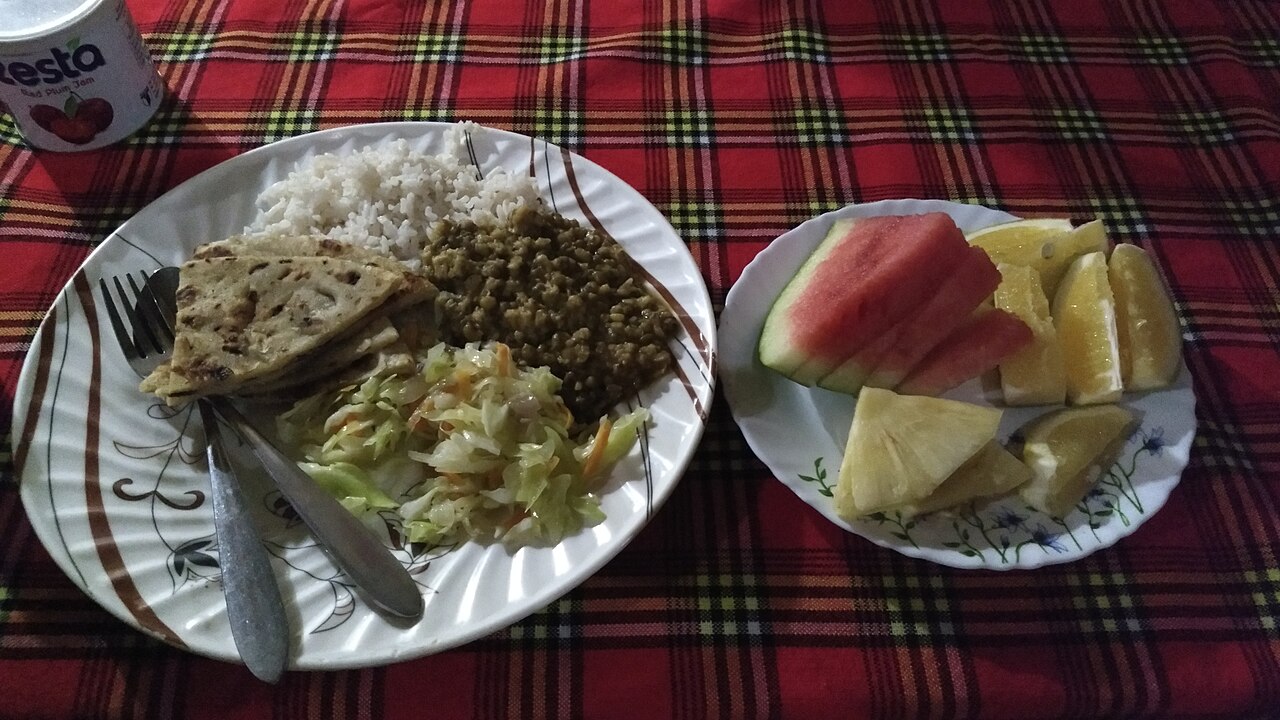
A real photograph taken in the Mara on April 20, 2019 records a meal containing chapati, rice, a green-gram dish and fruit salad. It illustrates another practical feature of safari dining: camp meals often combine local ingredients with foods familiar across East Africa and the wider Indian Ocean region.
Picture the place
At a safari camp, a meal is commonly served around a designated dining area rather than at an independent restaurant on the plains. Ugali is a firm, pale mound of cooked maize; kachumbari adds brightly colored chopped vegetables, while grilled meat provides a contrasting browned surface.
The easily missed detail
Accommodation location changes the dining arrangement. A camp inside the Mara Triangle has a different access relationship with the protected area from an establishment outside the gate. The conservancy’s published 6 a.m.–7 p.m. gate hours and daytime ticket validity make an impromptu trip out for dinner much less practical than arranging meals at the accommodation.
A practical rhythm
Breakfast — Safari camp: Eat before an early game drive, following the camp’s departure schedule.
Lunch — Organized dining stop: Return to the lodge or use a designated packed-meal arrangement rather than stopping beside wildlife.
Dinner — Kenyan specialties: Order nyama choma with ugali and kachumbari, or choose greens and a maize-based dish when available.
What could complicate the plan
Camp menus may be fixed, buffet-based or linked to accommodation packages; meals are not necessarily included in every booking. A guest staying outside the reserve must also account for gate restrictions when returning from an evening drive. Chapati contains wheat, while some Kenyan dishes include meat stock or dairy even when vegetables are prominent. No specific lodge is presented here as the best dining option without comparative evidence.
What to do next
explains why dining stops must fit the wildlife-viewing rules. provides the reserve access periods that affect breakfast departures and evening returns.
Sources
- Mara Conservancy, Camps and Lodges — accommodation locations and reserve management responsibilities.
- Mara Conservancy, Experience Mara Triangle — gate access and operating hours.
- Smithsonian Folklife Festival, Nyama Choma with Kachumbari and Ugali — Kenyan grilling tradition and accompaniments.
- Kibabii University, Kenyan Meals Guide — ingredients of ugali, sukuma wiki, githeri and pilau.
- Kenya National Tourism Service Portal, Cultural and Heritage Tourism — cultural diversity and Kenyan food heritage.