Maldives country guide Trip planning
How can I plan a memorable first trip to Maldives without rushing?
The short answer
Pick one atoll cluster and stay in it for a week or more, with at most two bases — because in a country of 1,190 islands scattered over 35,000 square miles of ocean, the transfers are the trip, and every change of island costs half a day.
The answer, with local context
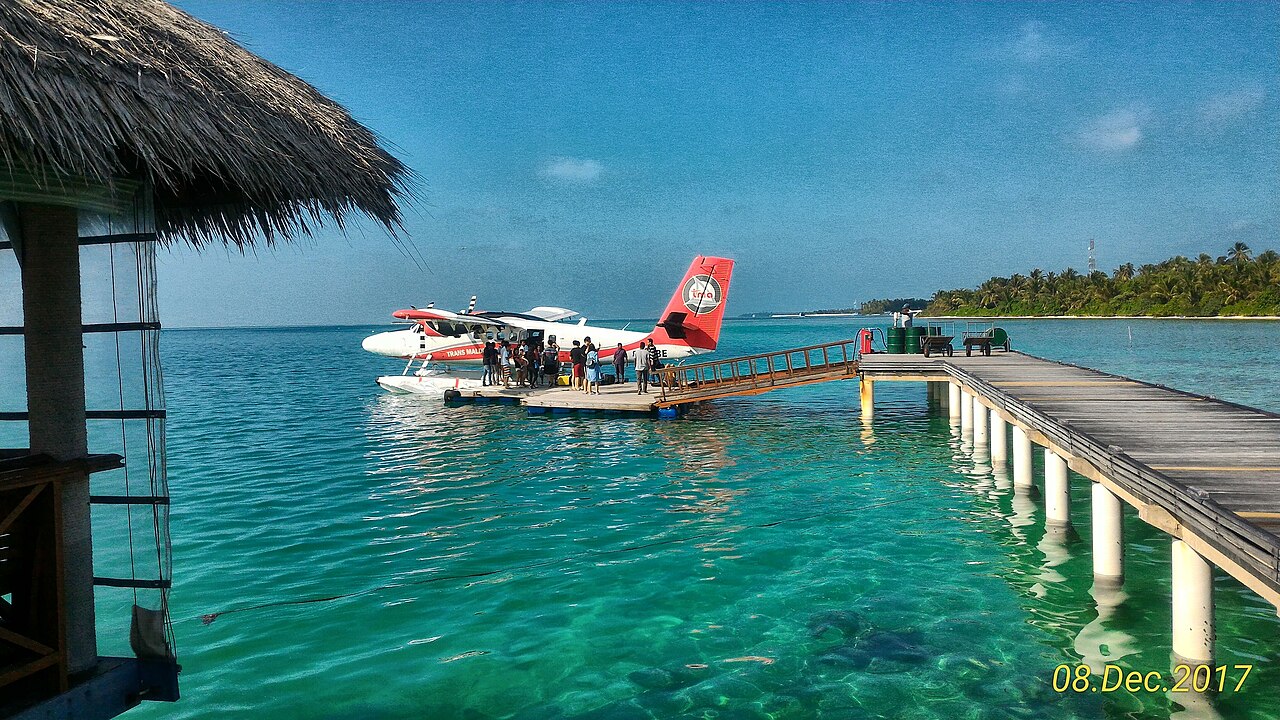
The planning geometry is set by the map. The Maldives strings 26 natural atolls in a double chain running 540 miles (870 km) north to south across the equator, with about 1,190 islands but only some 115 square miles (300 km²) of land; roughly 187 islands are inhabited, around 165 more are single resorts, and every international arrival funnels through Velana International Airport on Hulhulé, beside Malé. Entry is simple — a free 30-day visa on arrival, with the IMUGA Traveller Declaration completed online beforehand — but onward movement is the budget in both time and money: speedboats serve the near atolls, domestic flights the far ones, and seaplanes, which fly only in daylight, everything between. A late-evening international arrival therefore spends its first night in Malé or Hulhumalé whether the itinerary admits it or not, because no seaplane will leave until morning.
So the unhurried design is a choice, made once: which Maldives? A resort island delivers the lagoon, the house reef and the spa at the price of seeing one island perfectly. An inhabited island — possible only since the government permitted guesthouses on local islands in 2009 — delivers the society: cafés, mosques, football at dusk, at a fraction of the cost, with its own terms (a designated bikini beach for swimwear, modest dress in the village, no alcohol). A liveaboard dive boat delivers the channels and the far atolls as a moving week. The memorable first trip usually pairs two of these registers at most — say, five nights on a local island and three at a resort in the same atoll region — and refuses the third.
The money needs the same honesty as the map. Quoted room rates are not the bill: resorts add a 10% service charge and 17% Tourism GST, plus the Green Tax of US$12 per person per night (doubled from $6 on January 1, 2025, by the Maldives Inland Revenue Authority; small guesthouses on inhabited islands pay $6, and children under two are exempt), and the tax feeds the national Green Fund for climate work — fitting, in the world's lowest country, where almost no island rises more than 6.5 feet (2 m) above the sea. Public ferries run by MTCC connect the local islands for a few dollars but keep neither speed nor a Friday schedule — most routes pause for the holy day — so a local-island itinerary is built around the ferry timetable, not against it. Give the plan ten nights if you can, seven if you cannot; below five, spend them all in one place and let the reef come to you.
Picture the place
On a Dhigurah evening the island settles into its own order: fishing boats tied along the harbor wall, children cycling the sand streets between the palms, the call to prayer rolling over the rooftops, and at the island's long beach the last swimmers coming out of a lagoon that runs three miles down the coast — the Maldives at the pace it keeps for itself.
The easily missed detail
The seaplane's daylight rule silently designs thousands of itineraries. Because the seaplanes cannot fly after roughly 4 p.m., any international flight landing in the afternoon strands its resort passengers in the capital for a night — a fact brochures treat as a footnote and travelers discover at the arrivals hall. Book the long-haul flight that lands in the morning, and the "lost" first night becomes a Malé afternoon and an unhurried transfer, which is the cheapest luxury in the whole trip.
A practical rhythm
- Morning — Travel days start early and end at lunch: the morning seaplane or speedboat, checked in and settled by midday, with the first swim before the light goes — every transfer day budgeted as a half day, never a sightseeing day.
- Midday — Middays belong to the island you're on: the house reef at high sun, the village café, the shaded hour. The archipelago punishes itineraries that schedule across water at noon.
- Evening — Evenings are single-island by design: night fishing from a dhoni, a sandbank barbecue the resort or guesthouse runs, or the harbor front of a local island — the day's second act needs no boat at all.
What could complicate the plan
Weather still edits the best plan: in the southwest monsoon, speedboat transfers to exposed atolls can be rough or briefly suspended, and a departure-day storm is the standard argument for spending the last night within speedboat reach of the airport rather than a seaplane away. Ramadan moves through the local islands' year — cafés close by day, evenings come alive after iftar — while resort islands run unchanged, so the same dates describe two different trips. And the tax stack is real money on a long stay: a couple's fortnight at a resort carries $336 of Green Tax alone before GST and service charges, which is why the honest comparison between quotes is always the final, taxed total.
What to do next
Decide the register first — resort, local island, liveaboard, or one deliberate pair — then the atoll, then the season; book the morning-arriving flight, keep the last night near Malé, and let one island be enough.
Sources
- Maldives Immigration — the free 30-day visa on arrival and the IMUGA Traveller Declaration required before arrival
- Maldives Inland Revenue Authority (MIRA) — the Green Tax of US$12 per person per night at resorts and US$6 at small inhabited-island guesthouses from January 1, 2025 (children under two exempt), and Tourism GST at 17% from July 1, 2025
- Maldives Ministry of Tourism and Visit Maldives — the archipelago's 26 atolls and roughly 1,190 islands, the resort and inhabited island counts, and the 2009 opening of guesthouse tourism on inhabited islands; MTCC public ferry schedules and their Friday pause