Maldives country guide Places and experiences
What should a first-time traveler see in Maldives beyond the obvious highlights?
The short answer
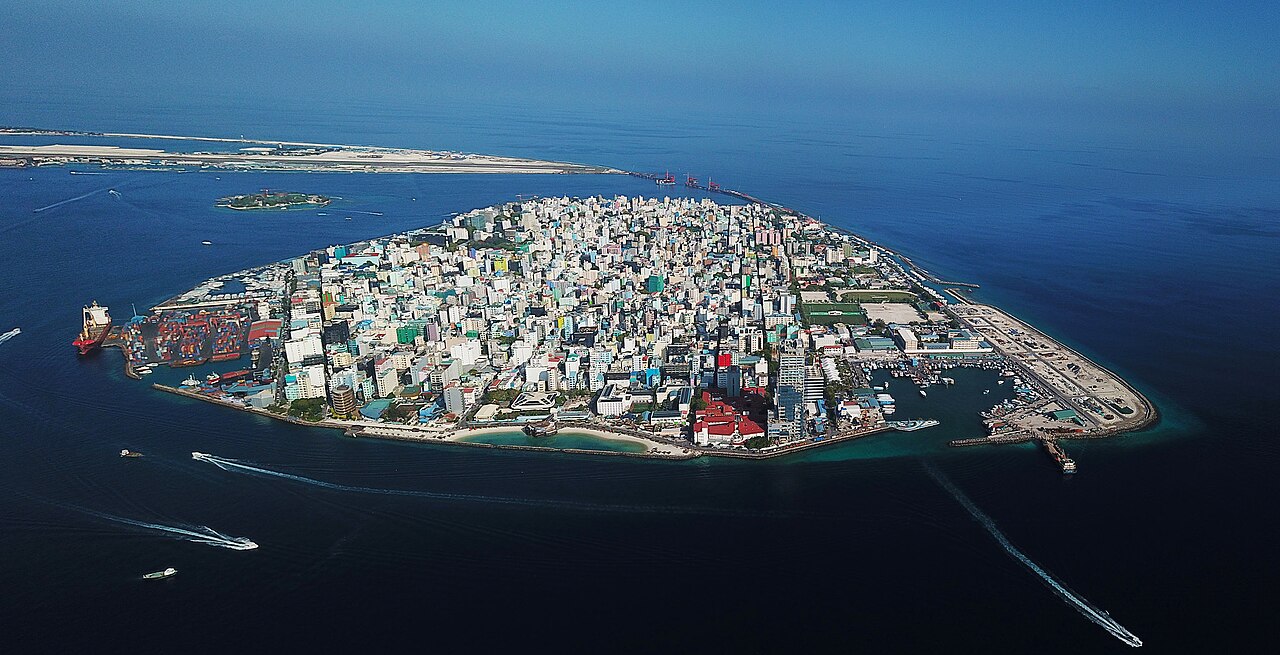
Malé itself — the coral-stone Friday Mosque and the fish market of one of the world's densest capitals — then the managed wild spectacles: Hanifaru Bay's manta aggregations in Baa Atoll, the year-round whale sharks of South Ari, and the lived-in Maldives of the guesthouse islands.
The answer, with local context
Start where almost nobody stays: Malé. The capital packs roughly a third of the country's half-million people onto an island of less than 0.8 square miles (2 km²) at North Malé Atoll's southern edge, and it holds the nation's history in a few walkable blocks. The Hukuru Miskiy, the Old Friday Mosque, was built in 1658 from interlocking coral stone carved with Quranic script so fine it sits on UNESCO's Tentative List for the Maldives; around it lie the carved coral headstones of sultans, and a short walk away the fish market receives the dhoni fleet's skipjack and yellowfin each afternoon. This is the Maldives that powers the resorts, and an afternoon in it recalibrates everything the seaplane window showed you.
The wildlife encounters beyond the resort house reef are the country's second layer, and they run on permits and seasons. Baa Atoll, designated a UNESCO Biosphere Reserve in June 2011 — the first in the Maldives, protecting some 250 coral species and more than 1,200 fish species across 75 islands — holds Hanifaru Bay, a small funnel-shaped inlet where southwest-monsoon tides trap plankton from June to November. It has been a Marine Protected Area since 2009; scuba has been banned inside since 2012, entry is snorkel-only with a licensed guide, sessions run about 45 minutes, and the bay caps visitors at around 80 people a day. The reward justifies the regulation: on a July day in 2019 the Manta Trust counted 116 individual reef mantas feeding in the bay at once. South Ari Atoll answers with permanence instead of spectacle — its Marine Protected Area, designated in 2009 along 26 miles (42 km) of reef off Maamigili and Dhigurah, is one of the few places on Earth where whale sharks are present every month, identified individually by the Maldives Whale Shark Research Programme from the spot patterns behind their gills; the code of conduct keeps swimmers 10 feet (3 m) from the body and 13 feet (4 m) from the tail. In the far south, the single-island atoll of Fuvahmulah adds the country's third signature: tiger sharks, present year-round off its deep-water shores, and Addu Atoll lies beyond the equator itself.
The third layer is social. Since 2009, when the government first permitted tourist guesthouses on inhabited islands, a parallel Maldives has grown up on local islands — Maafushi, Thulusdhoo with its surf breaks and designated bikini beach, Dhigurah under the whale shark reef — where the currency is rufiyaa, the cafés serve Maldivian food, and the reef outside the harbor is the same reef the resorts sell. A first trip that includes two nights on a local island sees more of the country than a fortnight of resort excursions.
Picture the place
In Hanifaru Bay the water is green soup and the surface keeps breaking: a wing tip, a slow barrel roll, a white belly turning through the plankton, until a dozen mantas are feeding in formation in water barely deeper than a house is tall, and the snorkelers hang motionless at the edge of the choreography, as the rules require.
The easily missed detail
The Maldives' most famous wildlife spectacle is a wet-season event. Hanifaru's mantas feed on the plankton the southwest monsoon pushes into the bay, which means the country's postcard season — the calm, clear northeast monsoon of the brochures — is precisely when the bay is empty. Travelers must choose which Maldives they are coming for: the water clarity of February or the animals of August, because the archipelago does not offer both in the same month.
A practical rhythm
- Morning — Mornings in Malé before the heat: the mosque and the museum quarter in the cool hours, when the city is at work and the carved coral is in raking light.
- Midday — Midday is the fish market's overture: watch the dhonis unload in the early afternoon, then take tea and short eats in a hotaa as the capital's own break arrives.
- Evening — Evenings on a local island: the harbor front at Thulusdhoo or Dhigurah, where the day's boats come in and the island's cafés — not the resort's — set the menu.
What could complicate the plan
Hanifaru's access is a system, not a ticket: boats anchor outside, visitors transfer in limited numbers under ranger supervision, and in peak weeks the day's 80 places can be spoken for by the resorts and guesthouses that hold the allocations — arrange it from Dharavandhoo or your resort well ahead, and accept a cancelled trip if the mantas simply do not come. Malé rewards modest dress and patience with its traffic; the mosque is a working place of worship whose interior visiting depends on permission and prayer times. And the far south — Fuvahmulah, Addu — is a domestic flight away from the capital's orbit, so the tiger sharks belong to a trip with days to spare, not a spare day.
What to do next
Build the trip in three registers: a Malé afternoon on arrival or departure, a wildlife base — Baa in the southwest monsoon or South Ari in any month — and at least two nights on an inhabited island, where the country stops performing and starts living.
Sources
- UNESCO — Baa Atoll Biosphere Reserve, designated June 2011 as the Maldives' first, with some 250 coral and 1,200 fish species; the Hukuru Miskiy (Old Friday Mosque, 1658) on the Maldives' Tentative List
- Maldives Environmental Protection Agency / Hanifaru Bay management — Marine Protected Area status since 2009, the scuba ban since 2012, licensed-guide snorkeling in roughly 45-minute sessions capped near 80 visitors a day
- Manta Trust and Maldives Whale Shark Research Programme — 116 reef mantas counted in Hanifaru Bay on a single day in July 2019; the South Ari Marine Protected Area (2009) and its year-round, individually catalogued whale sharks