Maldives country guide When to visit
When is the best time to visit Maldives for North Male Atoll?
The short answer
February — the driest month in the Maldives Meteorological Service's records for the capital's atoll, with about 1.5 inches (38 mm) of rain, calm northeast-monsoon seas for North Malé's speedboat transfers, and underwater visibility at its annual peak.
The answer, with local context
The Maldives Meteorological Service divides the year into two monsoons and two transitions, and its station at Hulhulé — the airport island in North Malé Atoll itself — gives the anchor atoll's numbers. February averages just 1.5 inches (38.1 mm) of rain across 3 rainy days, with a mean high of 86.5°F (30.7°C) and a low of 78.6°F (25.9°C); January, by contrast, still records 4.5 inches (114.2 mm). The northeast monsoon, Iruvai, runs formally from January to March, with December and April as the shoulders — and April is the atoll's hottest month, its mean high reaching 88.9°F (31.6°C), while November is its wettest at 9.1 inches (231.1 mm). Nationally the gradient matters too: the northern atolls average about 70 inches (1,779 mm) of rain a year against the south's 87 inches (2,218 mm), and North Malé, in the center-north, shares the drier end of the country's climate.
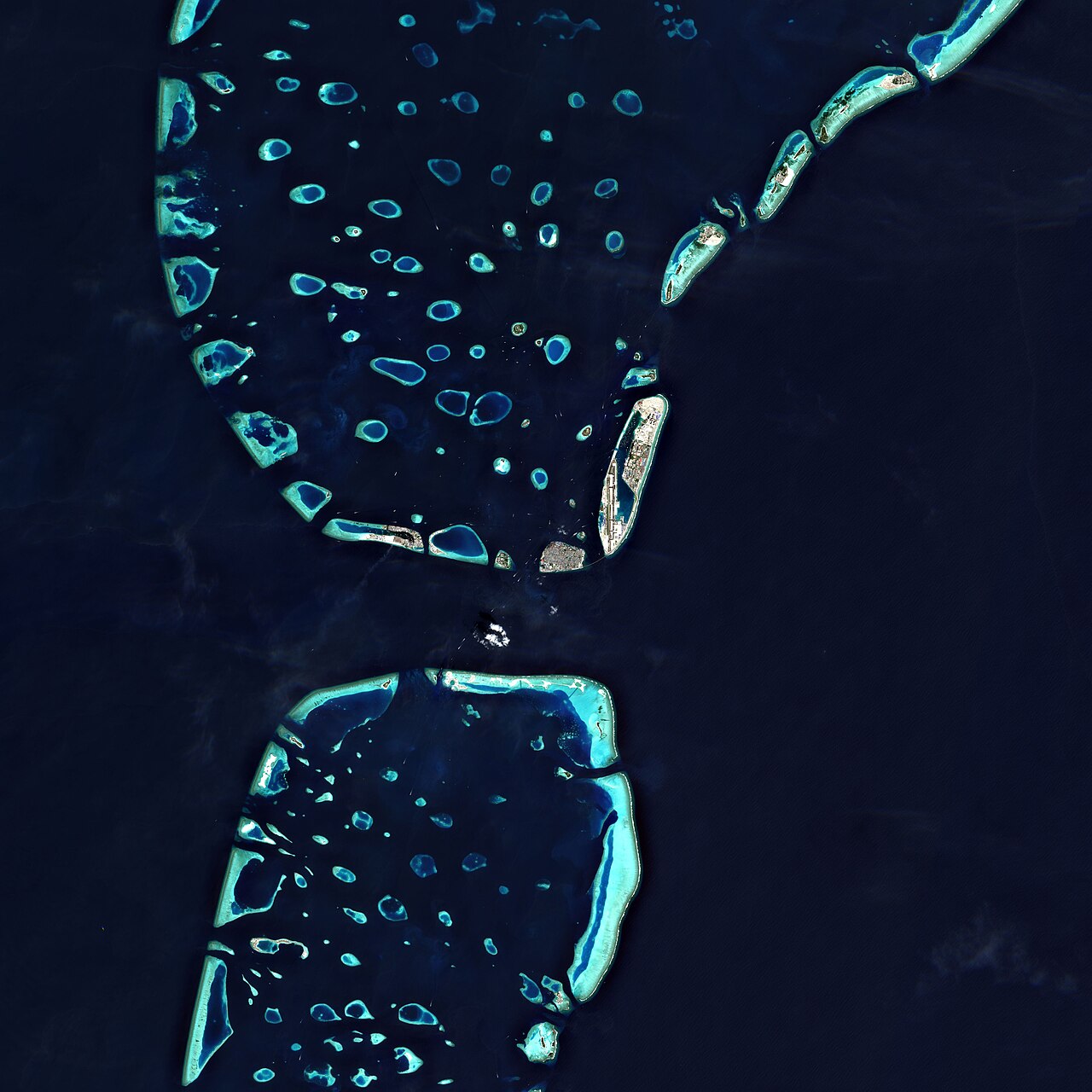
North Malé Atoll is the practical heart of Maldivian tourism: it holds the capital, the international airport and the densest ring of resorts, all reached by speedboat in 15 to 60 minutes rather than by seaplane — and February is when that geography performs best. The calm northeast-monsoon sea makes the transfers smooth, the channel diving off the atoll's eastern rim runs at visibility of 80 to 100 feet (25–30 m), and the house reefs and sandbank trips operate on schedule. The honest counterweight sits in the same atoll: Lankanfinolhu's Manta Point, North Malé's famous manta cleaning station, works on the opposite monsoon, filling with rays in the southwest season from roughly May to November when the plankton drifts east — the Manta Trust has identified close to 5,000 individual reef mantas across the Maldives, and a February diver trades the atoll's own manta season for its clearest water.
The surf calendar makes the same trade in reverse: the breaks off Thulusdhoo, in this atoll, fire on southwest-monsoon swells from about March to October. So February is the answer for the classic North Malé trip — resort or guesthouse island, diving, snorkeling, sandbanks, day trips to Malé — taken in the month when the weather statistics, the sea state and the water clarity all peak together, before April's heat and May's monsoon turn (the southwest monsoon reached the north on May 17 in 2024) rearrange the country.
Picture the place
From a speedboat leaving Malé in February the atoll reads like a diagram of itself: the dense white city shrinking behind, the lagoon shallows turning from navy to turquoise to glass-pale over the sandbanks, and the resort islands resolving one by one out of water so clear the reef edge is visible from the bow.
The easily missed detail
December, the most expensive month, is not the driest — around North Malé it is a transition month that can still deliver over 8 inches (200 mm) of rain, and in one recent year 4.3 inches (110 mm) fell on Malé in three hours just as the dry season began. The festive premium buys the calendar's most famous weeks, not its best weather; February, six weeks later, is statistically the surer island.
A practical rhythm
- Morning — February mornings are for the channels: the dive boats leave into a flat sea and the light is at its clearest for the eastern-rim reefs before any afternoon breeze.
- Midday — Midday is lagoon time at 86°F (31°C): the sandbank picnic trips and house-reef snorkels, when the sun is overhead and the shallows show their full color range.
- Evening — Evenings belong to the capital: the 15-minute crossing to Malé for the fish market's late-afternoon unload and the tea shops' short eats, back across a calm lagoon after dark.
What could complicate the plan
February's virtues are priced in: it is peak season, when North Malé's resorts charge their highest rates and the popular guesthouse islands — Maafushi, Thulusdhoo — fill with a different crowd entirely, so the month rewards early booking on both budgets. The dry season also thins the plankton that draws the big animals to this atoll's eastern side; travelers whose trip is about mantas should aim at the southwest monsoon instead and accept its rain. And "driest" is a relative term at the equator — February still averages three rainy days, and a tropical shower can close over the lagoon in minutes in any month of the year.
What to do next
Book February in North Malé, choose a speedboat island to keep the transfer under an hour, and split the stay between reef days in the clear water and one late afternoon in Malé itself.
Sources
- Maldives Meteorological Service, Hulhulé station long-term averages (published via the WMO World Weather Information Service) — February rainfall 1.5 inches (38.1 mm) on 3 rainy days, mean high 86.5°F (30.7°C); November the wettest month at 9.1 inches (231.1 mm); April the hottest at 88.9°F (31.6°C); the northeast monsoon from January to March with December and April transitional
- Maldives Meteorological Service regional climate summaries — annual rainfall of about 70 inches (1,779 mm) in the northern atolls, 77 inches (1,966 mm) centrally and 87 inches (2,218 mm) in the south; the southwest monsoon's 2024 onset reaching the north on May 17
- Manta Trust — close to 5,000 individual reef manta rays identified in Maldivian waters, and the monsoon-driven movement of mantas between atoll rims