Moldova country guide Trip planning
How can I plan a memorable first trip to Moldova without rushing?
The short answer
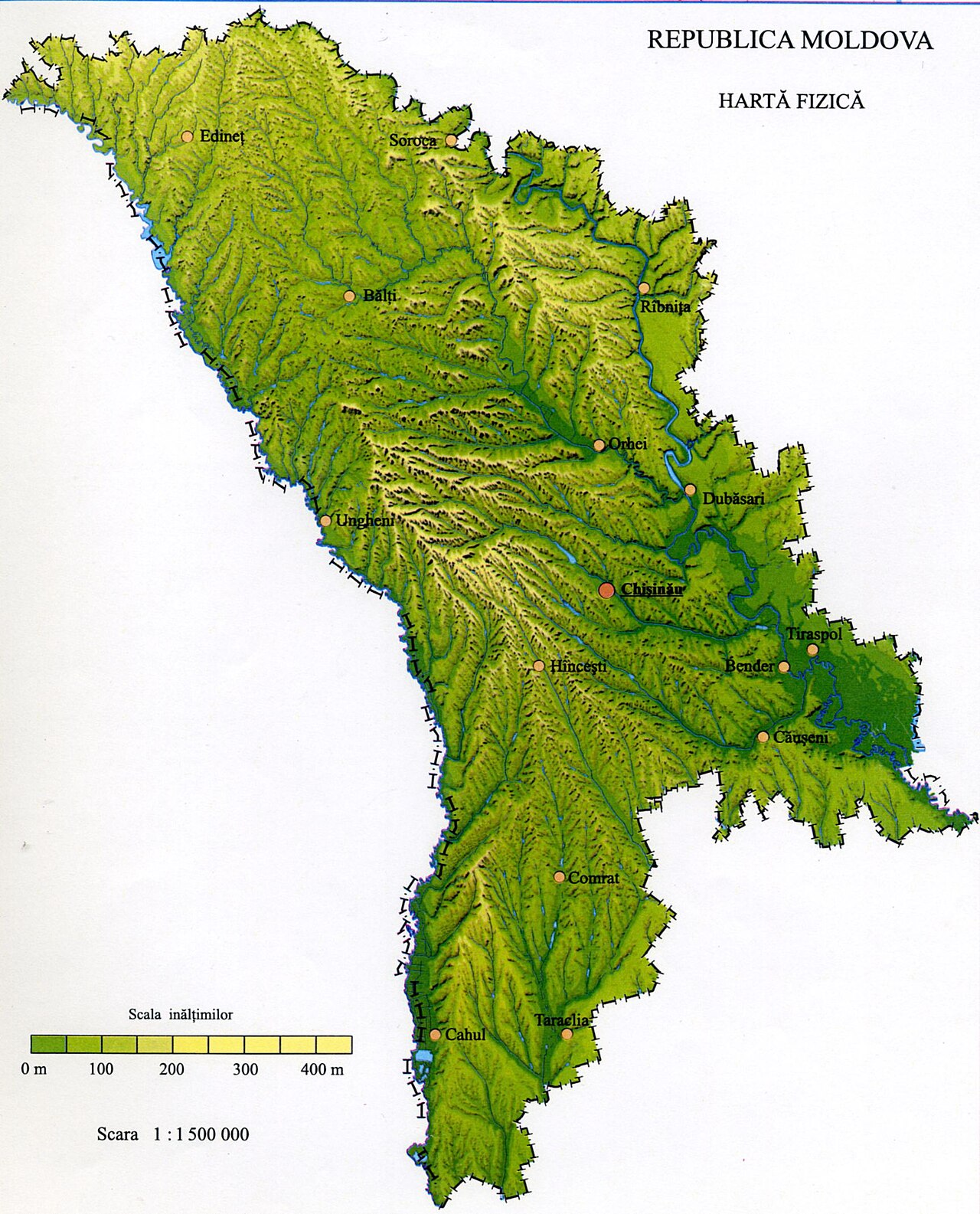
Base yourself in Chișinău for a week and treat Orheiul Vechi, the cellars and the cave monasteries as day trips — Orheiul Vechi is about 55 km north of the capital, and the country is small enough that almost everything worth seeing is a return drive.
The answer, with local context
The first planning decision is about Transnistria, and the State Department's Moldova travel advisory makes the terms clear. Issued 29 November 2024, it puts Moldova at Level 2, "Exercise increased caution while traveling to Moldova," because of the unresolved conflict between the breakaway region of Transnistria and the central government, and places Transnistria itself at Level 3, "Reconsider travel." If you do go, visitors must show identification to cross into Transnistria, travelers without a Moldovan government-issued ID need to present a passport, and passports or other identification may also be requested at checkpoints on roads entering and leaving the region. Photographing military sites or security personnel is prohibited and can cause problems with the authorities. Ukraine has closed its border crossings into Transnistria, so routes that once ran that way no longer exist.
With that settled, the itinerary is unusually compact. Orheiul Vechi sits about 55 km north of Chișinău and has been on Moldova's UNESCO Tentative List since the Ministry of Culture submitted it on 22 February 2017 under proposed criteria (ii) and (v). The Cricova and Mileștii Mici cellars have galleries running to hundreds of kilometers that are driven rather than walked, and Mileștii Mici was listed in the Guinness Book of Records in 2007 for the largest bottled wine collection in the world. The cave monasteries at Tipova, Japca, Butuceni and Saharna and the fortress at Soroca fill out the rest.
Timing is agricultural. FAO's country brief with a reference date of 14 July 2026 records winter cereals harvested from July into August, barley harvested August to September, and maize planted in May and harvested from October. National Wine Day has been held annually since 2002 on the first Saturday and Sunday of October.
Picture the place
Moldova is a country of low hills, river valleys and very open farmland, and the road north from Chișinău gives almost no warning before the Răut canyon opens. UNESCO's dossier describes a natural amphitheatre roughly 3,500 meters east to west and 1,500 meters north to south, reached through 2 natural passages about 80 meters and about 300 meters wide — which is why the site is invisible until you are inside it.
The easily missed detail
Moldova's wine geography is formally codified, and knowing the 3 names turns a cellar visit into something more specific. Three zone names carry legal weight here, and learning them turns a cellar visit into something more specific: Valul lui Traian, Codru and Ştefan Vodă, each a registered geographical indication over its own growing area, with a fourth registration, Divin, applying to brandy from anywhere in the country. All 4 gained EU protection on 18 October 2016. Asking which zone a bottle comes from works in Moldova because the zones are statutory boundaries rather than marketing regions.
A practical rhythm
- Days 1–2, Chișinău and the cellars — Cricova and Mileștii Mici are close to the capital and are driven through rather than toured on foot.
- Day 3, Orheiul Vechi — About 55 km north, and a full day rather than a stop: the property spans an amphitheatre some 3,500 meters across.
- Days 4–6, the north — Soroca's fortress and the Tipova, Japca and Saharna cave monasteries, each needing its own drive.
What could complicate the plan
Beyond the advisory levels, the economics shift fast enough to matter. FAO reports annual inflation falling from 7.9 percent in 2025 to 6.8 percent in 2026 on National Bank of Moldova figures, with retail wheat flour prices up to 5 percent above year-earlier levels as of May 2026, so budget estimates age quickly. The same brief records maize production at about 877,000 tonnes, nearly 30 percent below the 5-year average, after low rainfall and high temperatures in May and June 2026 — a dry late spring is a real possibility and affects rural road and trail conditions. And the cave monasteries are genuinely dispersed: Tipova, Japca and Saharna are three separate drives from Chișinău rather than a loop, which is the main reason a week here is a comfortable length and five days is not.
What to do next
The Moldova when-to-visit answer gives the full harvest and festival calendar, and the places-and-experiences answer covers the cave monasteries and fortresses this plan builds around.
Sources
- US Department of State, Moldova travel advisory — Level 2 and Transnistria Level 3, issue date, identification and photography rules, closed Ukrainian crossings
- UNESCO World Heritage Centre, Tentative List 6220 — submission date and submitting ministry, proposed criteria, amphitheatre and access-passage dimensions, cave count, 1904 church
- Ministry of Foreign Affairs and European Integration of the Republic of Moldova — distance to Orheiul Vechi, Cricova and Mileștii Mici galleries, 2007 Guinness listing, National Wine Day, named monasteries and fortresses
- FAO Global Information and Early Warning System, Republic of Moldova country brief, reference date 14 July 2026 — harvest and planting months, maize forecast, rainfall, inflation and flour prices
- State Agency on Intellectual Property of the Republic of Moldova (AGEPI), Ministry of Justice — the 3 wine geographical indications, Divin, EU protection date