Moldova country guide Food and drink
What local dishes should I try in Moldova, and where should I look for them?
The short answer
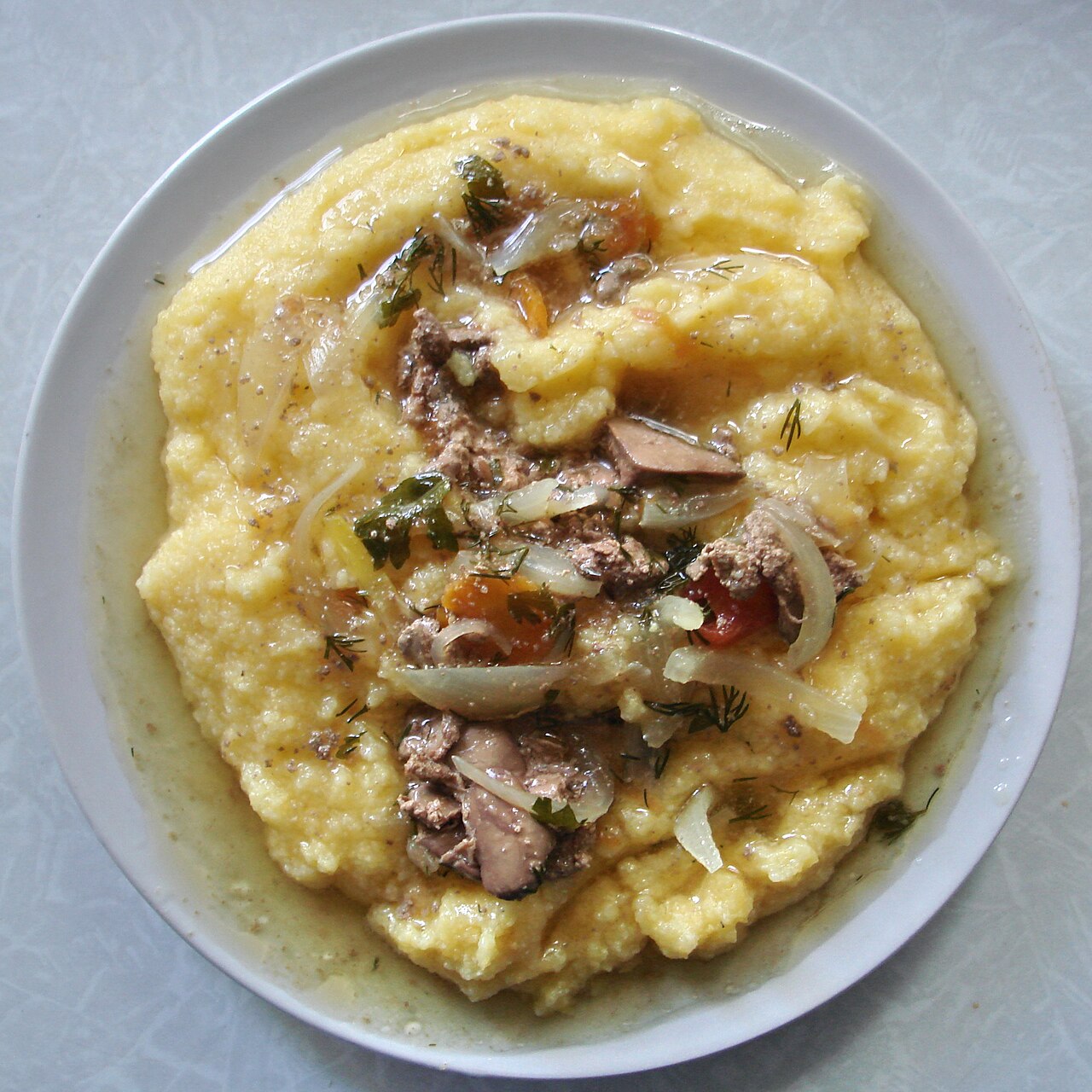
Mămăligă and sarmale, with wine from one of the 3 protected growing zones — Valul lui Traian, Codru and Ştefan Vodă have been protected in the EU as geographical indications since 18 October 2016, alongside Divin for old wine brandy made throughout Moldova.
The answer, with local context
Moldova's Ministry of Foreign Affairs and European Integration names mămăligă, a cornmeal porridge, and sarmale, stuffed cabbage or vine leaves, as the country's defining dishes, alongside a cuisine built heavily on vegetables. Both are directly tied to what the land produces, and FAO's figures make the link explicit: in its country brief dated 14 July 2026, maize production was forecast at about 877,000 tonnes, nearly 30 percent below the 5-year average, after low rainfall and high temperatures in May and June constrained development mainly in the central and southern regions. Wheat came in at about 1.5 million tonnes, nearly 10 percent above average, with total cereals around 2.6 million tonnes, 10 percent below. In a country whose national staple is made from maize, a maize shortfall of that size is a food story, not just an agricultural one.
Wine is the other half. The State Agency on Intellectual Property lists Valul lui Traian, Codru and Ştefan Vodă as geographical indications designating wine-growing zones, and Divin as a geographical indication for old wine brandy produced throughout Moldova — all protected in the EU as of 18 October 2016. Two appellations of origin, Ciumai and Românești, were previously protected in the EU. Two further products have been notified but are not yet protected: Apricot Brandy of Nimoreni and Rose Petal Jam of Călărași.
The cellars are the destination. The ministry describes the Cricova and Mileștii Mici underground cellars as famous, with galleries totalling hundreds of kilometers that visitors can drive through, and records that in 2007 Mileștii Mici was listed in the Guinness Book of Records for the largest bottled wine collection in the world. Moldovan wine is sold in more than 50 countries.
Picture the place
Mileștii Mici and Cricova are limestone quarries converted into cellars, so the galleries are road-width and the collection is shelved along them — which is why a visit is driven rather than walked. The stone holds a steady cool, which is what made the quarries worth converting in the first place.
The easily missed detail
Moldova's newest culinary-adjacent heritage credential is musical rather than edible, and it is shared. UNESCO inscribed "Cobza, traditional knowledge, skills and music" on the Representative List of the Intangible Cultural Heritage of Humanity in 2025, at the 20th session of the Intergovernmental Committee, under decision 20.COM 7.B.38, submitted jointly by Romania and the Republic of Moldova. The cobza is the instrument you are most likely to hear at a table where mămăligă and wine are being served, and as of 2025 it has an international designation of its own.
A practical rhythm
- Cellars first — Cricova and Mileștii Mici are the signature wine visits, and the galleries run for hundreds of kilometers, so they are a half-day each rather than a stop.
- Early October — National Wine Day has been held annually since 2002 on the first Saturday and Sunday of October.
- Village tables — Mămăligă and sarmale are home cooking, and the ministry notes guests are welcomed into homes, which is where the dishes are at their most characteristic.
What could complicate the plan
FAO reports national average retail wheat flour prices up to 5 percent above year-earlier levels as of May 2026, and annual inflation easing from 7.9 percent in 2025 to 6.8 percent in 2026 according to the National Bank of Moldova — so expect prices to move between now and your trip. Cereal exports for 2026/27 were forecast at about 1.2 million tonnes, roughly 15 percent below the 5-year average. On safety, the CDC's Yellow Book 2026 groups salads, uncooked vegetables and unpeeled fruit among its higher-risk items while treating vegetables rinsed in safe water before cooking as usually safe — a distinction worth carrying into a cuisine the Moldovan foreign ministry itself describes as built on vegetable dishes. The State Department's Moldova advisory of 29 November 2024 also keeps the country at Level 2 and Transnistria at Level 3, which rules out wine tourism on the Dniester left bank for most visitors.
What to do next
For dates, see the Moldova when-to-visit answer, which sets the September hinge between the grain and maize harvests against the October wine weekend; the places-and-experiences answer covers Saharna, Japca and Soroca.
Sources
- State Agency on Intellectual Property of the Republic of Moldova (AGEPI), Ministry of Justice — the 3 wine geographical indications, Divin, EU protection date, Ciumai and Românești, the 2 notified products
- Ministry of Foreign Affairs and European Integration of the Republic of Moldova — mămăligă and sarmale, Cricova and Mileștii Mici, 2007 Guinness listing, National Wine Day, export reach
- FAO Global Information and Early Warning System, Republic of Moldova country brief, reference date 14 July 2026 — maize, wheat and total cereal forecasts, rainfall effect, flour prices, inflation, export forecast
- UNESCO Intangible Cultural Heritage — Cobza inscription 2025, joint submission by Romania and the Republic of Moldova
- CDC Yellow Book 2026, Food and Water Precautions for Travelers — salad and raw-vegetable risk category, safe-water rinsing guidance
- US Department of State, Moldova travel advisory — Level 2 and Transnistria Level 3