Montenegro country guide Trip planning
How can I plan a memorable first trip to Montenegro without rushing?
The short answer
Plan 10 days in 3 bases — Kotor for the bay, Cetinje or Virpazar for the center, Žabljak for the north — and travel the country in one line, south-west to north-east, because Montenegro's 13,812 km² are compact on paper and slow on mountain roads.
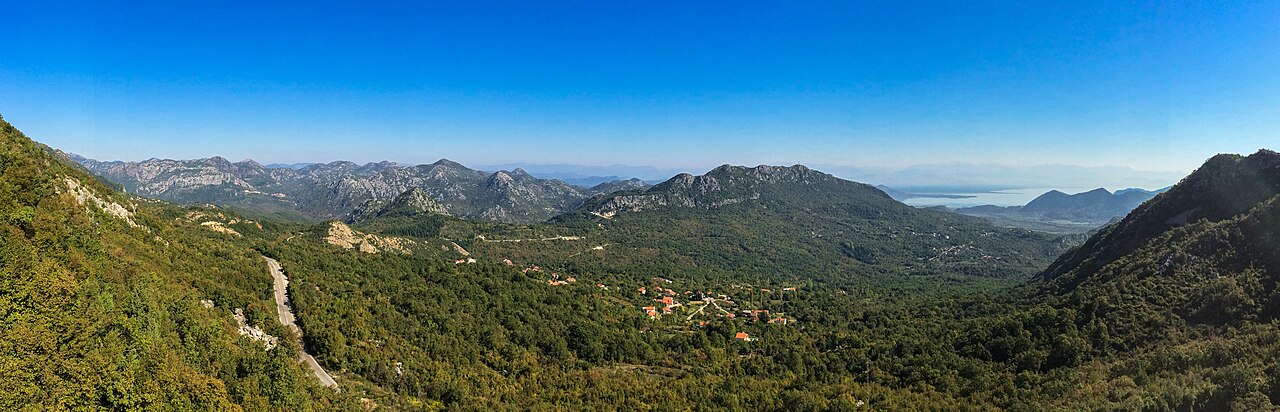
The answer, with local context
The country's shape dictates the method. Montenegro compresses a fjord-like bay, a riviera, the Balkans' largest lake and a high Dinaric interior into a territory of 623,633 people (2023 census), but its roads belong to the terrain: Podgorica to Kotor is about 90 km and up to 2 hours with the coastal traffic, Kotor to Žabljak about 180 km and 3.5–4 hours of mountain driving, Podgorica to Žabljak about 125 km and around 3 hours. So base 1 is the bay: 3 nights in Kotor (or Perast for quiet) cover the walled town and its 4.5 km of fortifications, the Perast islands, one riviera day in Budva, and the Lovćen road if the weather is kind. Base 2 is the center, 2 nights split between Cetinje — the historical capital, 35 minutes from the coast by the mountain road — and Virpazar on Lake Skadar, for the mausoleum climb (461 steps), the National Museum palaces and a pelican boat on the lake. Base 3 is the north: 3 nights in Žabljak for Durmitor's Black Lake and the Tara bridge, with Biogradska Gora's rainforest and Kolašin as the eastward exit. 2 spare nights flex where the trip surprises you.
The entry and money mechanics are simple but specific. The U.S. Department of State confirms no visa is needed for stays up to 90 days within any 180-day period, passports need only be valid at entry, and the stay must be registered within 24 hours of arrival — hotels and registered apartments file it; if you stay with friends or in an informal rental, verify it yourself at the local tourist organization. The currency is the euro (used unilaterally; Montenegro is not an EU or eurozone member), cash is essential in the north, and the 2 international airports divide the country neatly: Tivat, about 8 km from Kotor, for the coast, and Podgorica for the center and north — with Dubrovnik, just across the Croatian border, as a third option whose border crossing eats the convenience. The 1 piece of infrastructure that changed the interior is the motorway's first section, Podgorica (Smokovac) to Mateševo (41 km), opened in July 2022, which cut the Kolašin and Biogradska Gora run decisively; the Belgrade–Bar railway, running through Podgorica, Kolašin and the Morača canyon, is the scenic alternative for the eastern leg.
The unhurried texture is the point. Montenegro rewards the traveler who treats transfers as visits: the Kotor–Cetinje road (25 hairpins above the bay, through Njeguši, where the pršut lunch is) is a half-day, not a commute; the Skadar shore road to Rijeka Crnojevića is a string of viewpoints and wine villages; the Tara canyon road is the attraction it passes through. Sundays in the north are quiet, village households cook on arrangement, and the country's scale means a weather day is absorbed by swapping the mountain and museum days rather than by losing either. 10 days, 3 bases, 1 direction of travel — the formula leaves with the feeling of having seen a whole country, which, at this size, you actually have.
Picture the place
The old Kotor–Cetinje road at the 20th hairpin: the whole Bay of Kotor laid out below like a map of itself, a Njeguši smokehouse at the roadside, and Lovćen's grey summit waiting above the pass.
The easily missed detail
Arrival airport choice is an itinerary decision in disguise: landing at Tivat puts you 8 km from Kotor but a mountain range away from the north, while Podgorica sits in the country's middle and serves every base — travelers flying into Tivat and out of Podgorica (or the reverse) avoid backtracking the coast road entirely. The second sleeper is the registration receipt: keep the confirmation your host files (or the tourist-organization slip), because departure checks do happen and the paperwork is the proof, not the promise.
A practical rhythm
- 3 bases, 10 days — Kotor 3, the center 2, Žabljak 3, plus 2 flex nights where the trip asks for them
- Transfers as touring days — The Njeguši road, the Skadar shore and the Tara canyon driven slowly, with the stops planned
- Open-jaw flights — In at Tivat, out at Podgorica (or reverse), so the route never doubles back
What could complicate the plan
The coast road is the country's bottleneck: in July and August the Tivat–Budva–Kotor corridor can take twice its mapped time, and a cruise-ship day in Kotor fills the old town by mid-morning — the plan survives by keeping summer transfers early and the Kotor sightseeing at the day's edges. Mountain weather writes the northern clause: snow closes Durmitor's high routes outside June–September, the winter-equipment rules apply on northern roads in season, and the Morača and Tara canyon roads demand daylight driving. Finally, cash and coverage: card machines and mobile signal both thin out in Prokletije and the Durmitor villages, and park entry fees are paid per park — carry euros in small notes for the north.
What to do next
Draw the single line on the map — Kotor, Cetinje–Skadar, Žabljak, Biogradska — book the 3 bases, and hand the registration question to your first host before you fly.
Sources
- U.S. Department of State, Montenegro travel information — 90 days visa-free in any 180-day period, passport valid at entry, registration within 24 hours
- MONSTAT, 2023 census and national statistics — 623,633 residents, 13,812 km²
- Monteput / Government of Montenegro — the Smokovac–Mateševo motorway section (41 km), opened July 2022
- Public Enterprise National Parks of Montenegro — per-park entry arrangements across the 5 national parks