Montenegro country guide When to visit
When is the best time to visit Montenegro for Kotor Bay?
The short answer
September — the Adriatic is still near 75°F (24°C), the July–August cruise-ship peak has left Kotor's walls, and the same month opens cool hiking in Durmitor and the grape harvest in the Crmnica vineyards: the one window when coast, bay and mountains all work at once.
The answer, with local context
Montenegro is 3 climates stacked inside 13,812 km², and the national calendar has to satisfy all of them: a Mediterranean coast where the swimming season runs from May to October, a central belt around Podgorica and Lake Skadar that bakes through summer (the capital's July and August afternoons regularly pass 95°F / 35°C), and a Dinaric north — Durmitor, Biogradska Gora, Prokletije — where the hiking season is effectively June to September and snow closes high trails outside it. September is the hinge. The sea holds its summer warmth, the capital's furnace breaks, the mountain paths are at their driest and most stable, and the country's 2 great seasonal spectacles overlap: the Vranac grape harvest around Lake Skadar and the autumn bird movement over the lake itself, a national park since 1983 and a Ramsar wetland since December 13, 1995. Entry mechanics favour any month equally — the U.S. Department of State confirms that U.S. citizens need no visa for stays of up to 90 days within any 180-day period, with registration of the stay required within 24 hours of arrival — so the choice is purely about weather, water and crowds.
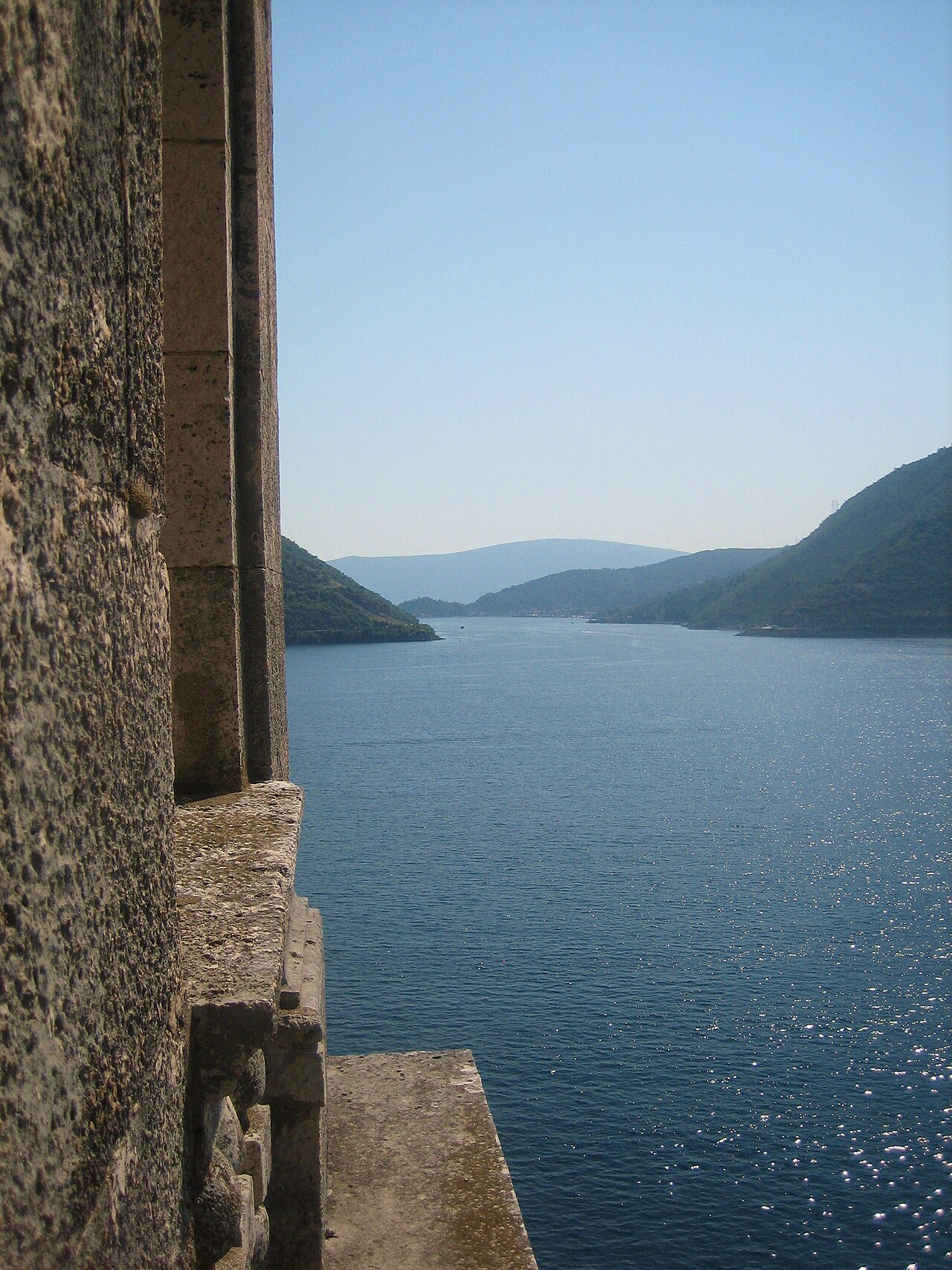
Now the anchor. The Bay of Kotor is a drowned river valley of interlocking basins — UNESCO inscribed the Natural and Culturo-Historical Region of Kotor in 1979, a protected landscape of 14,600 hectares that takes in Kotor, Perast and Risan — and its beauty is hostage to its own popularity in high summer, when cruise ships berth beneath the walls and the old town's lanes fill by 10 a.m. In September the ships thin out, the light drops lower on the limestone, and the bay's rituals become available again: the climb up Kotor's 4.5 km of fortifications and roughly 1,350 steps to the fortress of St. John in air you can breathe, the boat out to Our Lady of the Rocks off Perast (the church on its artificial island dates to 1632), and evening in the old town after the day boats leave. One warning belongs in the same paragraph: the hills above this bay, at Crkvice, record around 5,000 mm of rain a year, among the highest totals measured in Europe — the bay is wettest from November to March, which is precisely the season September lets you dodge.
The counter-candidates each win a constituency. Late May and June give the longest days, the mountains at their greenest and a warm-enough sea, and suit a hiking-first trip. July and August are the beach season proper — and the country's most crowded, hottest and most expensive weeks, with Podgorica unliveable at midday and Kotor overrun. Winter is a specialist product: skiing at Kolašin and Žabljak, empty old towns, and a coast where the bora wind and that famous rainfall take turns. For the traveler this question describes — the country, with Kotor Bay as its jewel — September stands.
Picture the place
Kotor at 7 a.m. in mid-September: the bay glass-flat under Mount Vrmac, fishing boats crossing to Perast, the walls glowing amber above a town whose cafés are setting out chairs for locals again.
The easily missed detail
Montenegro's September is really 2 Septembers. The coast and bay stay summery into October, but the north turns early: nights in Žabljak, at 1,456 m the country's highest town, can drop near freezing by month's end, and the season's first snow can dust Durmitor's passes while swimmers are still in the water at Budva. A September itinerary that ends in the mountains should pack for autumn, not for the beach it started on. The second missed fact is maritime: the bay's calm is a morning phenomenon — the afternoon maestral wind ruffles the outer basins, so swims, kayak trips and the Perast boat ride all belong before lunch.
A practical rhythm
- Bay first, mountains second — Kotor and the coast in the trip's warm first week, Durmitor held for the cooler, clearer days after
- Walls before breakfast — The fortress climb done by 9 a.m., when the light is on the bay and the steps are empty
- Harvest evenings — September nights given to the Crmnica and Ćemovo vineyards' Vranac, the season's new wine country
What could complicate the plan
The registration rule is the classic trap: the U.S. State Department is explicit that visitors must register their stay within 24 hours of arrival (hotels and licensed hosts do it for you; anyone in a private apartment or unregistered rental must check it was done), and unregistered stays can draw fines and trouble at departure. Money needs a sentence too: Montenegro uses the euro — adopted unilaterally, since the country is an EU candidate, not a member — and card acceptance thins sharply in the mountain north, so cash carries the Durmitor leg. September weather is a shoulder, not a guarantee: the bora can cancel bay boats for a day, and the first Atlantic fronts can end the mountain season a week early in a wet year.
What to do next
Book a September window of 9–12 days, put the Kotor base first, and confirm your host handles the 24-hour registration before you arrive.
Sources
- U.S. Department of State, Montenegro travel information — no visa for U.S. citizens up to 90 days in any 180-day period; mandatory registration within 24 hours of arrival
- UNESCO World Heritage Centre, Montenegro country page — 4 inscribed properties; the Kotor region (1979) covering 14,600 hectares
- Ramsar Sites Information Service — Skadarsko Jezero, designated December 13, 1995 (site no. 784)
- MONSTAT, 2023 census — 623,633 residents; national area 13,812 km²