North Macedonia country guide Trip planning
How can I plan a memorable first trip to North Macedonia without rushing?
The short answer
Give it 9–10 days in 3 bases — Skopje, Ohrid and a southern or mountain stop (Bitola or Mavrovo) — and move in a loop, because at 25,713 km² the country is small enough to cross in a day and interesting enough that crossing it in a day is the mistake.
The answer, with local context
The distances first, since they set the tempo. Skopje to Ohrid is about 170 km and 2.5–3 hours by the current road through Tetovo, Gostivar and Kičevo (the long-promised motorway is built in sections and finished in none — plan on the mountain road, and treat it as scenery, not delay). Skopje to Bitola is about 170 km and close to 2 hours, mostly motorway; Skopje to Tetovo 43 km; Ohrid down its own shore to the St. Naum monastery 29 km. So the loop builds itself: 2–3 nights in Skopje (the Old Bazaar, the Kale fortress, the Mother Teresa Memorial House — she was born in Skopje in 1910 — and a half-day at Matka Canyon, 14 km out), then southwest to Ohrid for 3–4 nights (the old town and lake, Galičica's pass to Prespa, St. Naum by boat), then east through Bitola and Pelister or up through the Tikveš wine country for 2 nights, and back to the capital. Mavrovo, with Korab (2,764 m) above it, swaps in for Bitola on a hiking trip; Kratovo and Kokino make the eastern variant.
Entry is short paperwork, precisely specified. The U.S. Department of State confirms: no visa for tourist stays under 90 days within a 6-month period; passport valid at least 3 months beyond departure; travel medical insurance must be presented on entry; and visitors register with the police within 48 hours of arrival — hotels file it for you, private apartments are your errand. The currency is the denar, pegged to the euro for 2 decades, cards work in the cities and thin out in the mountains; the 2021 census counted 1,836,713 residents, and this is still one of Europe's most affordable capitals-and-lakes circuits — the budget stretches to the good konoba, the private driver for Kokino day, and the lakeside room with the balcony. 2 airports serve the design: Skopje International for the loop, and Ohrid St. Paul the Apostle, with seasonal European flights, for an open-jaw exit that saves the return drive.
The unhurried texture is cultural as much as geographic. This is a country of long coffees (the café sitting is a civic institution on Širok Sokak and Skopje's Debar Maalo), of dinners that start at 8 and end when they end, of village guesthouses in Mavrovo and the Prespa shore where the host's rakija and the day's beans are the evening programme. Build the slack in deliberately: 1 unplanned day in Ohrid absorbs the boat that weather cancelled, the church key-holder who appears after lunch, and the second morning at Kaneo that the first morning makes necessary. Rush is the only real risk in a country this size — the itinerary above is the antidote, and it still leaves the Šar ridges and Kratovo's crater for the return trip the first one tends to cause.
Picture the place
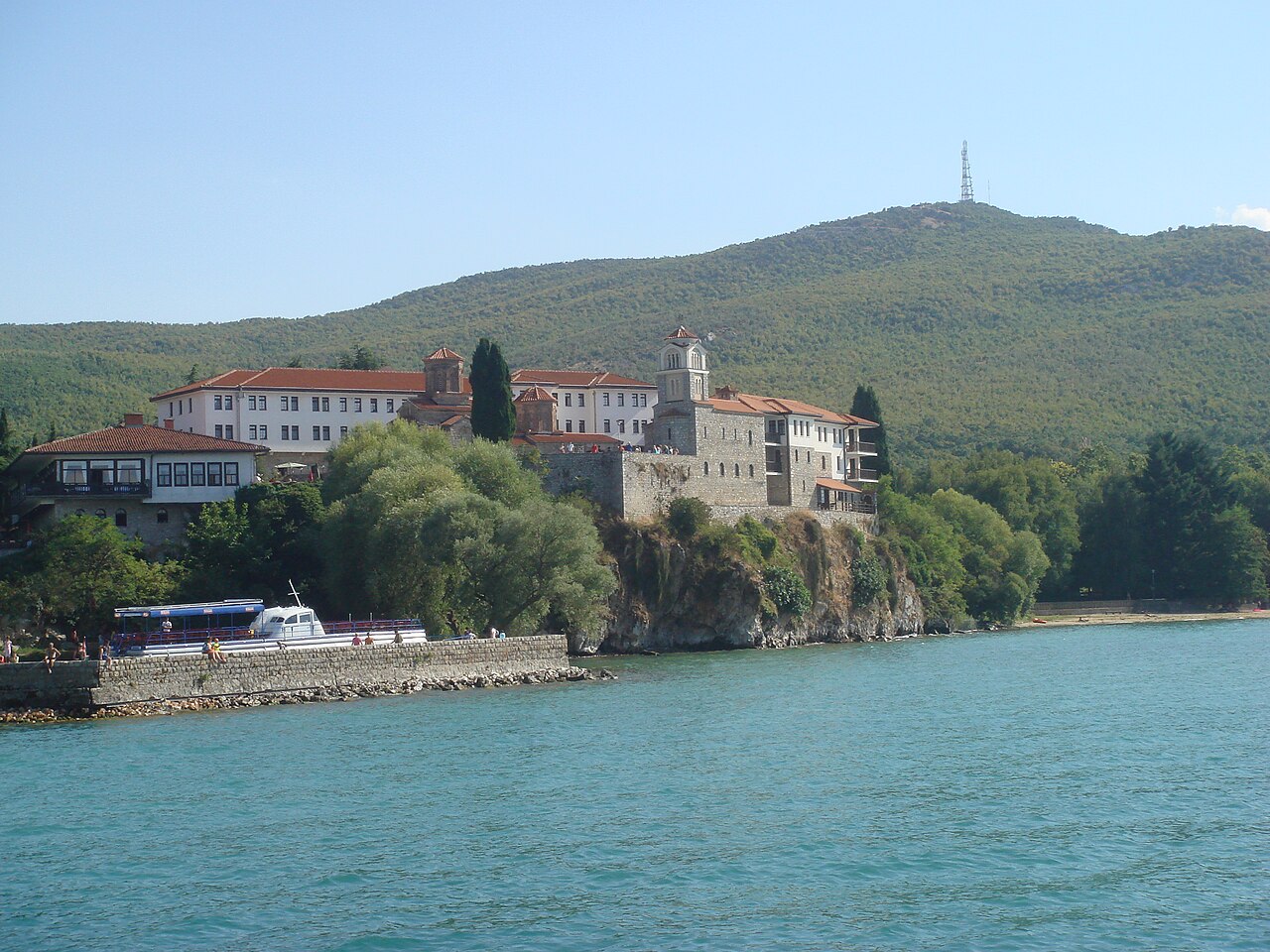
Evening on Ohrid's quay with nothing scheduled: fishing boats coming in past the old town's lit walls, a café rakija going amber in the glass, and Galičica's silhouette holding the last light over the water.
The easily missed detail
The open-jaw exit is the planner's gift here: Ohrid's airport, though small and seasonal, breaks the loop's only backtrack — flying out of Ohrid after the lakes means the trip ends at the water instead of on the Kičevo road. The second detail is the 48-hour registration's paper trail: keep the hotel's registration slip with your passport until departure; in private stays, the police-station visit is quick but only you can make it, and border officers can ask for proof on exit.
A practical rhythm
- Loop, don't hub — Skopje → Ohrid → Bitola/Tikveš → Skopje, each base earning 2–4 nights
- 1 anchor per day — A canyon, a monastery, a wine town: the country's pleasures are half-day sized, and 2 anchors crowd them
- A slack day at the lake — Held in Ohrid for weather, boats and the second look at everything
What could complicate the plan
The Skopje–Ohrid road is the itinerary's hinge and its weakness: a single mountain route through Kičevo, busy on summer weekends when the whole capital drives to the lake, and slow behind trucks — schedule the transfer on a weekday morning, never on a Friday afternoon in July. The border rules reward precision: overstaying the 90 days draws fines and re-entry bans (the Border Police enforce it strictly, per the U.S. State Department), and the insurance presentation is a real checkpoint habit, not boilerplate. Ohrid in late July and August compresses hard — the Summer Festival, the diaspora and Ilinden (August 2) stack into the same weeks — so the unhurried version of this trip is a June or September trip, or an August trip booked very early. Mountain weather, finally, can close the Galičica pass road and the high trails on a day's notice in the shoulder months.
What to do next
Sketch the loop, book Skopje and Ohrid first, carry printed insurance proof, and leave the last Ohrid day deliberately empty.
Sources
- U.S. Department of State, North Macedonia travel information — 90 days visa-free within 6 months; passport 3 months beyond departure; insurance on entry; 48-hour police registration; strict overstay enforcement
- State Statistical Office, 2021 census — 1,836,713 residents; national area 25,713 km²
- Roads of North Macedonia (JPDP) / airport operators — the Skopje–Ohrid and Skopje–Bitola corridors and Ohrid St. Paul the Apostle Airport's seasonal network
- National Bank of North Macedonia — the denar's long-standing euro peg