North Macedonia country guide Places and experiences
What should a first-time traveler see in North Macedonia beyond the obvious highlights?
The short answer
The canyon, the observatory and the second cities: Matka Canyon at Skopje's edge, Bronze Age Kokino, Roman Stobi and Heraclea, the high towns of Kruševo and Bitola, and 3 of the 4 national parks — Mavrovo, Pelister and the Šar Mountains — that most visitors never reach.
The answer, with local context
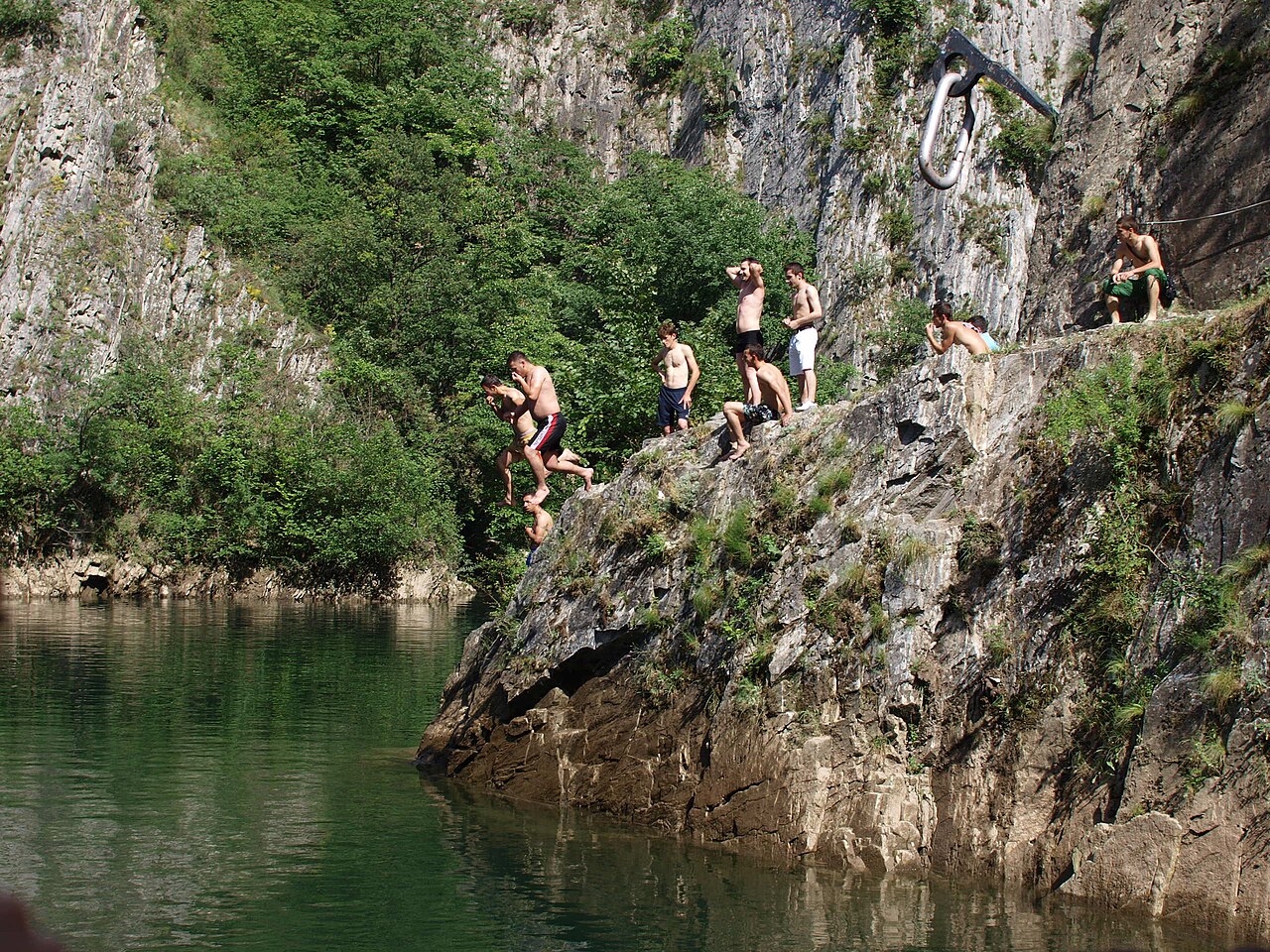
Begin 14 km from the capital's center, where the Treska River has cut Matka Canyon — a protected area of about 5,000 hectares holding medieval monasteries (St. Andrew's, founded 1389, among them), a reservoir lake made in 1938, and the Vrelo cave system, among the world's deepest underwater caves, explored beyond 200 m of depth. Matka is Skopje's weekend lung and the easiest great sight in the country. The deep past lies the other way: at Kokino, near Kumanovo, a Bronze Age archaeoastronomical observatory of about 1800 BC tracks solstices and equinoxes from a volcanic hilltop — it sits on UNESCO's tentative list, as do the stone towers of Markovi Kuli above Prilep and the 1191 frescoes of St. George at Kurbinovo above Lake Prespa. At Stobi, astride the old road between Skopje and Thessaloniki, a Roman and early Christian city keeps its theater, basilicas and mosaics beside the motorway that replaced its highway — the country's best archaeological site after Heraclea.
The second cities carry the modern story. Bitola, the city of consuls, holds Heraclea Lyncestis (founded by Philip II in the 4th century BC, its bishop's palace mosaics among the Balkans' finest) and the café promenade of Širok Sokak; it was here that the Manaki brothers shot the first film footage in the Balkans in 1905. Kruševo, at 1,350 m commonly cited as the highest town in the Balkans, was the capital of the 10-day Kruševo Republic of the 1903 Ilinden Uprising, and keeps the Mechkin Kamen memorial and the Makedonium monument above streets of Vlach merchant houses. Prespa, the quieter lake, adds Golem Grad — the island of medieval churches, pelicans and snakes in a nature reserve — and Kurbinovo's angels on the shore road.
The parks are the country's skeleton. Mavrovo, the largest, holds Mount Korab (2,764 m, the country's highest peak) and the Dlaboka Reka beech forest that UNESCO added to the primeval beech forests property in 2021 — North Macedonia's second World Heritage inscription; its village of Galičnik stages the Galičnik Wedding each July, a costumed re-enactment of the old migrant weddings around Petrovden (July 12). Pelister, proclaimed in 1948 — the country's first national park — protects the molika pine (Pinus peuce, a Balkan endemic relict) and the 2 glacial lakes called Pelister's Eyes above Bitola. Šar Mountains, the newest park (2021), runs along the Kosovo border above Tetovo, and Galičica, between the 2 great lakes, gives the drive of drives: the pass road from Ohrid to Prespa with both lakes in a single frame. Add Kratovo, a town built into a volcanic crater and watched over by the Kuklica stone dolls, and Vevčani's springs and January carnival in the hills above Struga, and the beyond-Ohrid country is a full second itinerary hiding inside the first.
Picture the place
Matka at first light, before the kayaks: the reservoir green and motionless between limestone walls, a monastery bell from St. Andrew's, and mist standing in the canyon mouth like a held breath.
The easily missed detail
Galičica's 2-lakes view is direction-dependent: the famous frame — Ohrid on one side, Prespa on the other — exists only from the pass's high saddle on a clear morning, and haze from either lake erases it by midday in summer; go early or accept 1 lake. The second sleeper is Stobi's position: it sits directly on the Skopje–Thessaloniki motorway corridor, so the country's grandest Roman site is a 1-hour stop on a driving day, not a destination requiring its own expedition — and almost every tour bus still drives past it.
A practical rhythm
- Matka on arrival day — The canyon taken as Skopje's half-day opener, by kayak or the monastery path
- A south loop, not day trips — Bitola, Pelister and Prespa strung into 2–3 nights instead of returns to the capital
- 1 mountain festival if the dates meet — Galičnik Wedding (July) or Vevčani Carnival (January) as the trip's fixed point
What could complicate the plan
The sites run on Balkan logistics: Kokino and Kuklica are signed but remote, with minimal facilities and no public transport worth the name — a car or driver is the real admission ticket. Park infrastructure is honest but thin (Mavrovo's trails are waymarked in patches; Pelister's mountain hut opens seasonally), and winter closes the high country entirely — Korab and the Šar ridges are June-to-October undertakings for anyone without alpine kit. Religious sites ask the usual dress respect, and several fresco churches (Kurbinovo included) keep irregular hours or a key-holder system through the village — the visit is arranged, not assumed. Finally, the Galičica park road charges entry and closes in winter weather, which decides the Ohrid–Prespa crossing for you in the cold months.
What to do next
Add 3 nights beyond Skopje and Ohrid — Bitola for the south, Mavrovo or Kratovo for the interior — and let Galičica's pass road join the lakes.
Sources
- UNESCO World Heritage Centre — the primeval beech forests extension (2021) covering Mavrovo's Dlaboka Reka; North Macedonia's tentative list (Kokino, Markovi Kuli, Kurbinovo, Slatinski Izvor)
- Ministry of Environment / national parks administrations — the 4 national parks (Pelister 1948; Mavrovo; Galičica; Šar Mountains 2021) and Matka's protected status
- Institute for Protection of Cultural Heritage — Stobi, Heraclea Lyncestis and the Kokino observatory
- National Tourism Agency (macedonia-timeless.com) — Kruševo (1,350 m), the Galičnik Wedding and Vevčani Carnival traditions