North Macedonia country guide Food and drink
What local dishes should I try in North Macedonia, and where should I look for them?
The short answer
Tavče gravče from Tetovo beans, ajvar in its autumn season, burek for breakfast, pastrmajlija in Štip, and Tikveš Vranec with all of it — a bean, pepper and vineyard cuisine eaten in Skopje's Old Bazaar, kafanas, village konobas and the wine cellars of Kavadarci.
The answer, with local context
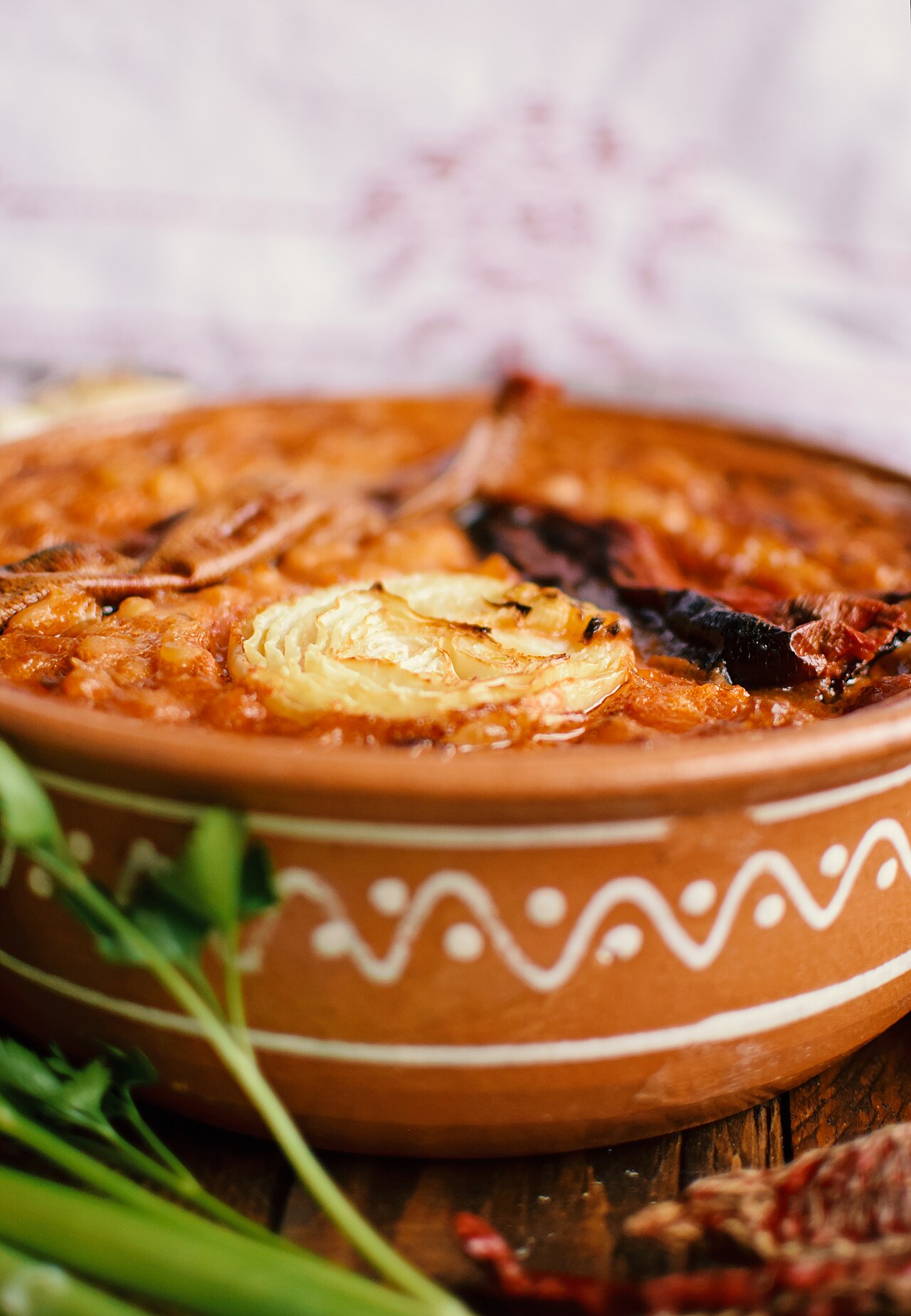
The national dish is beans: tavče gravče — large white beans baked in an earthenware tavče with onion, dried peppers and mint — made properly with beans from the Tetovo region, whose Polog valley beans are the country's benchmark and a protected pride. It anchors a pantry built on peppers: ajvar, the roasted red-pepper relish that Macedonian households make in September and October in courtyard quantities (the pepper harvest is a national season; jars of homemade ajvar are the standard gift), alongside lutenica, its spicier tomato cousin, and turšija, the pickles that cut the fat of winter meals. Breakfast is burek — flaky filo with sirenje cheese, meat or spinach, cut in quarters and eaten with drinkable yogurt — from the burekađilnica bakeries that open at dawn in every town; its flatbread cousin, pastrmajlija, comes from Štip, topped with salted, dried pork (pastrma) and an egg, and Štip holds a festival in its honour.
The meat table runs through the kafana, the tavern institution: kebapi (grilled minced-meat fingers) with shopska salad and warm bread in Skopje's Old Bazaar — one of the largest preserved Ottoman bazaars in the Balkans, where the grill houses and boza shops (boza, the thick fermented millet drink, is the bazaar's own) line the lanes below the Kale fortress — zelnik and banica pastries in the villages, and gjomleze at Ohrid, a layered batter pastry cooked slowly under a sač (iron bell) for hours and sold by the slice. The lakes add fish with a legal wrinkle: Lake Prespa's carp and Lake Ohrid's famous trout are the prestige plates, but the Ohrid trout (Salmo letnica) is an endangered endemic whose wild fishery is restricted — the Hydrobiological Institute in Ohrid releases up to 2.5 million juveniles a year to hold the stock — so the honest plate is hatchery fish, and a good kitchen will say so. Prespa adds its own beans and the apples of Resen, whose orchards fill the valley between the lakes.
Wine is the country's liquid flagship. The Tikveš district around Kavadarci, in the Vardar valley's sun trap, is the Balkans' old wine engine: the Tikveš winery dates to 1885, and the region grows the red Vranec (the name means black stallion) that dominates serious Macedonian wine, the aromatic white Temjanika, Smederevka for everyday drinking, and Stanušina, a variety found almost nowhere else. Rakija completes the table — žolta (yellow) rakija, grape brandy aged in mulberry or oak, and Strumica's mastika, a mastic liqueur — offered at the start of meals in village households whether you planned for it or not. Where to eat, in order: the Old Bazaar's grill houses for kebapi and boza; town kafanas for tavče gravče on Fridays (its traditional meatless day makes it the Friday special); producers' stalls at Skopje's Bit Pazar and the green markets for ajvar, cheese and peppers; winery restaurants in Kavadarci and Demir Kapija for the Tikveš canon with the wines that belong to it.
Picture the place
A Skopje courtyard in late September: sacks of red peppers waiting by the grill, the first batch already blackening over the fire, and 3 generations arguing happily about salt while the ajvar pots fill the shelves.
The easily missed detail
Ajvar has a calendar with teeth: outside September and October you are eating last year's jars (fine) or the industrial product (variable) — the fresh-roasted article, and the pepper-roasting smell that takes over whole neighborhoods, exists only in the harvest weeks, which is one of the strongest arguments in this whole guide for an autumn trip. The second miss is the burek hour: the great bakeries sell out of the morning trays by 10 a.m., and burek eaten at lunch from a reheated tray is a shadow of the dawn article — breakfast is the appointment.
A practical rhythm
- Burek at dawn, kebapi at noon — The Old Bazaar structured by its own clock: bakery first, grill houses for lunch, boza to finish
- Friday for beans — Tavče gravče ordered on its traditional day in a kafana, with turšija and warm bread
- Wine country as a meal — Kavadarci given a full evening: cellar tasting, then Vranec with the dinner it was made for
What could complicate the plan
The Ohrid trout question is real: wild Salmo letnica is protected and endangered, menus trade on its name, and dishes sold as Ohrid trout can be farmed rainbow trout or fish of unclear origin — ask directly, and treat the honest answer as a quality mark. Seasonality governs the rest: ajvar-making is September–October, Prespa carp and the bean harvests are autumn, gjomleze is made in small batches and sells out at Ohrid's bakeries by midday. Village and kafana kitchens keep generous but early hours, and during Orthodox fasting periods (Lent above all) many traditional kitchens lean heavily into the fasting menu — wonderful for the bean-and-pepper canon, thinner for the grill. Rakija hospitality, finally, is compulsory in spirit: the first small glass is a welcome, not a drink order.
What to do next
Put 4 eating appointments on the itinerary by name: a dawn burek, a Friday tavče gravče, an Old Bazaar kebapi lunch, and a Tikveš cellar dinner.
Sources
- National Tourism Agency of North Macedonia — tavče gravče, ajvar and the national food traditions; Tetovo beans and Štip pastrmajlija
- Tikveš Winery (founded 1885) and the Tikveš wine district — Vranec, Temjanika, Smederevka and Stanušina
- Hydrobiological Institute, Ohrid — the Ohrid trout's protected status and the restocking of up to 2.5 million juveniles a year
- City of Skopje / Old Bazaar records — the bazaar's grill houses, boza shops and market traditions