Panama country guide When to visit
When is the best time to visit Panama for Panama City?
The short answer
January through mid-April — Panama's meteorological service defines that window as the dry season, and in Panama City it is the difference between a February that averages 10.0 mm of rain (0.39 inches) and an October that averages 329.6 mm (12.98 inches).
The answer, with local context
Panama is not a country with four seasons; it is a country with two, and the national split is between a short dry stretch and a long wet one. The Instituto de Meteorología e Hidrología de Panamá places the dry season from January to mid-April, treats April and May as transition months, and runs the rainy season from May to December, with December itself behaving as a handover back to dry weather. That calendar holds nationally on the Pacific side, where most of the population and most of the internal flight network sit.
Temperature barely participates. Measured at Tocumen over 1977–2010, the monthly average ranges only from 26.3°C in January (79.3°F) to 28.1°C in May (82.6°F), against an annual mean of 27.3°C (81.1°F). What changes across a Panamanian year is water. The capital's monthly rainfall climbs from 10.0 mm in February to 233.0 mm in May (9.17 inches), peaks at 329.6 mm in October, and still delivers 252.4 mm in November (9.94 inches) before dropping to 99.2 mm in December (3.91 inches). The annual total at that station is 1,917.4 mm — about 75.5 inches.
For Panama City specifically, the dry months matter because the city's set pieces are open-air. The capital holds two halves of one World Heritage property: the Historic District of Panamá, with the Salón Bolívar, and the archaeological site of Panamá Viejo, which the World Heritage Committee added in 2003 under Decision 27 COM 8C.40, inscribing the enlarged property under cultural criteria (ii), (iv) and (vi) and renaming it to cover both. Panamá Viejo is ruins in open ground. Casco Antiguo is cobbles, balconies and plazas. Neither improves in a 330-millimeter month.
Picture the place
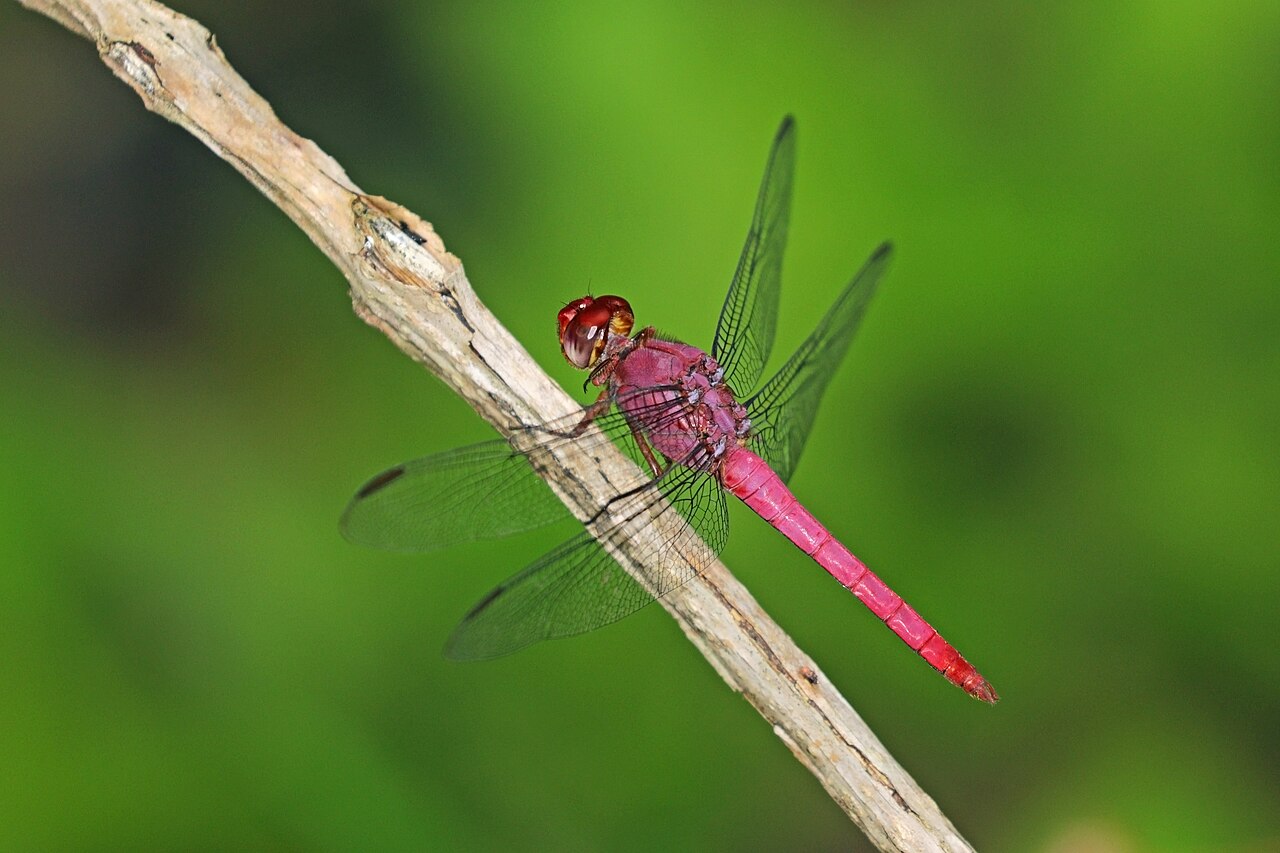
In the dry months the trade winds come across the isthmus and the humidity that sits over the city in October lifts noticeably; the Pacific side is the drier side of a country whose Caribbean coast stays wetter year round, and the contrast is visible in the vegetation within an hour's drive of the capital.
The easily missed detail
The single most schedulable thing in Panama City is the canal, and the Panama Canal Authority publishes its visitor-center admission. At Miraflores, non-residents aged 13 and over pay B/.17.22 for terrace access and children aged 6 to 12 pay B/.7.22; children up to five enter free with an adult. At Agua Clara on the Caribbean side, the non-resident adult rate is B/.10.00 and the 6-to-12 rate B/.5.00. Panamanian residents pay B/.3.00, retirees B/.1.50, and residents aged 0 to 18 nothing, on production of a national identity card. Travel-agency operators buying at least 25 tickets in one transaction pay B/.15.22 at Miraflores. Lock viewing depends on ship traffic rather than weather, which makes it the one capital attraction that works in a downpour.
A practical rhythm
- Dry-season visit — Put Panamá Viejo and Casco Antiguo in January, February or March, when the capital's monthly rainfall sits between 10.0 and 26.4 mm.
- Shoulder — April averages 69.6 mm (2.74 inches), still low, and is the last month before the May jump.
- Wet-season visit — From May to November, build the day around the canal locks and indoor sites and treat afternoons as the likely washout.
What could complicate the plan
The rainy season is not a monsoon that cancels travel, but it is long: eight months of the year average more than 170 mm. Panama's five World Heritage properties are spread the length of the country — the Fortifications on the Caribbean Side of Panama at Portobelo-San Lorenzo, Coiba National Park and its Special Zone of Marine Protection, and the Talamanca Range-La Amistad reserves all sit far from the capital, so a Panama City trip is not a Panama trip. Portobelo-San Lorenzo has been the subject of state-of-conservation reporting to the World Heritage Committee from 2000 through 2025, and condition varies between its components.
What to do next
Read the Panama places-and-experiences question in this group for what lies beyond the capital, and the trip-planning question for how to sequence the dry-season window across regions.
Sources
- Instituto de Meteorología e Hidrología de Panamá, Caracterización del clima en el distrito de Panamá — monthly temperature and rainfall, Tocumen 1977–2010, season definitions
- Panama Canal Authority, visitor-center tariff (2095-0100 ENTRADAS CV) — Miraflores and Agua Clara admission rates by category
- UNESCO World Heritage Committee, Decision 27 COM 8C.40 — 2003 extension, criteria and renaming of the Panamá property
- UNESCO World Heritage Centre, Panama States Parties page — property count, named properties, reporting history