Patagonia / Argentina When to visit
When should I visit Patagonia, Argentina, for the best experience?
The short answer
February — the southern summer at its most settled: the warmest highs of the year hold, the notorious wind has passed its December peak, the days are still long, and the wildlife calendar, from Punta Tombo's penguins to the last of Valdés, is still running.
The answer, with local context
Patagonia is not one climate but a staircase of latitudes, and the honest answer names its parts. In the far south — El Calafate and El Chaltén in Santa Cruz — the season runs November to March, and Argentina's weather service, the SMN, keeps the receipts: at El Calafate, January's average high is 66°F (19.1°C), and December is statistically the windiest month of the year, with average winds of 15 mph (24.4 km/h) and strong wind recorded on about 22 days, more than double July's count. February keeps December's warmth while the wind begins its long decline, and the daylight is still extravagant — around the summer solstice Ushuaia, in Tierra del Fuego, gets close to 17 hours of it, and El Calafate's evenings run past 10 p.m.
The wildlife runs on its own timetables, and February catches the overlap. At Punta Tombo in Chubut, the great Magellanic penguin colony — its season set by the provincial government, running September to April — is at its most animated: the chicks that hatched from late November are now fat, molting adolescents crowding the burrows, weeks from fledging. Península Valdés's southern right whales, the subject of this library's Argentina answer, are a June-to-December story and are gone by February; what the coast offers instead is the full summer cast of sea lions, elephant seals and seabirds, in the warmest water of the year. In the northern Lakes District, Bariloche's summer highs reach about 75°F (24°C) against Ushuaia's 57°F (14°C) — the same month, two climates — and the lenga forests hold their green until the autumn turn of late March.
February's other asset is arithmetic: the Christmas-to-late-January peak, when half of Argentina is on holiday, has thinned, while every service — the estancia tours, the glacier boats, the refugios, the Antarctic sailings from Ushuaia that run from late October to late March — is still operating at full stretch.
Picture the place
At Punta Tombo in February the colony is a city at rush hour: half-grown chicks in gray down loitering at the burrow mouths, adults streaming up the paths from the sea with their bellies full, the whole hillside above the Atlantic ticking and braying in the heat while the wind combs the coirón grass flat.
The easily missed detail
The wind has a calendar as precise as the wildlife's, and it punishes the obvious choice: the solstice weeks of late December and January, which travelers pick for the longest days, are by the SMN's own counts the windiest of the year at El Calafate — strong wind on roughly twenty days a month. February trades an hour of daylight for a measurably calmer sky, which is why the guides themselves take their holidays then.
A practical rhythm
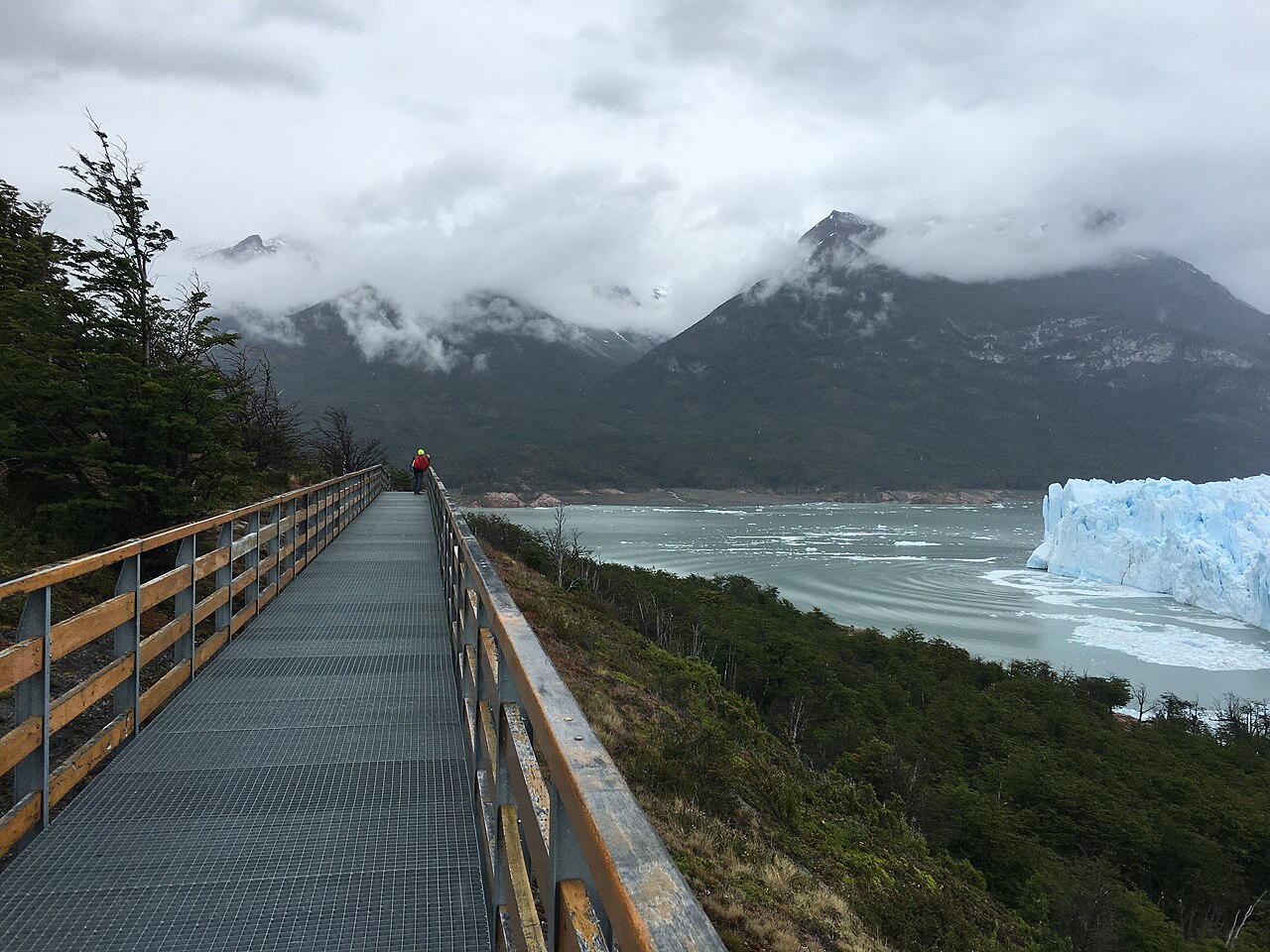
- Morning — Southern mornings are the day's calm installment: the boardwalks at Perito Moreno and the first boats on Lago Argentino belong before noon, when the wind is still gathering itself.
- Midday — Midday in February is genuinely warm on the steppe — the estancia lunches, the lake beaches of Bariloche, and the siesta logic of the small towns all make sense of the same sun.
- Evening — The evening is the dividend: light past ten in the far south, the Fitz Roy spires holding the sunset for an hour, and dinner at nine feeling like afternoon.
What could complicate the plan
Winter is the hard boundary: by June, Ushuaia has about seven hours of daylight — celebrated, with defiant good humor, by the Fiesta Nacional de la Noche Más Larga, the festival of the longest night — snow closes the high trails, El Chaltén largely shuts, and the region becomes a ski-and-silence proposition around Bariloche rather than a touring one. Shoulder travelers should note the asymmetry of the seasons: November buys spring flowers and the whales' tail end at the price of the rising wind and snow lingering on the high passes; April buys the red lenga forests as the services wind down. And February itself is not cheap or empty by Patagonian standards — book the Calafate–Chaltén corridor as early as you would for January.
What to do next
Fix February, run the trip north to south or south to north in one direction only, and give the hiking question in this group its own reading — the trail window is narrower than the touring one.
Sources
- Servicio Meteorológico Nacional (SMN), climate normals — El Calafate: January average high 66°F (19.1°C); December the windiest month, averaging 15 mph (24.4 km/h) with strong wind on about 22 days, against about 7 in July; Bariloche summer highs near 75°F (24°C) and Ushuaia's near 57°F (14°C)
- Gobierno del Chubut — the Punta Tombo protected area's season, set by the province, running September to April for the Magellanic penguin colony
- Municipalidad de Ushuaia — the Fiesta Nacional de la Noche Más Larga, marking the winter solstice's roughly seven hours of daylight at the bottom of the continent