Patagonia / Argentina Food and drink
Where should I eat in Patagonia, and which local food or drink is worth trying?
The short answer
Follow the gradient south: trout in the Lakes District, lamb roasted on an iron cross across the steppe — Cordero Patagónico, a registered Geographical Indication since 2014 — Welsh tea in the Chubut valley, and centolla, the southern king crab, in Ushuaia, where Visit Argentina puts the best eating between November and January.
The answer, with local context
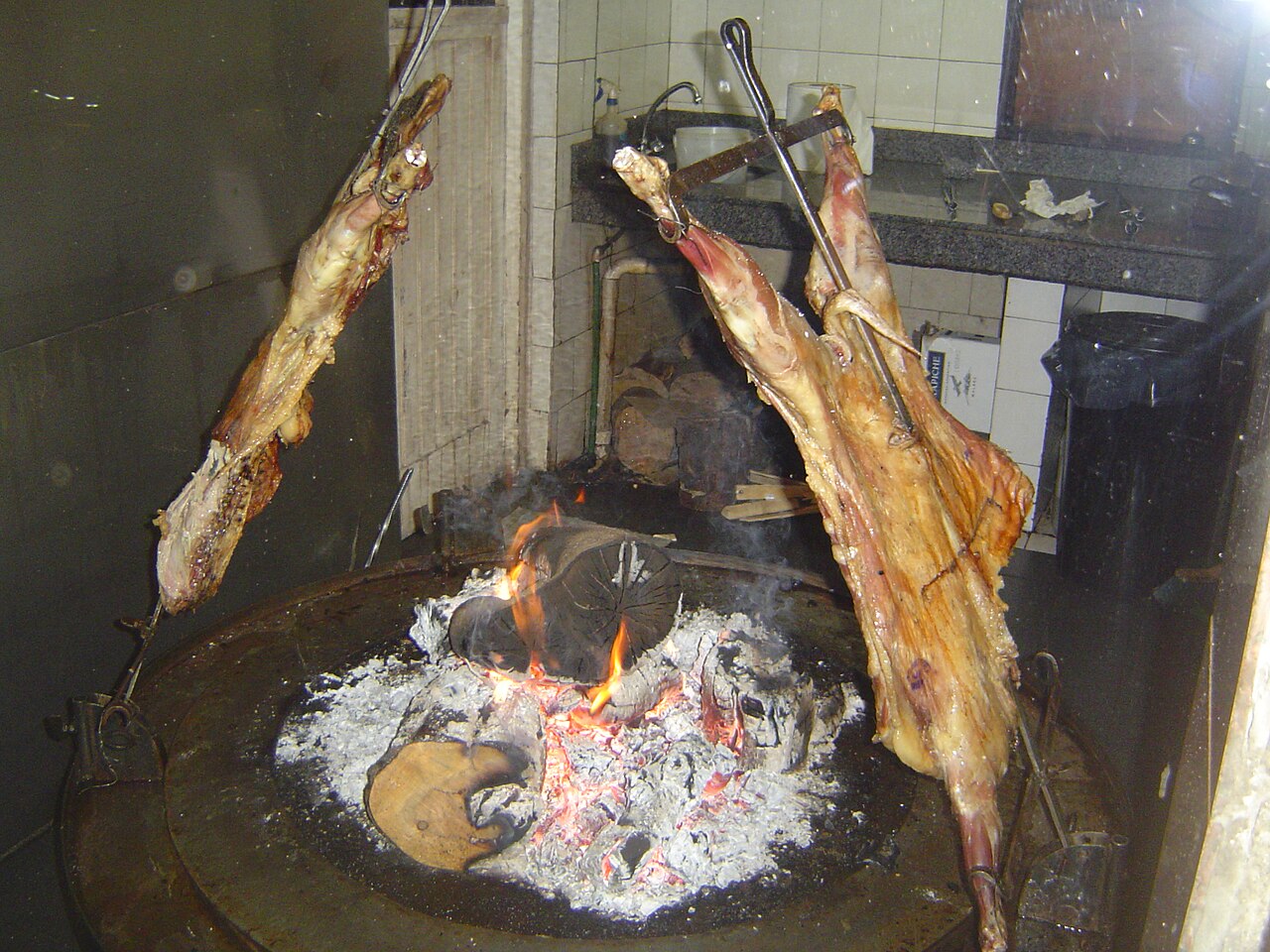
Patagonia's food map is a latitude chart. In the north, the Lakes District around Bariloche cooks from cold, clear water: trout from the mountain lakes and rivers, served simply, in the region's German- and Swiss-inflected kitchens. Across the central steppe, the animal is sheep. The cordero patagónico is not a breed marketing exercise but a protected origin: registered as a Geographical Indication in Argentina in 2014, it names lambs raised on the native bunchgrasses — coirón above all — of the Patagonian steppe, and the canonical cooking is al asador: the whole lamb brined with garlic and coarse salt, butterflied onto an iron cross, and leaned toward an open fire for hours, turned slowly by the asador until the skin crisps and the meat gives. The estancias around El Calafate serve it as the main event of the ranch day; the parrillas of every southern town list it; guanaco, the steppe's wild camelid, appears beside it on El Calafate's menus as the leaner, gamier local alternative.
In the Chubut valley the table turns improbably British: the Welsh who settled the valley built a tea culture that survives in the tea houses of Gaiman, where Ty Gwyn and its neighbors serve towers of cakes anchored by the torta negra galesa, the dense Welsh black fruit cake that has become a Patagonian regional product in its own right. And at the bottom of the continent the sea takes over entirely. Ushuaia's prize is the centolla, Lithodes santolla, the southern king crab of the Beagle Channel, hauled up by artisanal boats — at Puerto Almanza, a fishing village 47 miles (75 km) east of the city, a dozen families still fish it at small scale — and served as plainly as possible, steamed or in chupe, so the sweet meat speaks. The fishery is regulated with a closed season from March 1 to June 30 while the crabs reproduce; a crab offered in April is a crab to refuse. The merluza negra, Patagonian toothfish from the deep southern ocean, is the city's second splurge.
The berry that names a town ties the route together: the calafate, a small dark fruit of a native spiny shrub, eaten fresh in season and year-round as jam, ice cream and liqueur in El Calafate's shops, and in Punta Arenas across the border as the calafate sour. Visit Argentina retails the saying in its Selk'nam-mythology form: whoever tastes calafate is destined to return to Patagonia. It is the region's only dessert with a prophecy attached, and the correct response is to eat it early in the trip, as insurance.
Picture the place
At an estancia outside El Calafate the lambs stand in a row of iron crosses around a windbreak of poplars, each beast spread-eagled toward the fire's glow while the asador works the line with a long fork and a glass of wine — the smoke going sideways in the steppe wind, the diners already seated at the long table inside the quincho, watching through the glass.
The easily missed detail
The iron cross is a measuring instrument as much as a cooking frame: the asador angles the lamb toward or away from the flame over four or five hours, skin side and flesh side in turn, and the doneness is judged by the sound and the resistance of the meat to the fork — there is no thermometer in the system because the system predates thermometers by a century of shepherds. Order the lamb where you can see the crosses from the road; a cordero that arrives without that theater was cooked by another method and is a different, lesser dish.
A practical rhythm
- Morning — Patagonian mornings are for the road and the trail, so breakfast runs local and quick: medialunas, coffee, and — in the Lakes — the first of the day's trout money saved for dinner.
- Midday — Midday is the estancia hour: the ranch visits outside El Calafate build the afternoon around the asador, and the Welsh tea houses of Gaiman take the valley's afternoons at four or five with the full cake service.
- Evening — Evening belongs to the splurges: cordero in the southern parrillas, centolla in Ushuaia's Beagle-facing dining rooms — booked ahead in summer — and a calafate liqueur to close, wherever the day ended.
What could complicate the plan
The centolla's closed season is the standing trap: from March 1 to June 30 the honest kitchens of Ushuaia have none, and the dish's price the rest of the year reflects a small artisanal fleet — clarify whether the price buys a whole crab or a portion before it reaches the table. Distances discipline the rest: Gaiman's tea is a detour from the Trelew–Punta Tombo run, not a stop on the way to the glaciers, and the estancia asado is a half-day commitment, not a lunch. Finally, the steppe runs on cash and early hours in the small towns — the celebrated parrilla of a one-street village may serve its last lamb by nine.
What to do next
Eat the lamb where the crosses burn in view, time Ushuaia inside the crab season, and buy the calafate jam in El Calafate on day one — partly for the prophecy, mostly because it is excellent.
Sources
- Registro de Indicaciones Geográficas (Argentina) — Cordero Patagónico registered as a Geographical Indication in 2014, for lamb raised on the native grasses of the Patagonian steppe
- Visit Argentina (Instituto Nacional de Promoción Turística) — the centolla's best months named as November to January, and the calafate saying: whoever tastes calafate always returns to Patagonia
- Tierra del Fuego fisheries regulation — the centolla closed season from March 1 to June 30; the artisanal fleet at Puerto Almanza, 47 miles (75 km) from Ushuaia