Peru country guide Food and drink
What local dishes should I try in Peru, and where should I look for them?
The short answer
Eat Peru by region, because the country cooks in three kitchens: ceviche and Nikkei on the coast — the terrain of this library's Lima answer — pachamanca and the potato harvest in the Andes, the picanterías of Arequipa in the south, and paiche with camu camu in the Amazon.
The answer, with local context
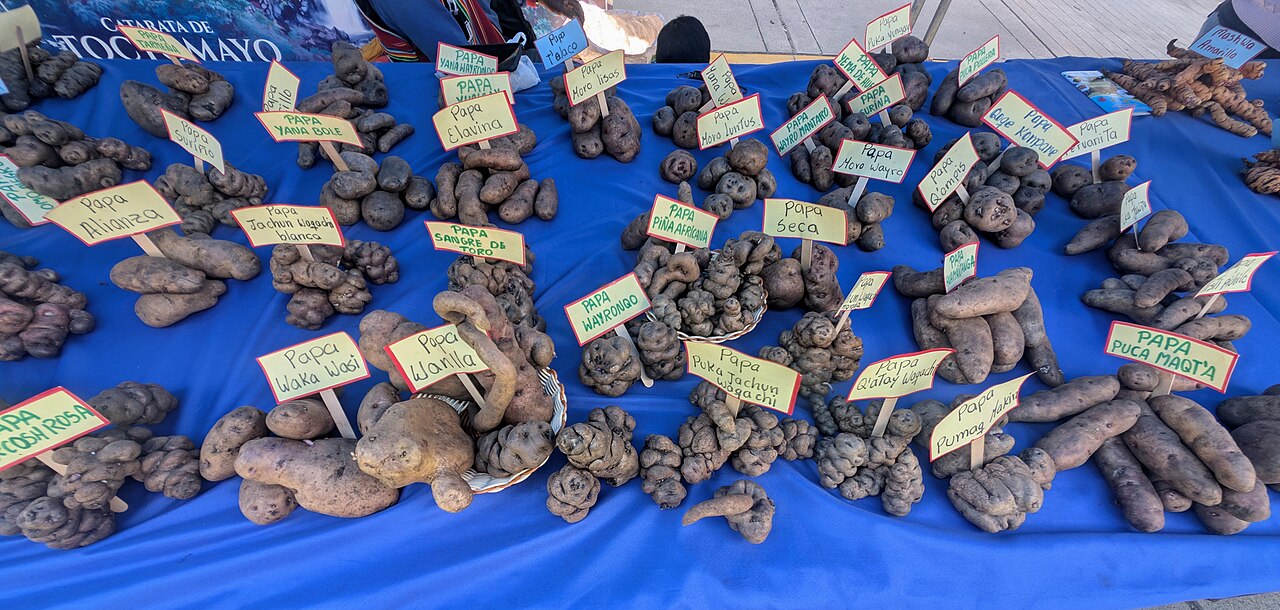
Begin with the ingredients, because Peru's cooking rests on an inventory no other country matches. The potato was domesticated around Lake Titicaca some 8,000 years ago, and Peru alone grows more than 3,500 native varieties by the state news agency's count — over 4,000 across the Andes by the International Potato Center's, whose Lima gene bank preserves the collection; the tubers arrive purple, red, black and gold, floury and waxy, and Peru celebrates them with a National Potato Day on May 30. The Andes also gave the world quinoa and the ají peppers that season everything. In the highlands the signature method is the pachamanca — "earth pot" in Quechua — meats, potatoes, corn and herbs layered over hot stones in a pit, sealed with earth and leaves, declared National Cultural Heritage in 2003 and still the centerpiece of harvest festivals and family gatherings across the sierra; eat it where it is cooked for a community occasion, in the Sacred Valley towns and the central highlands, rather than from a hotel's demonstration pit.
The south cooks its own proud dialect. Arequipa's traditional eating houses, the picanterías — family-run, lunch-centered, each day assigned its stew — serve rocoto relleno, the fiery rocoto pepper de-veined and stuffed with seasoned meat, peanuts and raisins, and chupe de camarones, a chowder of river shrimp from the coastal valleys enriched with fava beans, corn and cheese; ocopa, potatoes under a green huacatay-and-peanut sauce, is the city's other emblem. This library's Lima and Cusco answers cover the capital's ceviche — inscribed by UNESCO as Intangible Cultural Heritage in 2023 — and the highlands' cuy and festival dishes; the national point is that Arequipa considers itself a separate culinary country and has the weekday stew calendar to prove it.
The Amazon, 60% of the country and almost none of its restaurant fame, is the revelation. Its fish is the paiche — the pirarucu — the largest scaled freshwater fish in the world, now farmed to relieve pressure on wild stocks and served grilled in Iquitos and Puerto Maldonado; its parcels are juanes, rice and chicken wrapped in bijao leaves; its breakfast is tacacho, roasted plantain mashed with pork, with cecina; and its vitamin bomb is camu camu, a sour riverbank berry with one of the highest vitamin C concentrations of any fruit, drunk as juice everywhere in Loreto. The ají charapita, a tiny yellow Amazonian chili, perfumes the region's cooking the way ají amarillo defines the coast's.
Picture the place
In a highland market in potato season the stalls are arranged like paint charts: rows of tubers shading from cream through rose to a purple so dark it reads black, each heap with its own name and its own purpose, and the vendor — asked for boiling potatoes — answering with a question about which of four textures you had in mind.
The easily missed detail
The picantería runs on a liturgical week: the traditional Arequipa houses assign each weekday its own chupe — a rotating calendar of stews fixed by custom, so that the dish you can order is determined less by the menu than by the day you walk in. Travelers who arrive on the wrong day and ask for Friday's stew on Tuesday learn the system; travelers who ask the owner what today is for get the real institution.
A practical rhythm
- Morning — Mornings are market hours: the highland markets lay out the potato and ají diversity before the restaurants buy it up, and Amazonian towns take their tacacho and coffee early, before the heat.
- Midday — Midday is the main meal everywhere in Peru: the picanterías serve their stews at lunch and many close by mid-afternoon, and pachamanca, where it is offered, is a noon event cooked since dawn.
- Evening — Evenings belong to the cities' newer kitchens and the coast's Nikkei counters; in the Amazon towns, keep dinner simple and local — the river fish of the day, grilled, with camu camu juice.
What could complicate the plan
Heat is the honest warning, twice over: the rocoto looks like a bell pepper and is nothing of the kind — order rocoto relleno in Arequipa with water, not pride, at hand — and Amazonian specialties travel badly, so the paiche and juanes of Lima imitations rarely honor the originals. Wild paiche is a pressured stock; prefer restaurants serving the farmed fish. And the regions keep their own hours: the picantería you save for dinner may have served its last stew at four.
What to do next
Structure eating the way you structure the trip — coast, highlands, south, jungle — and in each region order the one dish that cannot be exported: Lima's ceviche at noon, a festival pachamanca in the sierra, Tuesday's chupe in Arequipa, grilled paiche in Iquitos.
Sources
- International Potato Center (CIP), Lima — more than 4,000 native potato varieties across the Andes (over 3,500 in Peru alone per the state news agency Andina); the potato domesticated around Lake Titicaca some 8,000 years ago (FAO); National Potato Day on May 30
- Ministerio de Cultura, Peru — pachamanca declared National Cultural Heritage in 2003: meats, potatoes and herbs cooked on hot stones in an earthen pit
- UNESCO Intangible Cultural Heritage — the practices and meanings associated with the preparation and consumption of ceviche, inscribed in 2023
- PromPerú / regional sources — Arequipa's picantería tradition (rocoto relleno, chupe de camarones, ocopa, the weekday stew calendar); the Amazon's paiche, the world's largest scaled freshwater fish, with farmed supply relieving wild stocks; camu camu among the richest known vitamin C sources