Poland country guide Food and drink
What local dishes should I try in Poland, and where should I look for them?
The short answer
Eat obwarzanek krakowski from a street cart in Kraków and oscypek in the southern mountains — both carry European Union protection, registered as a PGI in 2010 and a PDO in 2008 respectively, which fixes exactly where and how each may be made.
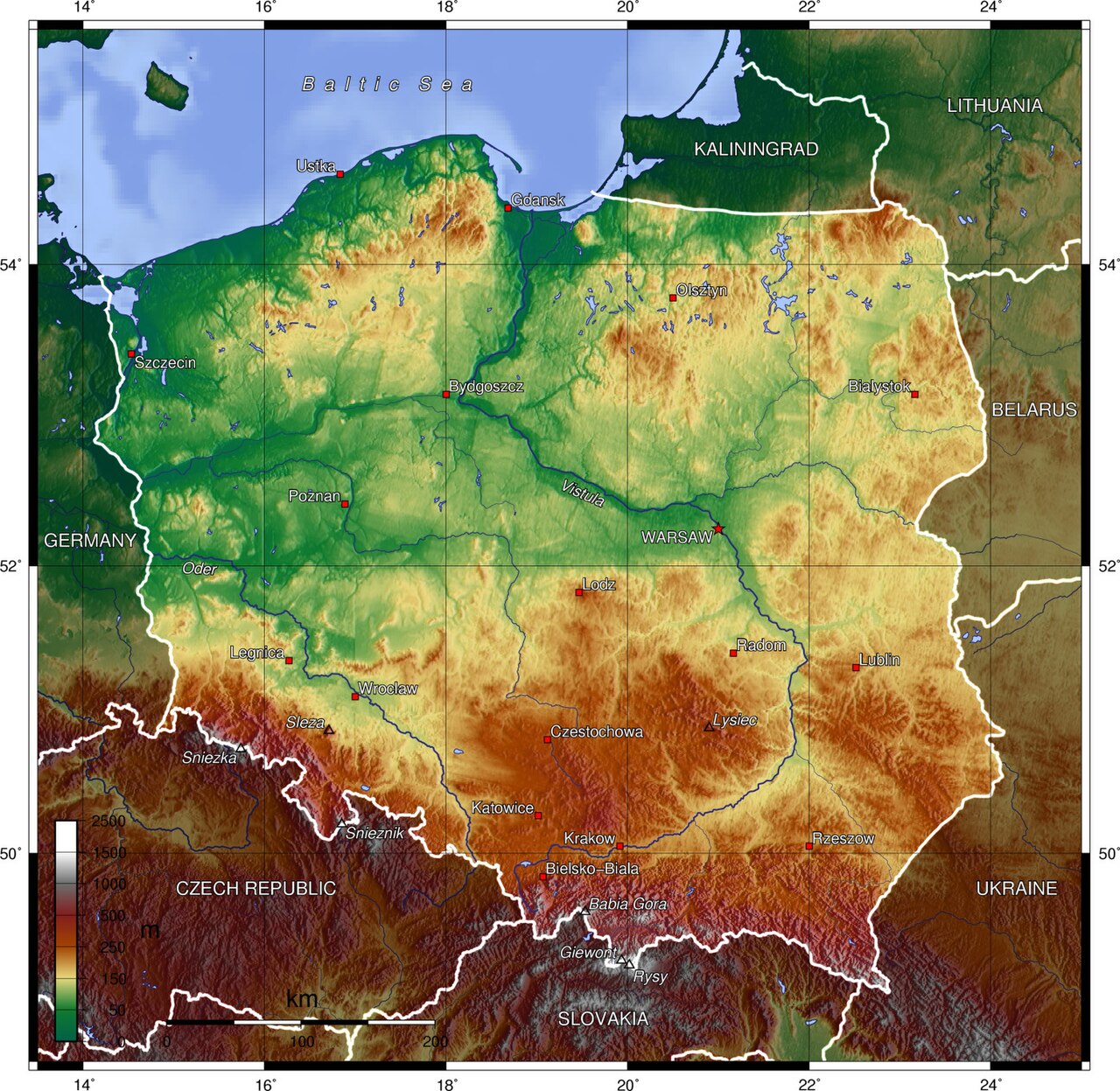
The answer, with local context
Obwarzanek krakowski is a ring of dough that is boiled briefly before baking, twisted into a braid and finished with salt, poppy seed or cheese. Commission Regulation (EU) No 977/2010 of 29 October 2010 entered the name in the European register of protected designations of origin and protected geographical indications as a PGI, which ties the product to the Kraków area. It is sold from glass-fronted carts on the street rather than from bakeries, and it is a morning product — by late afternoon the ones left on the cart have gone leathery.
Oscypek is the other protected name and a completely different thing: a smoked cheese of sheep's milk, pressed in a carved wooden mould into a spindle shape with a decorative pattern, made in the Tatra and sub-Tatra highlands. Commission Regulation (EC) No 127/2008 of 13 February 2008 entered it in the register as a PDO, the stricter of the two categories, which binds both the production method and the origin of the milk. A PDO designation on a cheese sold at a mountain roadside stall is a meaningful guarantee in a market full of imitations.
Beyond the two protected names, the Polish table is built on the things that keep through a continental winter: pierogi in dozens of fillings, bigos — a long-cooked braise of sauerkraut, fresh cabbage and several meats — żurek, the sour rye soup, placki ziemniaczane, kotlet schabowy, and cured and smoked meats. Salt is the thread running through all of it, and the reason is literal: UNESCO's inscription of the Wieliczka and Bochnia Royal Salt Mines records two mines on the same rock salt deposit worked in parallel and continuously from the thirteenth century. Poland had industrial-scale salt six hundred years before refrigeration, and the preserving traditions — the sauerkraut, the cured pork, the brined cucumbers — grew directly out of that supply.
Picture the place
The obwarzanek carts are a fixed feature of the Kraków streetscape, small wheeled boxes with sloping glass sides parked at corners around the old town and near the station, the rings stacked in rows inside. They are a city of a hundred-odd carts rather than a handful of stalls, which is why the product reads as street furniture rather than as a tourist offer.
The easily missed detail
The two protection categories are not interchangeable, and in Poland the difference is practical. A PDO, as granted to oscypek, requires the whole production process and the raw material to come from the defined area — so authentic oscypek means Tatra sheep's milk, made by highland methods. A PGI, as granted to obwarzanek krakowski, ties the product to its area with somewhat looser requirements. The commercial consequence is that mountain stalls sell large quantities of similar-looking smoked cheese that is not oscypek at all, often cow's-milk, while the obwarzanek is harder to counterfeit because the carts themselves are licensed features of the Kraków streets.
A practical rhythm
- Morning, Kraków — Obwarzanek from a cart, before the day's batch ages. It is breakfast, not a snack.
- Midday, anywhere — Pierogi and żurek, the two dishes that are reliably good at modest prices across the country.
- Southern highlands — Oscypek, grilled and served with cranberry preserve, bought where the PDO actually applies.
What could complicate the plan
Oscypek has a defined production season tied to sheep grazing in the highlands, so what is sold outside it is often a cow's-milk substitute under a different name — or nothing of the sort. Bigos is a dish that improves over repeated reheating and is therefore rarely at its best in a fast kitchen. Anyone combining a food-led trip with the Auschwitz-Birkenau Memorial should note that the Memorial advises allowing at least ninety minutes each for Auschwitz I and Auschwitz II-Birkenau, with a standard guided tour of about three and a half hours, which effectively removes one full day from the eating itinerary. And bags there are limited to 35 by 25 by 15 centimeters, so a market shop earlier in the day creates a storage problem.
What to do next
The Poland places-and-experiences answer in this group covers the salt mines that underpin this food history, and the Poland when-to-visit answer gives the seasonal shape of a Kraków-based trip.
Sources
- Official Journal of the European Union — registration of Obwarzanek krakowski as a PGI
- Official Journal of the European Union — registration of Oscypek as a PDO
- UNESCO World Heritage Centre — continuous working of the Wieliczka and Bochnia salt deposit from the thirteenth century
- Auschwitz-Birkenau State Museum — guided tour duration, recommended time per site, bag size limit