Poland country guide Places and experiences
What should a first-time traveler see in Poland beyond the obvious highlights?
The short answer
Go underground at Wieliczka and north to Malbork and Toruń — the Royal Salt Mines were inscribed by UNESCO in 1978 and the Teutonic castle and the medieval town of Toruń both in 1997, and none of the three appears on a standard Kraków-and-Warsaw itinerary.
The answer, with local context
The Wieliczka and Bochnia Royal Salt Mines are a serial World Heritage property inscribed under criterion (iv), recognized for recording the historic stages of European mining-technique development from the thirteenth to the twentieth centuries. Two mines on the same rock salt deposit in southern Poland were worked in parallel and continuously from the thirteenth century until the late twentieth, leaving hundreds of kilometers of galleries along with chapels, statues and decorative works carved from the salt itself, plus the tools and machinery of seven centuries of extraction. Both mines were administered from the Wieliczka Saltworks Castle, a medieval foundation rebuilt several times, and the underground tourist route dates from the early nineteenth century — which makes it one of the oldest continuously visited attractions in Europe.
North of that, the Castle of the Teutonic Order in Malbork, inscribed in 1997, is a vast brick fortress that served as the headquarters of a monastic military state. The Medieval Town of Toruń, inscribed the same year, survived the Second World War largely intact, which is unusual among Polish cities and makes its Gothic merchant houses genuinely original fabric rather than reconstruction. Warsaw's Historic Centre, inscribed in 1980, is the opposite case and worth understanding alongside it: it is on the List precisely because it was meticulously rebuilt after near-total destruction.
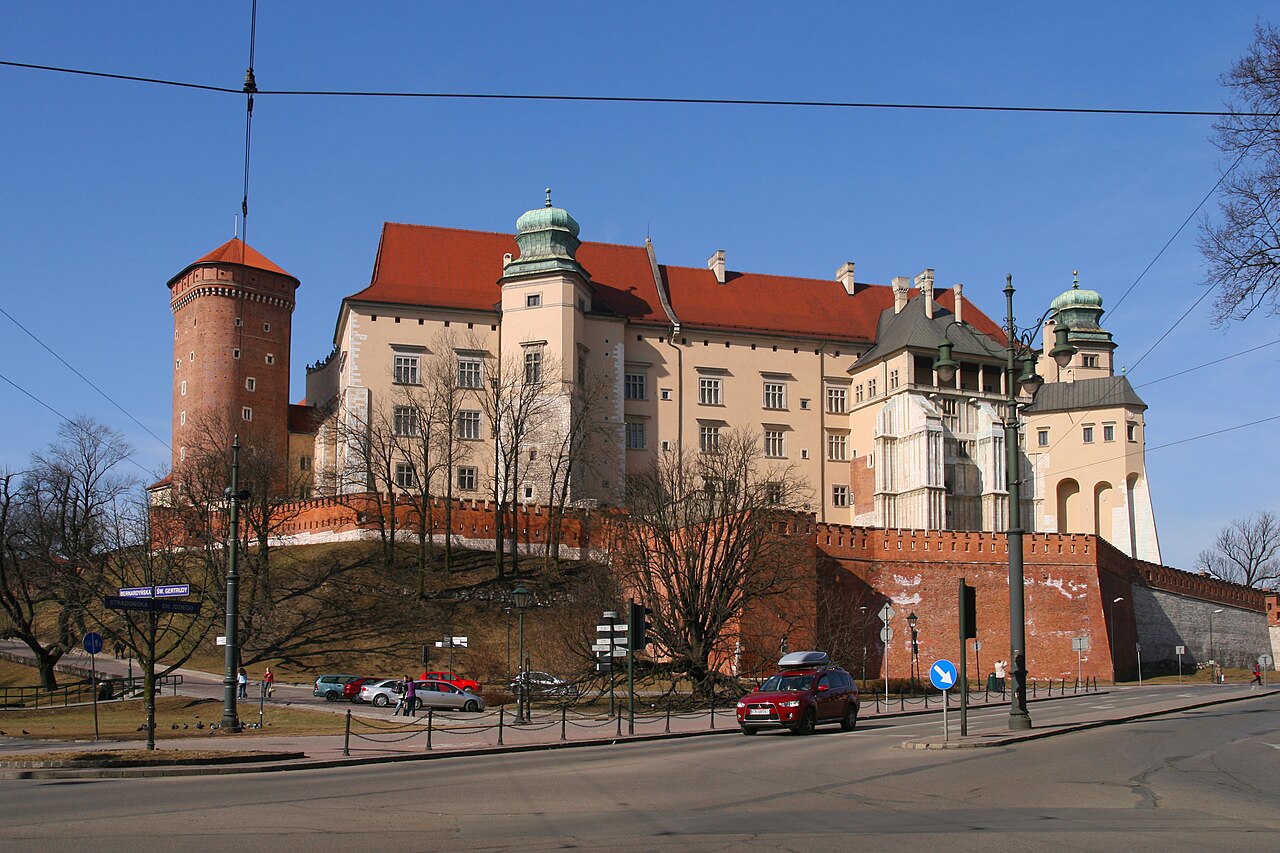
Kraków's own listed property contains a district that most visitors skip. Kazimierz, included in the World Heritage inscription along with the Stradom suburb chartered in 1335, was shaped by both Catholic and Jewish communities and is known for its ancient synagogues. It is a short walk from the main square and an entirely different city.
Picture the place
Wieliczka's scale is hard to anticipate from the surface. The visitor route descends through chambers cut out of grey-green rock salt, with timber bracing on the gallery roofs and carved altars standing in rooms large enough to hold a congregation. The salt is not white; it is translucent and veined, and the walls are dry and cold to the touch.
The easily missed detail
Wieliczka and Bochnia are listed as one property, and Bochnia is the part nobody visits. Both mines sit on the same deposit, both were worked continuously from the thirteenth century, and both are inside the inscription — but the tourist traffic goes almost entirely to Wieliczka because of its proximity to Kraków. For a traveler who wants the same heritage without the crowd, Bochnia is the overlooked half of a World Heritage site rather than a lesser alternative to it.
A practical rhythm
- South — Wieliczka or Bochnia underground, plus Kazimierz and Stradom within the Kraków inscription.
- North — Malbork's brick castle and Toruń's intact medieval core, inscribed in 1997 within months of each other.
- Center — Warsaw's reconstructed Historic Centre, inscribed in 1980, read as a deliberate counterpoint to Toruń's survival.
What could complicate the plan
The salt mines are a descent into a working industrial site: the visitor route involves long stair sections and sustained walking underground, and the galleries are cool year-round, so summer clothing is wrong for them. Distances in Poland are real — Malbork and Toruń are both several hours north of Kraków by rail, and attempting them from a southern base as day trips wastes most of the day in transit. Poland's Schengen membership means a short visit uses the shared 90-days-in-180 allowance for US passport holders. And the Kraków listing's inner areas, Kazimierz included, are residential neighborhoods rather than heritage enclosures, so ordinary city life takes precedence over visitor access. The entry rules impose a ceiling of their own on a wide-ranging itinerary: a short stay is capped at 90 days within any rolling 180-day window, counted by looking back 180 days from each day spent inside the zone, and the passport presented at the border needs at least 3 months of validity beyond the planned departure from it.
What to do next
Read the Poland when-to-visit answer in this group for the seasonal constraints on a Kraków-based trip, and the Poland food answer for the salt-trade history that still shapes the national table.
Sources
- UNESCO World Heritage Centre — Wieliczka and Bochnia Royal Salt Mines criterion (iv), thirteenth to twentieth century working period, extent of galleries, salt-carved chapels and statues, early nineteenth-century tourist route, Wieliczka Saltworks Castle
- UNESCO World Heritage Centre — inclusion of Kazimierz and the Stradom suburb chartered in 1335 within the Kraków property
- UNESCO World Heritage Centre — inscription years for Wieliczka (1978), the Historic Centre of Warsaw (1980), Malbork (1997) and Toruń (1997)
- US Department of State, Poland country information — visa not required for stays under 90 days, three months' passport validity required beyond planned departure from the Schengen area (retrieved 5 November 2026)
- European Commission, Migration and Home Affairs — the 90-day limit within any 180-day period and the instruction to count back 180 days from each day of the stay (retrieved 5 November 2026)