Romania country guide Trip planning
How can I plan a memorable first trip to Romania without rushing?
The short answer
Give it 12–14 days and work a grand arc — Bucharest, Brașov and the Saxon south, then either Bucovina–Maramureș in the north or the Delta in the east — because at 238,391 km² Romania is a country of regions 450 km apart, and the unhurried trip is the one that refuses to do both.
The answer, with local context
The geometry governs everything. Bucharest to Brașov is about 170 km (the train takes 2.5–3 hours up the Prahova valley; the road crawls on weekends when the capital escapes to Sinaia and Bușteni). Bucharest to Cluj-Napoca is about 450 km, to Suceava for Bucovina about 450 km, to Tulcea and the Delta about 280 km plus the boat — the Delta's villages sit 1 or more hours further by water. With the 2021 census count of 19,053,815 residents spread across that area, this is a country of long, full regions, so the rested design is an arc with 4 bases: Bucharest (2 nights — the Palace of the Parliament, the Old Town, the Village Museum), Brașov (3–4 nights — Bran, Sighișoara and the fortified villages as day loops, the Libearty bears at Zărnești), then a fork. North fork: Sibiu (2 nights) and on to Cluj, Maramureș (2–3 nights) and Bucovina (2 nights), exiting by internal flight. East fork: the Transfăgărășan crossing (in its summer window) to Sibiu, then across to Tulcea for 2–3 boat-based Delta nights, exiting from Bucharest. Either fork is a complete Romania; together they are a fortnight at a sprint.
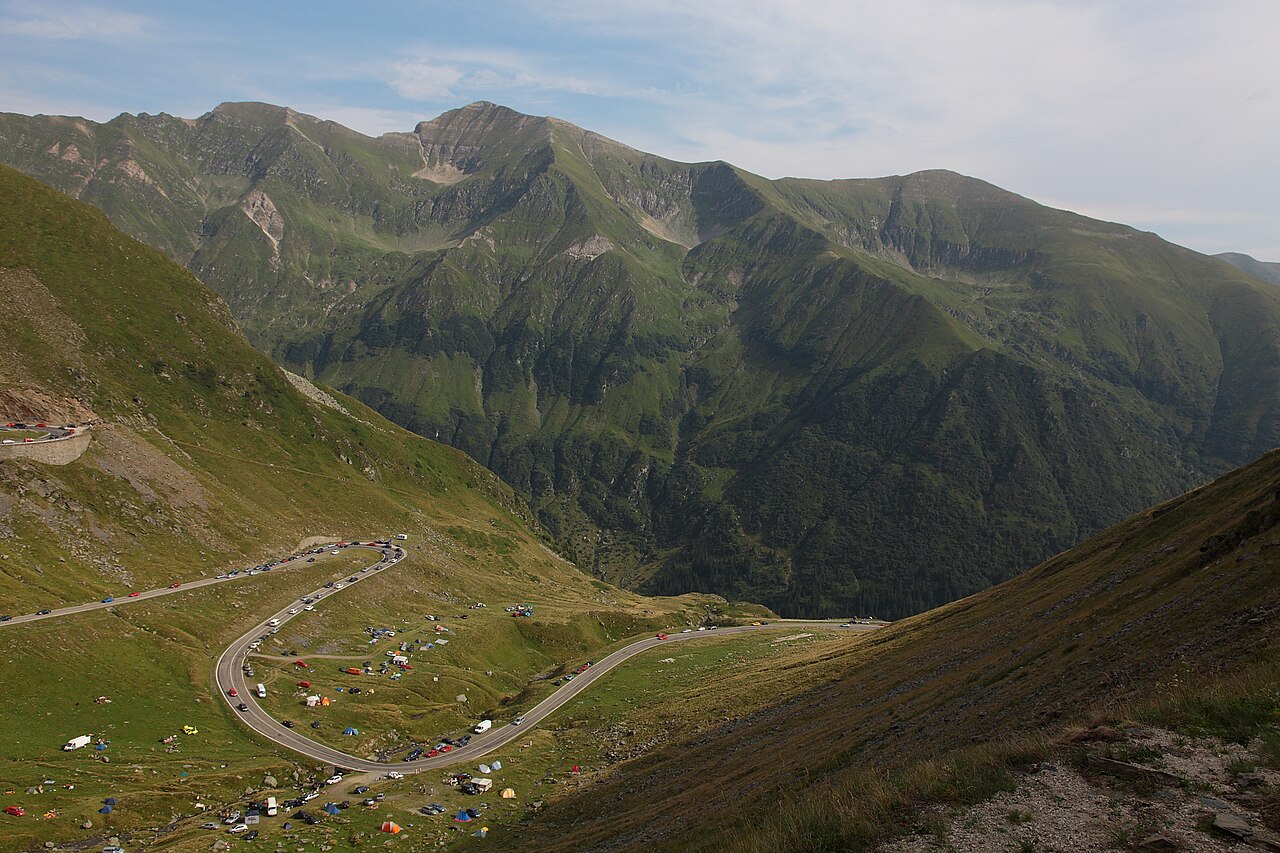
The paperwork is Schengen paperwork now. Romania is a full Schengen member (land borders since January 1, 2025): U.S. citizens enter visa-free for 90 days, but the allowance is 90 days in any 180 across the entire Schengen area — Romania no longer resets a long European trip, it consumes it. Passports need 3 months' validity beyond departure (U.S. State Department), and drivers should carry an International Driving Permit alongside the U.S. licence, as the State Department directs. A car is close to obligatory for the village country (fortified churches, Maramureș, the Delta gateway), while the Bucharest–Brașov leg is better by train; the national rail operator CFR is cheap and slow in equal measure, and the smart pattern is rail between capitals, wheels within regions. The Transfăgărășan (DN7C) is the design's seasonal hinge: some 90 km over the Făgăraș crest to Bâlea Lake at 2,034 m, open only from about late June or early July to late October — plan a September trip and it becomes the arc's centrepiece; plan May and the arc must route around the mountains instead.
Unhurried in Romania has a rhythm of its own: long lunches, village evenings, churches that open when the key-holder returns, trains that take the time they take. Build the plan at the country's scale — 1 region per 2–3 nights, 1 long transfer day per move, and a Delta day with nothing in it but a boat and the birds. The rewards are proportional: this is one of Europe's last countries where a first trip can still include a working steam railway, a lunch in a Saxon farmhouse, a pelican colony and a Brâncuși, all inside a fortnight, and none of them behind a velvet rope of mass tourism. Leave Maramureș's Easter or the Delta's spring migration for the return — the arc is designed to be repeated in the other fork.
Picture the place
The Transfăgărășan at 7 a.m. in September: hairpins empty above the cloud line, Bâlea Lake black and still at the crest, and the whole of Transylvania laid out on the far side of the tunnel like the trip's second half waiting.
The easily missed detail
The Prahova valley weekend crawl is the itinerary's hidden half-day: Bucharest's Friday-afternoon and Sunday-evening traffic to and from the mountain resorts can double the Brașov drive, so the transfer belongs on a weekday or on rails. The second detail is the Visa-Mastercard of the mountains: many Saxon churches, Mocănița trains and Delta boats are cash businesses with fixed, limited departures (the steam train runs a set timetable and sells out in season) — book the Delta boats and the Maramureș train ahead, and carry lei for the countryside where cards stop working at the county border of convenience.
A practical rhythm
- 4 bases, 12–14 days — Bucharest, Brașov, then 1 fork (north or east) given 5–6 nights of its own
- Rail for capitals, car for villages — The train to Brașov; wheels collected where the fortified villages begin
- The pass as centrepiece — In season, the Transfăgărășan placed mid-trip with a weather spare behind it
What could complicate the plan
The Schengen count is the structural risk: a traveler who has spent 80 days in western Europe has 10 left for Romania, full stop — count days before designing arcs. The transfer days are longer than the map suggests (mountain roads, single carriageways, the Prahova crawl; CFR trains average slow speeds), so the arc above already assumes them: compress it and the trip becomes windscreen tourism. The Delta is weather-ruled — wind cancels boats and strands village stays, which is why it sits at the arc's end with Bucharest behind it, not before a fixed departure. Bear country rules apply on Carpathian trails (Romania holds the EU's largest brown bear population; autumn feeding season and dusk are the cautions), and the high passes close on the year's weather, not the brochure's dates — the Transfăgărășan's October end has come early in snowy years.
What to do next
Pick your fork (north for wood and frescoes, east for the Delta), book Bucharest and Brașov first, and count your Schengen days tonight.
Sources
- U.S. Department of State, Romania travel information — visa-free 90 days; passport valid 3 months beyond departure; U.S. licence with an International Driving Permit
- European Commission — full Schengen membership from January 1, 2025 and the shared 90/180-day rule
- National Institute of Statistics, 2021 census — 19,053,815 residents; national area 238,391 km²
- CNAIR (national roads administration) — the Transfăgărășan (DN7C) seasonal opening regime and the Bucharest–Brașov corridor