Romania country guide When to visit
When is the best time to visit Romania for Transylvania?
The short answer
September — the Carpathian passes are still open, the Saxon villages are in harvest, the Danube Delta's mosquitoes have stood down for its autumn migration, and Bucharest has cooled from furnace to café weather, all in 1 month.
The answer, with local context
Romania is a big country by Balkan measure — 238,391 km² bent around the Carpathian arc — and its regions keep different calendars: Bucharest and the Wallachian plain bake through July and August (90s °F, humid), the Black Sea coast runs a June-to-early-September season, the Bucovina hills are greenest in June, and the Delta is a tale of 2 migrations (spring and autumn, 300+ bird species recorded) with a mosquito siege between them. September is when the calendars align. Harvest takes over the countryside — zacuscă pans on every stove, grapes coming in from Dealu Mare to Cotnari — the mountain roads built for summer, above all the Transfăgărășan, are still open before their late-October closure, and the Delta's autumn bird passage builds while the biting insects fade. The frame for it all is now Schengen: Romania became a full Schengen member, land borders included, on January 1, 2025, and the U.S. Department of State confirms no visa is required for U.S. citizens for 90 days or less, with a passport valid 3 months beyond departure — but those 90 days are now shared across the whole Schengen area in any 180, a fact that shapes any long European trip routed through here.
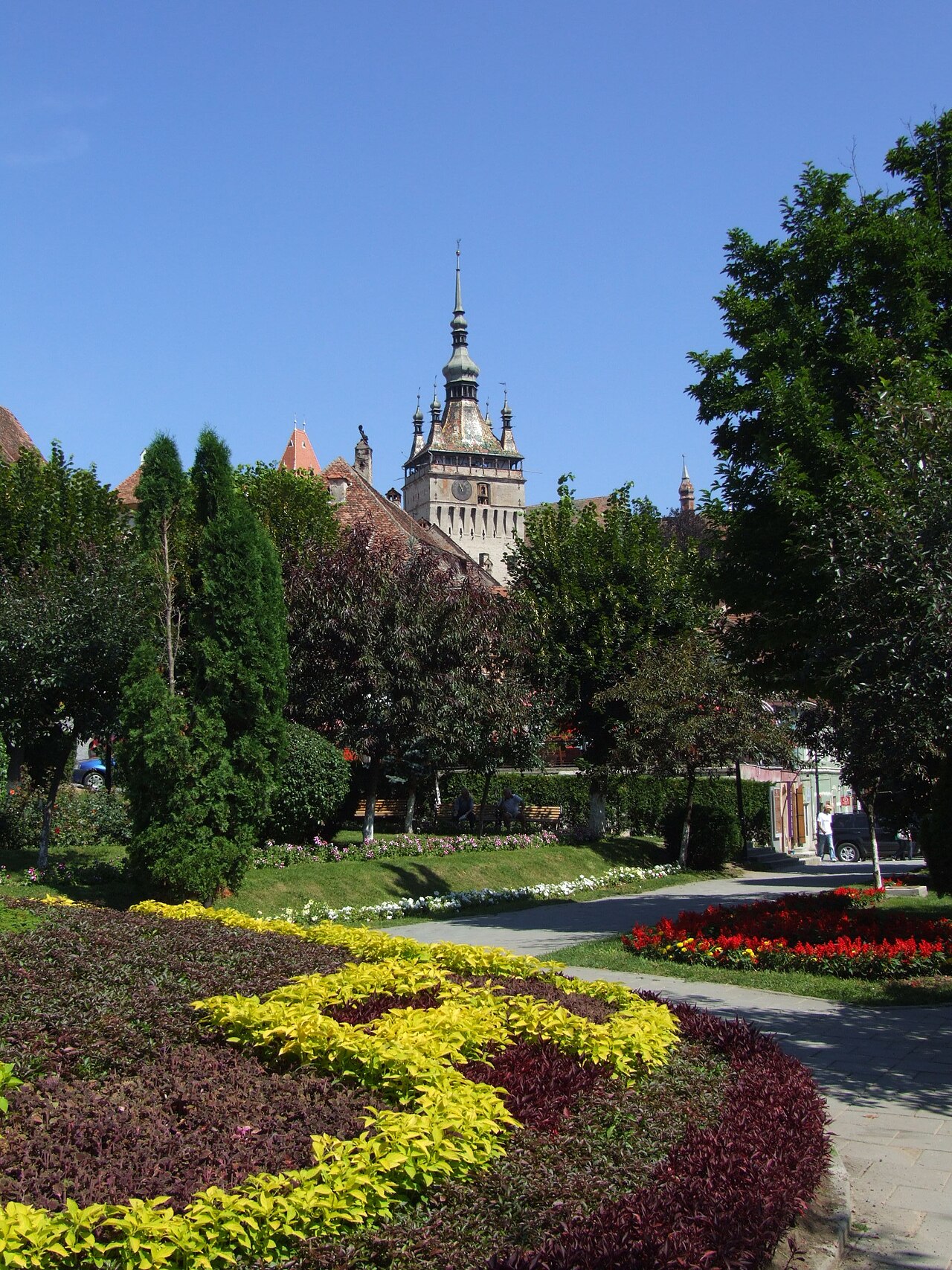
The anchor sits in the Carpathians' southern bowl. Transylvania in September is the medieval circuit at its working best: Brașov's old town under Tâmpa mountain, its Black Church (built 1383–1477, the largest Gothic church in Romania) open without summer queues; Sighișoara's still-inhabited citadel — a UNESCO site since 1999, its Clock Tower above lanes where Vlad Țepeș was born in 1431 — emptied of the August coach parties; and the 7 Saxon villages with fortified churches that UNESCO inscribed in 1993 and 1999 (Biertan first, then Prejmer, Viscri and 4 more) standing in harvested fields, their guesthouses serving the autumn table. Bran Castle (1377–1388), marketed on Bram Stoker's 1897 Dracula — written by a man who never visited Romania — is a 30-minute drive from Brașov and at its least theatrical in this month. Romania holds 11 UNESCO properties in all (9 cultural, 2 natural, per the World Heritage Centre's country page), and September is the rare month when the Transylvanian share of them, the high passes and the Delta can be combined in a single trip without weather vetoing a leg.
The rivals have their constituencies. May and June give the painted monasteries and Maramureș their wildflower peak, and June opens the Delta's pelican summer — at the price of its mosquitoes. July and August are for the high Făgăraș trails and the coast, with Bucharest at its least lovable. December brings the Christmas markets (Sibiu's is the country's flagship) and the ski season at Poiana Brașov. But for the national circuit with Transylvania at its heart, September carries it: everything open, everything harvested, nobody's peak.
Picture the place
A September evening in Viscri: the white fortified church on its hill above the village, storks gone from the chimney nests, woodsmoke and plum brandy in the lane, and the Făgăraș ridge going rose-grey across the whole southern sky.
The easily missed detail
September's gift in the Delta is double: the great white pelican colonies are still on the lakes (the Delta holds Europe's largest breeding population, around Rosca-Buhaiova) while the autumn passage — geese, raptors, warblers — is already moving through, so 1 boat day can meet both seasons' birds. The landward miss is the Transfăgărășan's asymmetry: it typically opens later than travelers expect (late June or early July, snow-dependent) yet stays open into late October, making September the reliable month for it — the summer month people assume is guaranteed, July, is actually the gamble in late-snow years.
A practical rhythm
- Anchor in Brașov — 3–4 nights for the Saxon circuit, Bran and the fortified villages as day loops
- The pass in the trip's heart — The Transfăgărășan driven mid-trip, midweek, before its late-October closure
- Delta last, or first — 2 boat-based nights at the circuit's end, timed to the autumn passage
What could complicate the plan
The Schengen arithmetic is the new trap: since January 1, 2025, days in Romania count against the same 90-in-180 allowance as France or Spain, so a traveler arriving from 2 months elsewhere in Schengen may have far less Romanian time than they planned — count before booking. In Transylvania, the fortified churches run on village systems (a key-holder, a phone number on the gate, irregular hours outside summer) — September's smaller crowds come with shorter opening windows, and some Saxon churches need a call ahead. The Transfăgărășan can close for days at a time for snow or fog even in September at Bâlea Lake's 2,034 m, and the Delta's villages are boat-only: a wind day cancels transfers, not just tours. Wild brown bears — Romania's Carpathians hold the EU's largest population — are at their most active and least predictable in autumn's feeding season, which is a rule for hikers (no dusk trails, no food left out), not a sightseeing promise.
What to do next
Book a September loop with Brașov as the anchor base, count your Schengen days before you book anything else, and put the Transfăgărășan mid-trip with a spare day behind it.
Sources
- U.S. Department of State, Romania travel information — no visa for 90 days or less; passport valid 3 months beyond departure; U.S. licences usable with an International Driving Permit
- European Commission — Romania's full Schengen membership (air and sea from March 31, 2024; land borders from January 1, 2025) and the shared 90-in-180 rule
- UNESCO World Heritage Centre, Romania country page — 11 properties inscribed (9 cultural, 2 natural), including Sighișoara (1999) and the Villages with Fortified Churches (1993, 1999)
- UNESCO, Danube Delta property (1991) — Europe's largest wetland; 300+ bird species and 45 freshwater fish species