Romania country guide Places and experiences
What should a first-time traveler see in Romania beyond the obvious highlights?
The short answer
The far corners the Dracula circuit skips: the Danube Delta's boat-only villages, Bucovina's painted monasteries, Maramureș's wooden churches and Merry Cemetery, the Turda Salt Mine, and the 2 UNESCO inscriptions of 2024 — Brâncuși's Târgu Jiu ensemble and the 1,000 km Dacian Limes.
The answer, with local context
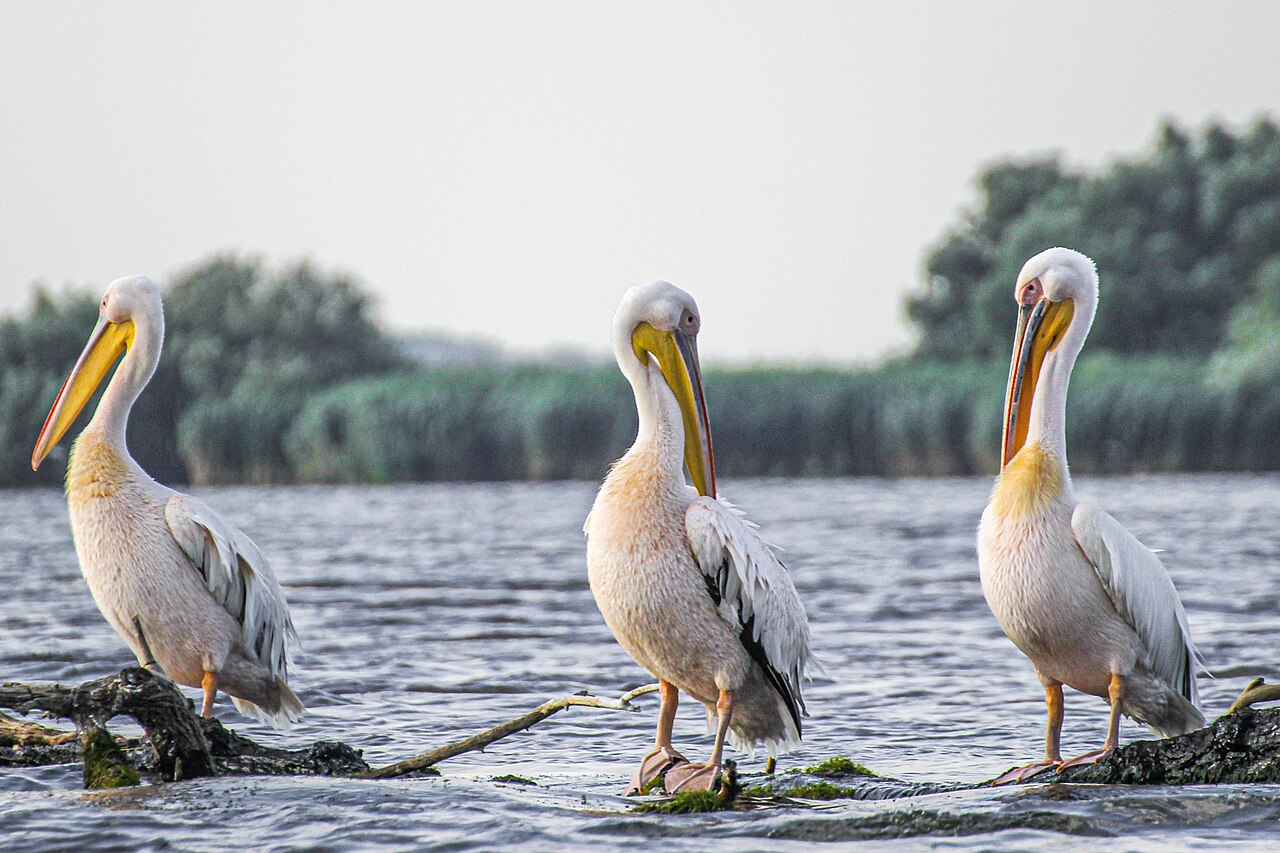
Start where the road network ends. The Danube Delta, UNESCO-listed in 1991 as Europe's largest wetland (300+ bird species, 45 freshwater fish species), is a water world reached from Tulcea: channels and reed beds, the subtropical Letea forest with its lianas and wild horses, Lipovan fishing villages like Mila 23 that have no roads at all, and pelican colonies on lakes you visit by small boat under biosphere-reserve rules. Northeast, in Bucovina, stand the Churches of Moldavia — 8 churches of the 15th and 16th centuries wrapped inside and out in fresco, UNESCO-listed in 1993: Voroneț (built 1488 by Stephen the Great, its west-wall Last Judgment painted in the famous Voroneț blue) and the fortified Sucevița above all. North again, Maramureș keeps the country's wooden civilisation: 8 wooden churches of the 17th and 18th centuries on the UNESCO list, the Mocănița steam railway still hauling out of Vișeu de Sus on its narrow-gauge forestry line, and at Săpânța the Merry Cemetery, where folk artist Stan Ioan Pătraș began carving painted oak crosses with rhymed, first-person epitaphs in 1935 — a cemetery that tells the village's jokes about itself.
Underground and modernist Romania balance the medieval north. Salina Turda, a salt mine worked from Roman times and now a visitor world 120 m down (underground lake, Ferris wheel, salt-crusted galleries), is the country's strangest single sight. At Târgu Jiu, Constantin Brâncuși's monumental ensemble — the Table of Silence, the Gate of the Kiss and the 29.3 m Endless Column, laid out in 1937 for the fallen of the First World War — joined the UNESCO list in 2024, the same year as the Frontiers of the Roman Empire – Dacia: a limes of 1,000+ km with some 100 forts across the country's northwest, the longest land sector of Rome's European frontier. The older layers are just as strong: the 6 Dacian Fortresses of the Orăștie Mountains (UNESCO 1999) around the capital of Sarmizegetusa Regia; Horezu Monastery (founded 1690), the masterpiece of the Brâncovenesc style; Roșia Montană's Roman gold-mining landscape (inscribed 2021, and listed in danger the same day); Alba Iulia's great Vauban star citadel; and Timișoara, European Capital of Culture in 2023 and the first European city lit by electric street lamps (1884).
And the bears. Romania's Carpathians carry the European Union's largest brown bear population, and Zărnești's AMP Libearty sanctuary — created in 2005 by the Millions of Friends Association with World Animal Protection — gives 130+ rescued bears (180+ taken in across its history) 69 hectares of oak forest; visits are guided walks, closed Mondays, with no children under 5 admitted. Paired with a wild-bear observation hide in the Harghita hills, it is the honest way to meet the animal that the mountain villages live alongside.
Picture the place
Dawn on a Delta channel near Mila 23: mist at reed height, a fisherman poling past in a black wooden lotca, and a squadron of pelicans crossing a sky the exact pink of the water below.
The easily missed detail
The Merry Cemetery's humour needs its translator: the epitaphs are first-person, rhymed and in dialect — the cross of the mother-in-law and the one of the shepherd killed by his own sheepdog only land with a guide or the printed translations, and the painter-carver tradition continues (Pătraș's apprentice Dumitru Pop Tincu carried the work on), so the cemetery is still growing jokes. The second miss is logistical: Salina Turda's underground holds a near-constant cool temperature (about 50–54°F / 10–12°C) in high summer — the jacket you didn't pack for Turda is the one you'll want 120 m down.
A practical rhythm
- 1 region per 2–3 nights minimum — Delta, Bucovina and Maramureș are full worlds; day-trip logic breaks all 3
- North in a line — Cluj → Maramureș → Bucovina strung together rather than 3 returns to Bucharest
- Bears with a morning — Libearty visited on its guided morning walks, paired with Bran only if the day stays unhurried
What could complicate the plan
Distance is the tax: Romania's highlights beyond the obvious sit at the country's edges, and its trains are slow and its single-carriageway roads slower — the Delta, Maramureș and Bucovina each cost a travel day from Bucharest, and combining all 3 in a week is a road trip, not a holiday. The Delta runs on boats and permits: core reserve zones require authorised guides and boats, and bad weather strands schedules. The painted churches are working monasteries and churches — dress codes apply, photography inside is restricted or fee-based, and services close the famous frescoes to touring parties at exactly the hours day-trippers arrive. Libearty sells out its guided slots in season and closes Mondays. And Roșia Montană's inscription came with an in-danger listing and an active community dispute over mining — visit it as a living controversy, respectfully, not a ruin park.
What to do next
Choose 2 of the 3 far regions (Delta, Bucovina, Maramureș) for a first trip, add Turda and Târgu Jiu as the wild cards, and give each region its own base.
Sources
- UNESCO World Heritage Centre — Dacia (both 2024, the Limes at 1,000+ km with ~100 forts); Roșia Montană (2021, in danger)
- AMP Libearty Sanctuary (Millions of Friends Association) — 69 hectares, 130+ bears in residence, 180+ rescued since 2005; guided visits, Monday closure, no children under 5
- Danube Delta Biosphere Reserve Authority — the reserve's rules, boat-only villages and protected zones
- Salina Turda — the mine's history and underground visitor levels