Romania country guide Food and drink
What local dishes should I try in Romania, and where should I look for them?
The short answer
Sarmale with mămăligă, mici off a Bucharest grill, ciorbă in its regional dialects, papanași to finish, and Fetească Neagră in the glass — a sour-soup, cornmeal and vineyard cuisine eaten in hanuri (inns), market halls, village pensiuni and the Delta's fish kitchens.
The answer, with local context
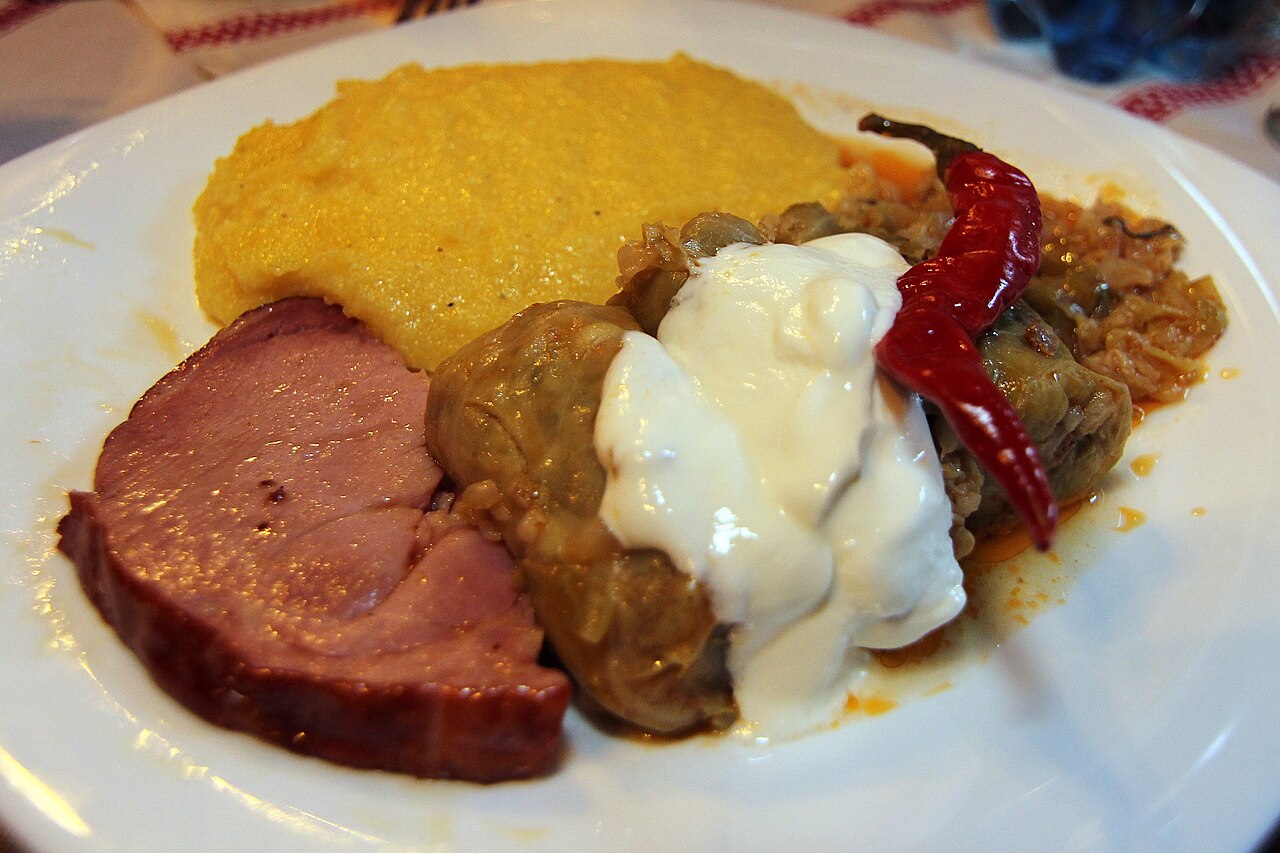
The national plate is sarmale: minced pork (or pork and beef) with rice, rolled in sour cabbage leaves (or vine leaves in summer), slow-cooked and served with mămăligă — the firm cornmeal that is Romania's polenta and default starch — plus sour cream and a hot pepper. It is the obligatory dish of Christmas, Easter and weddings, and every region argues its size (Transylvanian sarmale are famously large; Moldavian ones small). Beside it stands mămăligă's second career: mămăligă cu brânză și smântână, baked in layers with salty cheese and sour cream, the mountain meal of the shepherd stations that also produce brânză de burduf — kneaded sheep's cheese ripened in pine bark, fierce and spreadable. The soup course, ciorbă, is a sour architecture (soured with borș, lemon or cabbage juice) with regional dialects: ciorbă de burtă (tripe, the Bucharest institution, finished with garlic, vinegar and hot pepper); ciorbă rădăuțeană, the chicken-and-cream soup created in Rădăuți, Bucovina, in 1979; ciorbă de perișoare (pork meatballs); and in the Delta, fish soups built on the day's catch and storceag, the sturgeon soup of Sfântu Gheorghe.
The grill belongs to the capital: mici (or mititei) — skinless, garlicky minced-meat fingers grilled over charcoal and eaten with mustard, bread and beer — are the centrepiece of the Bucharest grill-house tradition at institutions like Hanu' lui Manuc, the city's oldest inn (1808), still serving in its courtyard by the Old Town. The pantry speaks in spreads and preserves: zacuscă, the roasted eggplant-and-pepper preserve every household jars in autumn (Transylvanian versions add mushrooms or beans), salată de vinete (smoky eggplant salad), telemea cheese with tomatoes, and Sibiu salami, the garlic-and-pepper salami whose name carries EU geographical protection. Desserts keep the feast register: papanași — fried cottage-cheese doughnuts under sour cream and sour-cherry jam — cozonac, the walnut or cocoa sweet bread of the holidays, and Dobrogea's cheese plăcintă.
The glass completes the canon. Romania's vineyards are old and indigenous varieties are the point: Fetească Neagră, the flagship red (plum, spice, from Dealu Mare and Drăgășani); the whites of Cotnari in Moldavia, court wines since the 15th century (Grasă de Cotnari above all); Fetească Regală and Fetească Albă; and the vineyards of Recaș near Timișoara. Spirits open the meal in the country: țuică, the plum brandy of the first welcome, doubled in strength as Maramureș horincă and Transylvanian pălincă. Where to eat it: Bucharest's market halls (Piața Obor, the capital's largest market, for mici at the terrace grills and produce), the hanuri and caravanserai courtyards of the Old Town, the pensiuni of Maramureș and the Saxon villages (where dinner is whatever the household made), Delta fish restaurants in Tulcea and Sfântu Gheorghe, and winery restaurants in Dealu Mare and Cotnari for the varieties at their source.
Picture the place
A Bucovina pensiune kitchen at dusk: sarmale ticking in a clay pot on the wood stove, mămăligă turned out in a steaming round, and the host already pouring the first small, cold glass of horincă.
The easily missed detail
Sarmale run on a calendar as much as a recipe: the winter version in sour cabbage is the canonical article, and the great batches appear at Christmas, Easter and village weddings — in summer the vine-leaf version is lighter and everywhere, but a traveler who wants the full feast register should know which sarmale they are ordering. The second detail is the mici rule: they are judged by the queue and the smoke — the Obor market terraces at lunch hour, with mustard and a cold beer, are the benchmark, and a mie with a knife and fork is a small heresy.
A practical rhythm
- Soup first, always — A ciorbă to open lunch (burtă in Bucharest, rădăuțeană in Bucovina, fish soup in the Delta)
- The national plate at a pensiune — Sarmale and mămăligă eaten where they're cooked in clay, not in a hotel dining room
- Wine at the source — A Dealu Mare or Cotnari cellar dinner to anchor the varieties to their ground
What could complicate the plan
The cuisine is feast-weighted and pork-forward: vegetarians eat well on fasting (de post) menus — which Orthodox calendars produce generously, and which many kitchens default to in Lent — but outside those periods the meatless traveler works harder, and menus rarely mark it. Regional availability is real: storceag depends on sturgeon (a protected, restricted fishery — order it only where it is legally and proudly sourced), burduf cheese is a mountain product at its best in summer pastures, and zacuscă is an autumn-and-winter jar food. Village pensiune dinners are set, generous and early (the household's hour, not yours), and the țuică welcome is a ritual with social weight — a polite small glass is the graceful minimum. Finally, Bucharest's famous grill terraces peak brutally at weekend lunch: go at noon on a weekday.
What to do next
Make 4 reservations with names: an Obor mici lunch, a pensiune sarmale dinner, a Delta fish soup, and a papanași anywhere it comes with sour cherries.
Sources
- Romanian National Tourism Authority / regional tourism boards — sarmale, mămăligă and the regional food map; Cotnari and Dealu Mare wine regions
- Hanu' lui Manuc, Bucharest — the inn of 1808 and its courtyard restaurant tradition
- EU geographical indications register — Salam de Sibiu (Sibiu salami) protected status
- Danube Delta Biosphere Reserve Authority / Tulcea County — Delta fish cuisine and sturgeon protections