Samoa country guide Places and experiences
What should a first-time traveler see in Samoa beyond the obvious highlights?
The short answer
Savai'i's volcanic north (the Saleaula lava fields and their buried church), the Alofaaga blowholes, Piula Cave Pool, Stevenson's Vailima and Mount Vaea, and the giant-clam sanctuary at Savaia: Samoa beyond To Sua is a 2-island country, and most visitors only ever see half of it.
The answer, with local context
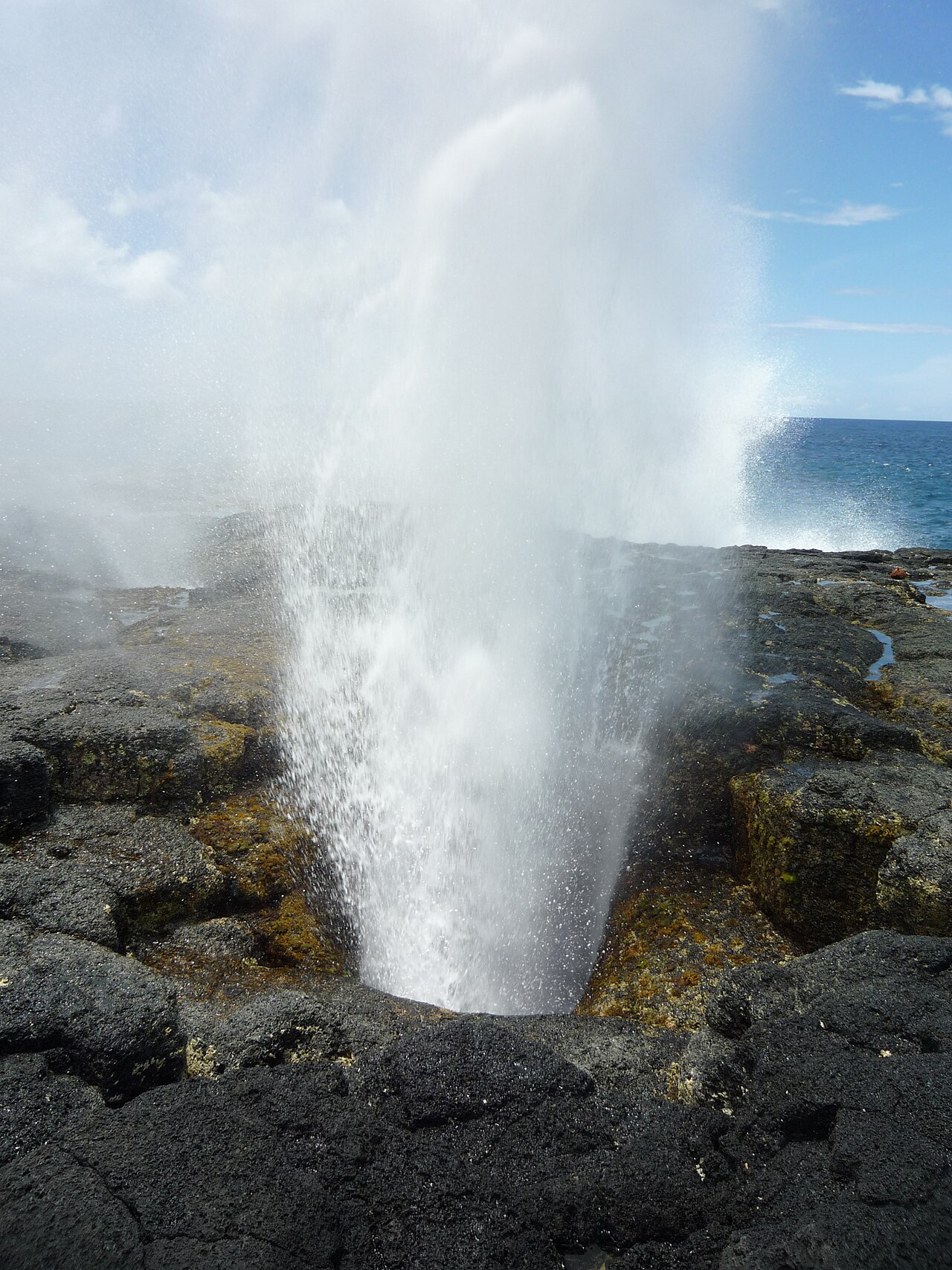
The geography is the argument: Upolu (1,125 km²) holds the capital, the airport and most of the famous postcards; Savai'i (1,694 km² — the larger island, holding 45,175 of the country's 205,557 people at the 2021 census) holds the volcano, the quiet and the old Samoa. Savai'i first, then. Between 1905 and 1911 Mount Matavanu erupted for 6 years, sending lava across the island's north and burying villages — at Saleaula the flow filled a church to its roof beams, leaving the walls standing in a black field with the old LMS church's floor and a grave (a nun's, kept clear by local telling) visible in the rock; virgin's grave and lava church are visited with a village guide for a small customary fee. Down the west coast at Taga, the Alofaaga Blowholes fire seawater up to 30 m through lava tubes when the swell runs — villagers will throw a coconut in to prove the pressure — and inland, Afu Aau Falls pours into a deep jungle pool. At the island's western tip, Falealupo's rainforest preserve protects a canopy of giant banyans walked on a suspended walkway, a conservation landmark since the 1990s (its logging-buyout story helped invent Pacific community conservation; current access varies — ask in Salelologa). Mount Silisili (1,858 m), Samoa's highest summit, rises from Savai'i's center for guided multi-day climbs, and the ferry that makes it all possible runs from Mulifanua wharf on Upolu to Salelologa — about 75 minutes across the Apolima Strait on Samoa Shipping Corporation's vehicle ferries, with little Manono and Apolima islands (Apolima is a village inside an extinct crater, visited by arrangement) in the channel.
Upolu's second register is literary and cool. Above Apia at Vailima stands the 5-gabled house Robert Louis Stevenson built when he made Samoa home — he died here in 1894, aged 44, and Samoans carried his coffin up Mount Vaea, where his tomb carries the Requiem he wrote ("Home is the sailor, home from sea"); the house is a museum, the climb is the pilgrimage, and the view explains his choice. On Upolu's lush north coast, Piula Cave Pool hides under the Methodist theological college at Lufilufi — a spring-fed cave pool of impossible blue, swum with respect (it is a college and a village place, with a small fee and Sunday restraint). Papapapaitai Falls, among Samoa's tallest, drops beside the cross-island road; the Papaseea Sliding Rocks, in a gorge behind Apia, let the brave slide down algae-slick falls into pools (water-level dependent, genuinely slippery, attended by village custodians); and at Savaia village on the south coast, the giant clam sanctuary — a marine protected area where farmed Tridacna grow to dinner-plate size and beyond in a guarded lagoon — is snorkelled with village guides, the entry fee funding the village's conservation. Add Apia's own days (the Fugalei market, the cathedral, Mulinuu Peninsula's parliament and the old observatory point) and the pattern is complete: Samoa's highlights are water, but its depths are villages, volcanoes and 1 writer's grave.
Picture the place
Saleaula at midday: a black lava plain to the horizon, a white church wall standing roofless in the middle of it, and the village's green gardens beginning exactly where the flow stopped in 1911.
The easily missed detail
Almost everything in this answer sits on customary land, and the small fee at the gate — WST 5–20 at falls, blowholes, pools and lava fields, paid to the village — is not a ticket price, it is the fa'a Samoa economy working as designed: the village owns, guards and maintains the place, and the fee is recognition as much as revenue. Pay it gladly, in tala, and ask before photographing people and homes; the same system explains why some beaches close on Sundays and why a "closed" sign handwritten that morning outranks any guidebook. The second detail is the ferry's character: it is a working Samoan ferry, not a cruise — vehicles queue from dawn, foot passengers board amid cargo, and the crossing's timing follows loading, so Savai'i days begin early and end unhurried by design.
A practical rhythm
- Savai'i for 3 nights — Lava fields and Afu Aau 1 day, blowholes and the west the next, the ferry home on the 3rd morning
- Apia's hill — Vailima and Mount Vaea taken in the cool, with the market on the way down
- Water by the village's leave — Piula, Papaseea and the clam sanctuary strung along the coasts with tala in hand
What could complicate the plan
Customary terms are the practical complication in every direction: sites open and close by village decision (funerals, church events and chiefly business can close a waterfall for a day without notice or appeal), fees vary between seasons and sources, and Sunday compresses everything (many villages restrict beach swimming on Sunday morning; To Sua's late Sunday opening is the rule, not the exception). Transport is the second: the ferry takes vehicles but the car must be booked or queued early, Savai'i's ring road is a full day's careful drive, and public buses — colorful, wooden-seated, beloved — run to village time. Sliding Rocks and blowholes carry real injury histories (the rocks' algae is as slick as soap; blowhole viewing distances exist because the sea has thrown people) — obey the custodians literally. Health notices are live (the measles advisory from the planning answer) and dengue circulates seasonally; reef shoes and mosquito discipline are the south coast's uniform. Finally, Samoa's 2009 tsunami reshaped the southeast: rebuilt fales carry evacuation routes and the coast road's signs are operational — a first-timer reads them the way Arizona visitors read flash-flood signs.
What to do next
Give Savai'i 3 of your nights, keep tala small-notes for every village gate, and climb Mount Vaea on a clear morning before the trade-wind cloud builds.
Sources
- Samoa Tourism Authority — Saleaula lava fields (Matavanu eruption 1905–1911); Alofaaga (Taga) Blowholes; Afu Aau Falls; Falealupo canopy walkway; Piula Cave Pool; Savaia giant clam sanctuary
- Samoa Bureau of Statistics, 2021 Population and Housing Census factsheet — a national population of 205,557 with 45,175 of it on Savai'i, counted in the November 2021 census
- Samoa Shipping Corporation — the Mulifanua–Salelologa ferry (about 75 minutes)
- Samoa Tourism Authority — the customary-fee system at village sites