Samoa country guide When to visit
When is the best time to visit Samoa for To Sua Ocean Trench?
The short answer
June — the driest month in Apia's official climate record (about 138 mm of rain, against January's deluge), when the southeast trades hold, the ferry to Savai'i runs calmest, and To Sua's water sits at its clearest emerald: the single best month for Samoa's whole south-coast circuit.
The answer, with local context
Samoa's 2 islands share 1 rhythm: temperatures hover 75–88°F (24–31°C) all year, and the calendar is written by rain. The World Meteorological Organization's 1991–2020 normals for Apia Observatory (kept by the Samoa Meteorology Division) record about 3,090 mm (122 inches) of rain a year across roughly 173 wet days — but distributed with intent: the wet season runs November to April (hotter, stickier, and the South Pacific cyclone season; Cyclone Evan's December 2012 strike is the modern memory), while the dry season rides the southeast trade winds from May to October, with June the driest month of the record. June is also when the whole country breathes easiest for travel: the south coast's waterfalls run clear rather than brown, the Lalomanu beach fales sit under settled skies, the Apia–Savai'i ferry crosses the Apolima Strait on its calmest water, and Independence Day (June 1, marking freedom from New Zealand in 1962) opens the month with Apia in festival dress. The month's only crowd note is the late-June start of New Zealand school holidays — Samoa's diaspora heartland flies home, and beach fales book accordingly.
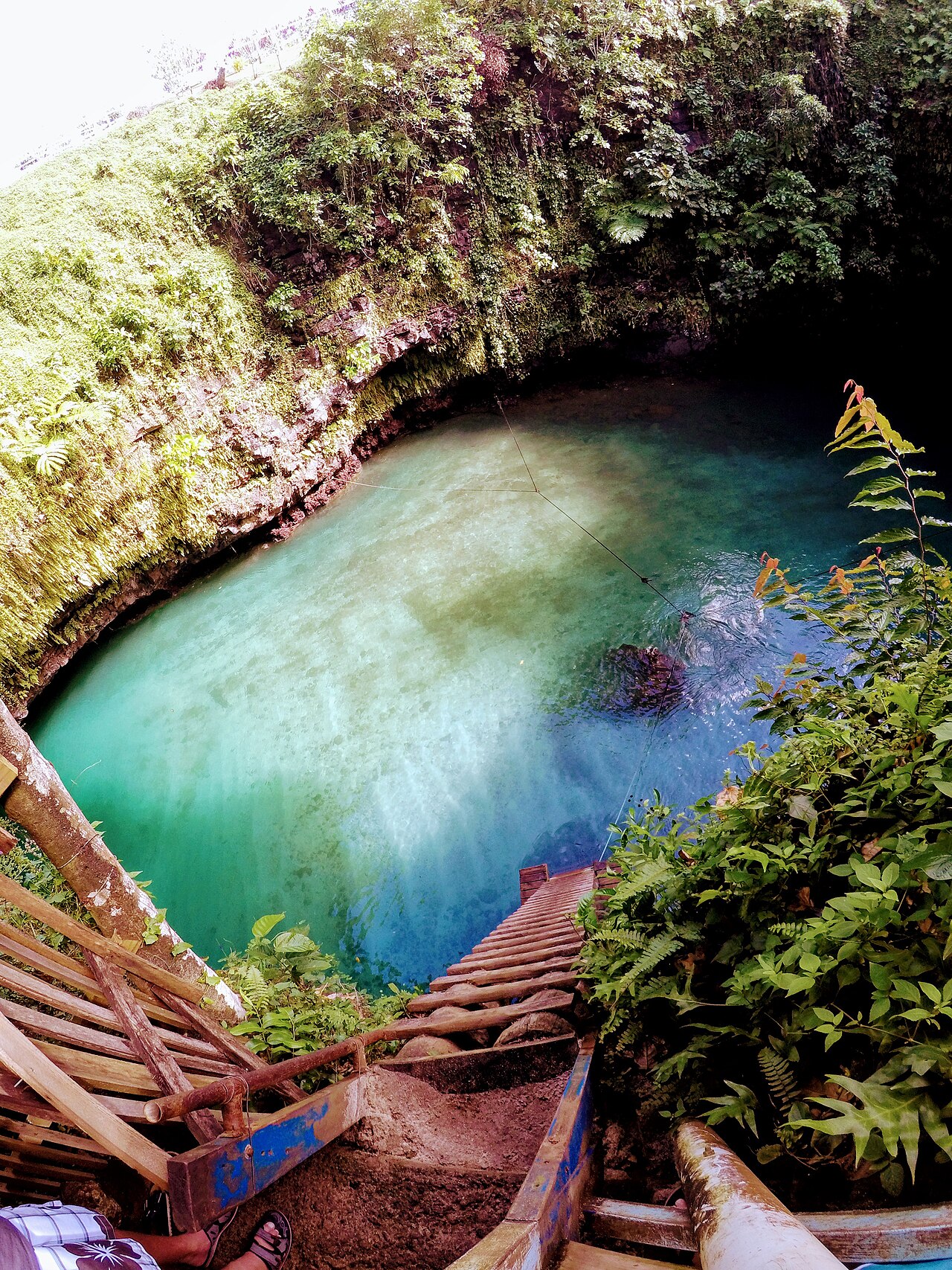
The anchor itself: To Sua Ocean Trench, at Lotofaga village on Upolu's south coast (about 1.5–2 hours from Apia by road), is a collapsed lava tube — a sinkhole some 30 m deep holding a pool of seawater that breathes with the ocean through an underground lava channel, reached by a long wooden ladder to a swimming platform. The published authority facts for the visit are the site's own published terms, run by the village on whose customary land it sits: open Monday–Saturday 8:00 a.m.–5:00 p.m. and Sunday 12:30–5:00 p.m. only (church first — Samoa's Sunday is constitutional in spirit), with an adult entry fee of about WST 20 (recent seasons' reports range WST 15–25; cash only, in tala, paid at the gate to Lotofaga village), children less, under-6s free. The grounds around the hole (gardens, a second dry trench To Le Sua, a small beach and rock pools) are part of the ticket. June serves the trench perfectly: dry-season light reaches the water at midday, the ladder is dry underfoot, and arriving at the 8:00 opening on a weekday gives the pool to a handful of swimmers before the day tours land. Entry rules for the country itself are stated with this answer: U.S. citizens need no visa for stays up to 90 days (U.S. State Department), a visitor permit is issued on arrival, the passport needs 6 months' validity, and Samoa's Ministry of Health currently advises every traveler from 12 months old to have had a measles vaccination at least 14 days before arrival (advisory of November 3, 2025 — Samoa remembers its 2019 epidemic, which killed 83 people).
August and early September are the honourable alternatives (September opens with the Teuila Festival in Apia, the country's great week of dance, fautasi longboat racing and fire-knife competition since 1991). But June is the driest, calmest and quietest version of everything Samoa does — trench included.
Picture the place
To Sua at 9 a.m. in June: the ladder descending through green shade into water so clear the swimmers' shadows lie printed on the sand 10 feet below them.
The easily missed detail
To Sua is tidal in disguise: the pool is plumbed to the ocean, so its clarity and level ride the tide cycle, and at low water the ladder lengthens and the current in the connecting cave strengthens — swimmers who are not strong stay on the platform side at the ebb, and nobody dives (the trench's beauty has a safety record written by ignored warnings; the village's rope and rules are there because they are needed). The second detail is the Sunday shape of the whole country: To Sua's 12:30 Sunday opening is your template — beaches, waterfalls and villages belong to church and family until afternoon, and a first trip planned around a quiet Sunday to'ona'i lunch (see the food answer) reads Samoa correctly, while one that fights it reads nothing at all.
A practical rhythm
- To Sua at the opening bell — 8:00 a.m. weekday arrival, the ladder and the pool before the tours
- South coast in sequence — Lalomanu, the trench, Sopoaga and Togitogiga falls strung along 1 dry road
- Savai'i mid-trip — The ferry on a settled June morning, 3 nights minimum on the big island
What could complicate the plan
The fee and hours are village-set, and the sources genuinely disagree (WST 15 to 25 for adults across recent seasons; opening at 8:00 or 8:30) — carry small tala notes, accept the gate's figure with grace, and confirm hours with your fale the night before, because customary land means customary terms. The trench's ladder is genuinely steep and slippery when wet, there is no lifeguard and no phone signal worth the name, and the site closes outright in dangerous weather and after heavy rain swells the connecting cave — June minimises, but does not abolish, that risk. Cyclone season is the macro version: November–April travel needs flexible bookings and insurance that names tropical cyclones (Evan closed the country in 2012; the 2009 tsunami's south-coast memory shapes Lalomanu's rebuilt fales and its evacuation signs — read them when you arrive, not as folklore). Entry has 1 live wrinkle: the measles advisory (vaccination at least 14 days before arrival, per the Ministry of Health's November 2025 notice) — check its current form before flying, as post-2019 Samoa adjusts it periodically. And June's diaspora traffic means the Auckland–Apia flights and the good south-coast fales fill early; book the beach fale before the international flight, not after.
What to do next
Book a Lalomanu or south-coast fale for early June, carry tala in small notes for the gate, and give To Sua the first clear morning of the trip.
Sources
- Samoa Meteorology Division / WMO 1991–2020 normals for Apia — about 3,090 mm of rain a year; June the driest month (about 138 mm); wet season November–April, dry season May–October
- To Sua Ocean Trench (site / village-published terms) — hours Monday–Saturday 8:00–5:00, Sunday 12:30–5:00; adult fee about WST 20 (reported range WST 15–25), cash only; a 30 m collapsed lava-tube pool connected to the sea
- U.S. Department of State, Samoa — no visa for U.S. citizens up to 90 days; passport valid 6 months; Level 1 (normal precautions, July 2026)
- Samoa Ministry of Health — measles travel advisory (November 3, 2025): vaccination advised at least 14 days before arrival for travellers from 12 months old
- Samoa Tourism Authority — Teuila Festival (early September, since 1991); Independence Day June 1