Saudi Arabia country guide Food and drink
What local dishes should I try in Saudi Arabia, and where should I look for them?
The short answer
Kabsa, the spiced rice that anchors every region; jareesh — officially named a Saudi national dish in 2023 — from the Najd; creamy saleeg in the Hejaz; sukkari dates in Qassim; and one pilgrimage to Al Baik, the fried-chicken chain founded in Jeddah in 1974 that Saudis defend like a football club.
The answer, with local context
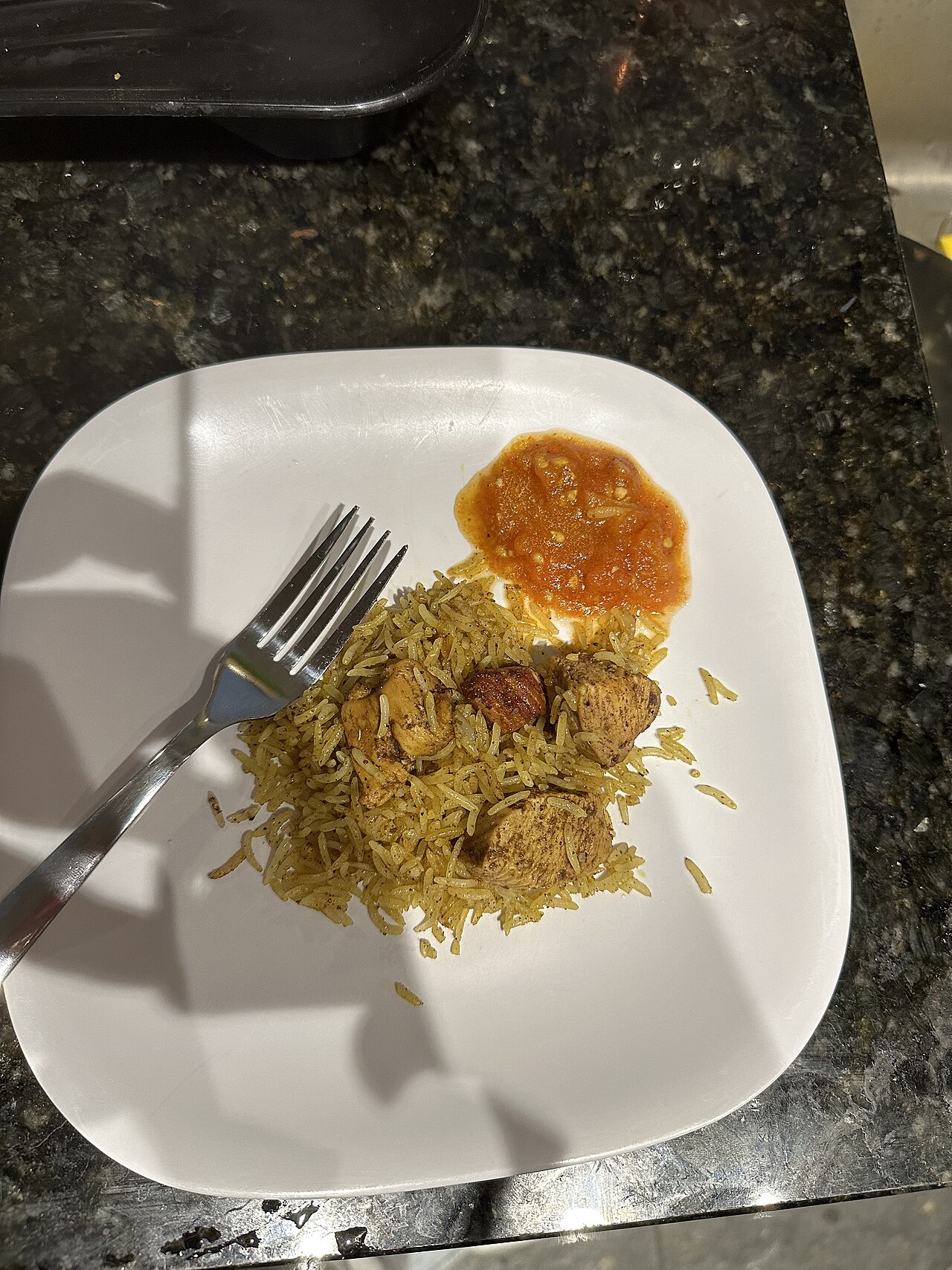
Saudi cooking maps to its regions. Kabsa is the through-line: long-grain basmati cooked in a meat broth dark with baharat, dried black lime (loomi), cardamom and tomato, then crowned with roasted chicken, lamb, goat or camel and a scatter of raisins and almonds, served communally on a platter the size of a tray table. Every region seasons it differently, and every family has a verdict. The Najd, the central plateau, adds its own canon: jareesh, crushed wheat slow-cooked with meat and stirred down with yogurt into a thick, sour porridge — chosen, with the Hail winter sweet maqshush, as national dishes by the Culinary Arts Commission at the start of 2023 — plus marqooq, thin-sauced stew mopped up with sheets of bread, and the date-and-bread winter pudding hanini.
The Hejaz, facing the Red Sea and centuries of pilgrim traffic, cooks softer and more cosmopolitan. Its emblem is saleeg, white short-grain rice boiled down in broth and milk to a risotto-like cream, served with roast chicken and a tomato-chili dakous — the comfort dish of Jeddah and Taif. The same coast produced the kingdom's great modern food institution: Al Baik, founded in Jeddah in 1974, whose broasted chicken and garlic sauce inspire the devotion of a national team; the airport branch may genuinely be Saudi Arabia's most visited restaurant. In the southwest, Asir's highland table runs to areekah, a date-and-bread mash flooded with ghee and honey, eaten by hand at breakfast.
Then there are the ingredients that travel as gifts. Dates are the kingdom's edible identity — sukkari, soft and caramel-sweet, from Qassim; khalas from Al-Ahsa; dark ajwa from Medina — and Buraidah, Qassim's capital, a UNESCO Creative City of Gastronomy, runs one of the world's largest date markets, peaking at its August festival. Coffee closes the circuit: gahwa, the pale cardamom coffee poured from a dallah in thimble pours, is the handshake of Saudi hospitality, and the bean itself now has heritage papers — Khawlani coffee cultivation in the Jazan mountains joined UNESCO's intangible list in 2022, and the Saudi Ministry of Culture declared 2022 the Year of Saudi Coffee outright.
Picture the place
The kabsa arrives on a platter wider than the table is deep, the rice in a burnished mound, a whole roast chicken quartered across the top — and four people eat from it cross-legged around a mat, right hands only, the raisins reserved as prizes.
The easily missed detail
The defining Saudi dining room is invisible to guidebooks: the single men's restaurant with its floor-mat family-style seating, and its opposite, the majlis meal where the guest is fed first and the host's questions wait until the coffee. And note the signal — a small shake of the finjal, the handleless coffee cup, is the polite way to say the pours can stop; without it, hospitality's rules say the dallah keeps coming.
A practical rhythm
- Lunch — The big rice meal of the day, kabsa or jareesh eaten at the midday sitting as Saudis take it.
- Afternoon — Gahwa and dates, the standing pause that punctuates shopping, museums and meetings alike.
- Evening — Al Baik at least once, saleeg in Jeddah, and the date souks of Buraidah or Al-Ahsa for provisions if the route passes.
What could complicate the plan
Alcohol is prohibited absolutely, everywhere, with real penalties — the coffee and date culture is not a substitute but the actual main event. Restaurant timings bend around the five daily prayers and many kitchens close mid-afternoon; lunch is the reliable feast, dinner the lighter meal. Portions built for platters and sharing defeat a solo diner's ordering ambitions — the smallest kabsa is a group decision. During Ramadan, daytime eating in public is restricted and the food day flips to iftar feasts after sunset.
What to do next
Eat regionally on purpose — Najdi dishes in Riyadh, Hejazi in Jeddah, dates bought at source — and let Al Baik be the delicious exception that proves the country modern.
Sources
- Saudi Culinary Arts Commission — jareesh named a Saudi national dish and maqshush the national dessert at the start of 2023; kabsa's composition of broth-cooked basmati with baharat and dried black lime
- Saudi Arabia's regional dishes — saleeg as the Hejaz's milk-and-broth rice; hanini and marqooq in the Najd; areekah in Asir
- Al Baik — the broasted-chicken chain founded in Jeddah in 1974
- UNESCO Intangible Cultural Heritage — Khawlani coffee bean cultivation (2022) and Arabic coffee; Buraidah's status as a UNESCO Creative City of Gastronomy and host to one of the world's largest date markets