Serbia country guide Food and drink
What local dishes should I try in Serbia, and where should I look for them?
The short answer
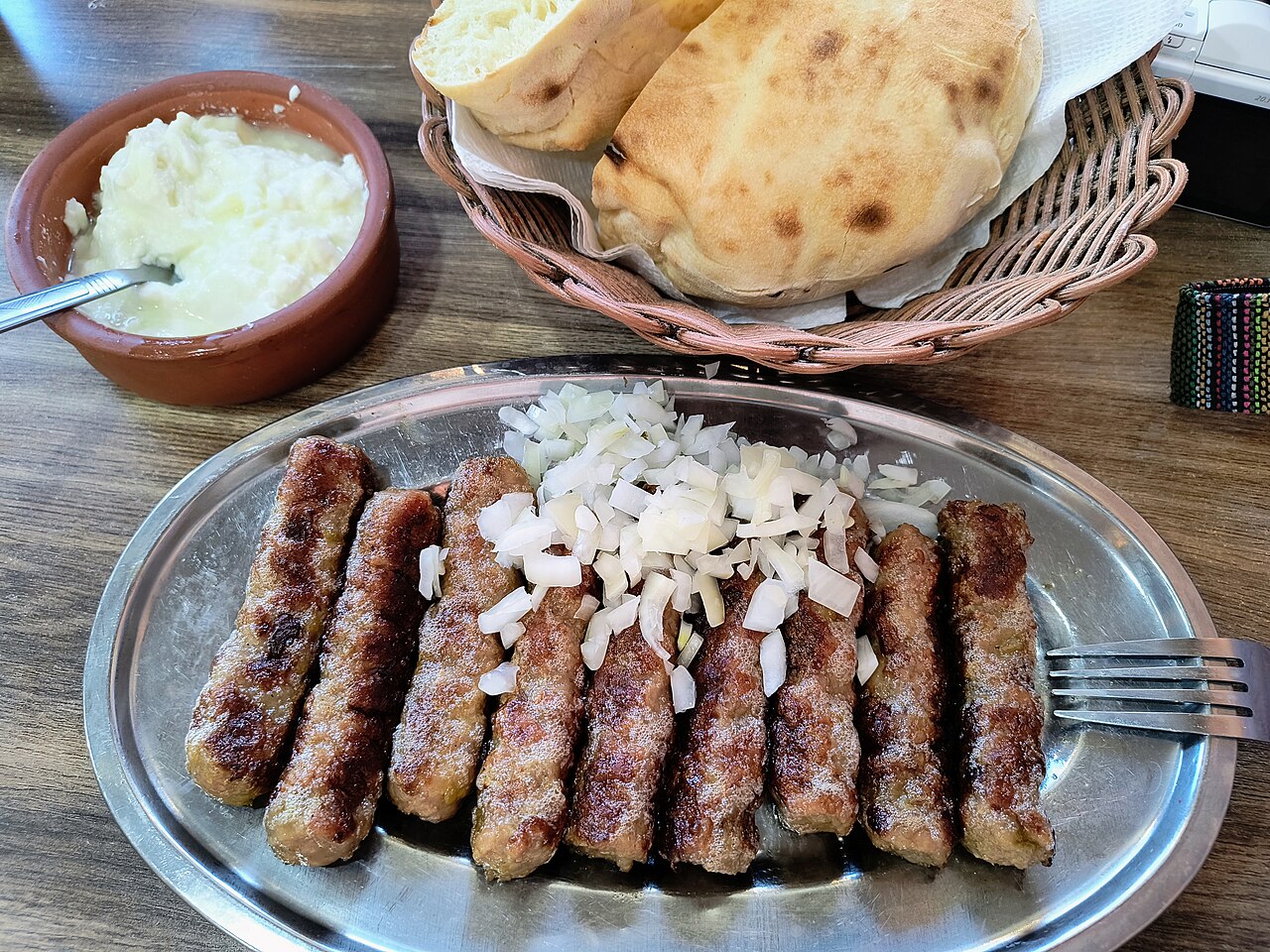
Ćevapi and pljeskavica off the grill, komplet lepinja in Užice, kajmak on everything in the west, and šljivovica to open the meal — a kafana-and-grill cuisine mapped by towns that each defend a speciality: Leskovac for the grill, Novi Pazar for ćevapi, Užice for kajmak, Sremski Karlovci for Bermet.
The answer, with local context
Serbian food is organized around the roštilj (grill) and the kafana (tavern), and both have capitals. Leskovac, in the south, is grill city: its pljeskavica — a broad, spiced minced-meat patty, often leskovačka-style with heat — anchors the Roštiljijada, the grill festival the town has staged since 1989, and its ćevapi and uštipci (fried dough with cheese) fill the kafane year-round. Novi Pazar counters with pazarski ćevapi, pure-beef fingers grilled and served in somun flatbread with onion, which southwesterners consider the country's benchmark; Belgrade's ćevabdžinice argue otherwise, which is the correct national condition. The west holds the dairy crown: kajmak, the clotted cream skimmed from boiled milk (the young, mild sort from Užice is the connoisseur's), reaches its apotheosis in komplet lepinja — a flatbread baked with kajmak, egg and pretop, the drippings of roast meat — the Užice-Zlatibor breakfast of champions. Gibanica (cheese pie), proja (cornbread), burek with yogurt at dawn from the pekara, and prebranac (slow-baked beans, gratin-crisped) and sarma (sour-cabbage rolls, winter's flagship) complete the Serbian table's fixed points.
The liquid canon is protected heritage. Šljivovica, plum rakija, was inscribed by UNESCO on the Representative List of the Intangible Cultural Heritage of Humanity in 2022 ("social practices and knowledge related to the preparation and use of the traditional plum spirit") — the village still, the autumn plum harvest and the toast ritual are the protected object, and the quince (dunja) rakija of Vojvodina runs it close. Wine divides by region: Fruška Gora's slopes (Graševina, and Bermet, Sremski Karlovci's spiced, vermouth-like dessert wine of Habsburg fame), Župa's hills around Aleksandrovac (the indigenous Prokupac and Tamjanika, with a wine museum in a region pouring since the monasteries), the stone pimnice wine-cellars of the Negotin Krajina (whole villages — Rajac, Rogljevo — built as cellars in the 18th and 19th centuries), and the royal vineyards of Oplenac above Topola. The feast calendar crowns it: the slava, a family's patron-saint day (UNESCO-listed in 2014), where the table carries slavski kolač (ritual bread) and žito (sweetened wheat) before the roasts arrive — a guest at a slava eats the culture whole.
Where to eat it: Belgrade's kafane first — the "?" (Znak pitanja, trading since 1823, the capital's oldest tavern) across from the Cathedral, and Skadarlija's bohemian row (Dva Jelena since 1832, Tri šešira since 1864) for the full theater of tamburica bands and grilled abundance; the green markets (Kalenić, Zeleni Venac) for kajmak, ajvar and peppers by the kilo; Leskovac and Novi Pazar in person for the grill argument; Užice for komplet lepinja at its source; Sremski Karlovci's cellars for Bermet; and the roadside pečenje restaurants along the Ibar and Morava roads, where whole lambs and pigs turn on spits and lunch is a motoring decision. Ajvar season (September–October) turns the south into a pepper-roasting encampment — the Leskovac basin's ajvar is a protected local pride.
Picture the place
A Leskovac kafana at 9 p.m.: the grill man fanning coals with a practised wrist, pljeskavice hissing in rows, kajmak melting at the edges of hot lepinja, and a tamburica band tuning up by the door.
The easily missed detail
Komplet lepinja has a rule that explains its name: "komplet" means the works — the bread is split, coated with kajmak, cracked with an egg, baked, then drowned in hot pretop — and ordering it "without" anything converts it into a different, lesser dish that Užice will serve you with quiet pity. The second miss is the rakija order of operations: šljivovica is an aperitif and a greeting, poured small and cold before food, and the traveler who saves it for after dinner has been politely misread all evening — accept the first glass on arrival, and the table is set.
A practical rhythm
- Grill by town, not by menu — Pljeskavica in Leskovac, ćevapi in Novi Pazar, each judged on home ground
- Breakfast like the west — Komplet lepinja or burek-and-yogurt before 10 a.m., when the pekara trays are fresh
- Kafana dinner in Belgrade — The "?" or Skadarlija taken late, with the band, as the capital's edible history lesson
What could complicate the plan
The cuisine is magnificent and meat-central: vegetarians live on the fasting (posno) traditions — prebranac, bean soups, stuffed peppers — which are genuine and widespread (Orthodox fasting is widely kept, and Wednesdays and Fridays lean meatless in traditional kitchens), but outside those lanes the grill menu is a wall of pork. Portions are engineered for farm labour; the full kafana sequence (rakija, soup, grill, salad, dessert) defeats most visitors by course 3. Grill towns peak on their festivals (Leskovac's Roštiljijada floods the south at the end of August) and village slava invitations are sacred hospitality — declining food is not really an available move. And homemade rakija, Serbia's pride, is unlabelled by definition: the distiller's own bottle is the honour and the risk in a single glass, and moderation is the guest's own department.
What to do next
Eat the argument in order: Belgrade kafana, Užice breakfast, 1 grill capital (Leskovac or Novi Pazar), and Bermet in Sremski Karlovci.
Sources
- UNESCO Intangible Cultural Heritage — Šljivovica practices (inscribed 2022) and the Slava celebration (2014), both for Serbia
- National Tourism Organisation of Serbia — the regional food map: Leskovac grill and Roštiljijada (since 1989), Novi Pazar ćevapi, Užice kajmak and komplet lepinja
- Fruška Gora / Župa / Negotin wine authorities — Bermet of Sremski Karlovci, Prokupac and Tamjanika, the pimnice cellar villages
- City of Belgrade — the Znak pitanja tavern (1823) and Skadarlija's historic kafane