Serbia country guide When to visit
When is the best time to visit Serbia for Belgrade?
The short answer
June — the capital's river life is fully switched on (splavovi open, Ada's beaches swimming, kafana gardens full past midnight), the southwest mountains and the Uvac vultures are in their green season, and the furnace weeks of July and August have not yet arrived.
The answer, with local context
Serbia is a continental country of plains, gorges and mid-height mountains: the Vojvodina flatland in the north, the Danube running 588 km through it, and the Zlatibor–Tara–Kopaonik high country stacked in the southwest. Its calendar splits cleanly. July and August are hot (Belgrade highs in the 90s °F, the south hotter) and festival-dense — EXIT in Novi Sad in July, Guča's brass festival in August — but the cities empty of their own people and the asphalt radiates. Winter belongs to Kopaonik's ski slopes and to the košava, the cold southeast wind that scours Belgrade from autumn to spring. June is the country's opening month at full power: the longest days of the year (Belgrade sunsets near 8:30 p.m.), the mountains in flower, the raspberry country around Arilje (Serbia is one of the world's great raspberry exporters) coming into harvest, and every outdoor institution running — without the peak-heat surcharge. Entry is its own simple affair: Serbia sits outside the EU and Schengen, and the U.S. Department of State confirms U.S. citizens need no visa for stays of up to 90 days — days that do not consume any of a traveler's Schengen allowance, a fact long-haul European itineraries can be built on.
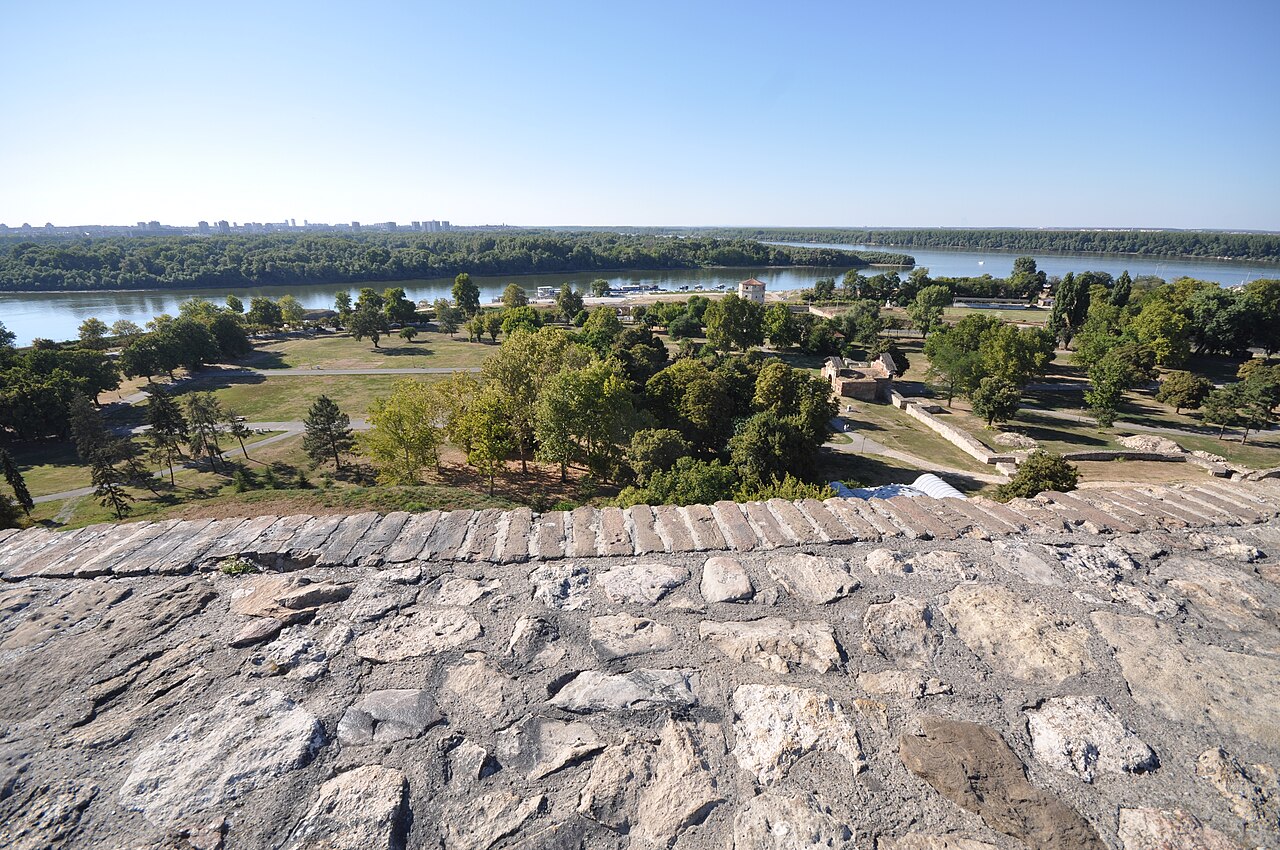
Belgrade in June is the city at its thesis statement. The capital stands where the Sava meets the Danube, and its life runs downhill to the water: Kalemegdan — the fortress park above the confluence, on a site fortified since Celtic Singidunum — fills with chess players, buskers and sunset crowds at the Victor monument (1928); the splavovi, the floating clubs and restaurants moored along both rivers, open their full season; and Ada Ciganlija, the river island turned lake resort, starts its swimming (its beaches draw hundreds of thousands on peak summer weekends). Above the old town the Temple of Saint Sava — the Balkans' largest Orthodox church, its shell built across 1935–2004 and its vast mosaic interior completed only in the 2020s — stands finished at last, and the Nikola Tesla Museum (founded 1952; its archive inscribed in UNESCO's Memory of the World in 2003) runs its famous induction-motor demonstrations in the cool of the afternoon. Serbia holds 5 UNESCO World Heritage properties (all cultural, from Stari Ras in 1979 to the Stećci tombstones in 2016), and June is when the road legs to them — monasteries, gorges, mountain reserves — are all simultaneously pleasant.
The rivals are honest. September is June's only real competitor — harvest, wine country in Fruška Gora and Župa, cooler cities — and wins for travelers who eat their way through a country. July and August are for festival collectors (EXIT's fortress nights, Guča's brass delirium) who accept the heat as the ticket price. May is June with the rivers 2 weeks behind. But June gives the whole country — capital nightlife, mountain green, the vulture reserve's boat season — in 1 frame, at full strength, before the heat edits it.
Picture the place
Kalemegdan at 8 p.m. in June: the Victor silhouetted over the confluence, 2 rivers going copper and grey-green below, and the whole city drifting toward the ramparts with ice creams and nowhere to be.
The easily missed detail
Belgrade's June secret is Zemun, the former Habsburg border town across the Sava, now a city municipality: its Gardoš hill (crowned by the 1896 Millennium Tower) and its Danube quay of fish restaurants give the capital a second, central-European face that most visitors never cross the river for — and at June's water levels the quay is the city's best dinner address. The second detail is the registration rule's paper: hotels register guests automatically, but the confirmation slip is worth keeping until departure, because border police can ask for it on exit.
A practical rhythm
- Belgrade by its waters — Kalemegdan at sunset, Zemun for fish, a splav evening: the city read from its rivers
- Mountains mid-trip — Zlatibor, Tara and Uvac taken in June's green, between the capital's 2 halves
- Novi Sad as the exhale — The fast train north for Petrovaradin and the Fruška Gora monasteries
What could complicate the plan
The paperwork has 1 live wire: the U.S. State Department states that U.S. citizens must register with the police within 24 hours of arrival — hotels do it, but anyone staying in a private apartment must go to a police station in person, and the unregistered stay can draw a fine. Heat management is June's second clause: the month opens gentle and can close in a 100°F (38°C) spike in its last week, especially in the south around Niš. The mountain weather is equally real — Tara and Zlatibor generate afternoon storms in June even in fine weeks, and the Uvac reserve's boat trips and viewpoints are daylight, fair-weather operations. And Belgrade's nightlife, the June headline, runs on Balkan time: splavovi fill after midnight, so the traveler who keeps northern hours will see the famous scene at half strength.
What to do next
Book June with Belgrade as both ends of the trip, keep the registration confirmation from your first hotel, and give the southwest a 3-night block in the middle.
Sources
- U.S. Department of State, Serbia travel information — no visa for U.S. citizens for up to 90 days; mandatory police registration within 24 hours of arrival
- UNESCO World Heritage Centre, Serbia country page — 5 properties inscribed, all cultural (Stari Ras and Sopoćani 1979 through Stećci 2016); Tesla archive in Memory of the World (2003)
- National Tourism Organisation of Serbia — the Ada Ciganlija season, the splavovi and the festival calendar (EXIT, Guča)
- Republic Hydrometeorological Service of Serbia — the continental climate and the košava regime