Slovenia country guide Trip planning
How can I plan a memorable first trip to Slovenia without rushing?
The short answer
Give it 7–9 days in 3 bases — Ljubljana, the Bled–Bohinj lakes, and either the Soča valley or the Karst-and-coast — because Slovenia's longest internal drive is barely 2.5 hours, and the country's gift to the unhurried is that nothing needs a transit day.
The answer, with local context
The distances are the delight. Ljubljana to Bled is 55 km (45 minutes by motorway); Ljubljana to Postojna 53 km; to Piran 120 km (about 1.5 hours); to Maribor 130 km; Bled to Bohinj 25 minutes. The whole country, 20,273 km² with about 2.12 million residents, fits inside the radius of a single American metro area — the longest sensible internal transfer, Ljubljana to the Prekmurje far east, is about 2.5 hours. So the shape writes itself: Ljubljana 2–3 nights (Plečnik's river city — the Triple Bridge, the market arcades, the castle by funicular, the car-free old town — with Škocjan or Postojna and Predjama as the day trip south), the lakes 3 nights (Bled's island and castle, Bohinj's wild shore and Savica falls, Vintgar at opening time, a Pokljuka or Vogel lift into the high pastures), and a third base of your choosing: Bovec for the Soča (entered over the Vršič Pass, 1,611 m and 50 hairpins, or around via Italy) or Piran for the coast (with the Karst — Lipica, an osmica, the salt pans — as its hinterland). The east (Ptuj, Maribor's Old Vine, the Jeruzalem terraces) is the second trip's head start or a 2-night extension.
Entry and means are simple. Slovenia is EU, Schengen and euro (since 2007): U.S. citizens enter visa-free for 90 days in any 180 across Schengen with a passport valid 3 months beyond departure (U.S. Department of State), registering through the EU's EES at the external border. Jože Pučnik Airport sits 25 km north of the capital with bus and shuttle links; Venice and Vienna are the usual alternate gateways (about 2.5 and 4 hours). By road, the 1 rule with teeth is the motorway e-vignette: Slovenia tolls by vignette (weekly and monthly versions sold online by DARS), and driving without one draws real fines — buy it before the border, not after. Rail covers the classic line well (Ljubljana–Lesce-Bled, for the lake's station 4 km out with buses meeting trains; the Bohinj line from Jesenice threads the Soča valley on a heritage Transalpina alignment; Ljubljana–Koper serves the coast), and a car earns its keep only for the valleys and wine hills.
The unhurried texture is the point: mornings on the water, evenings on Ljubljana's café embankments, a farm lunch that becomes the afternoon. Slovenia's tourism model (the country markets itself, credibly, as Europe's green classroom) rewards exactly this tempo — the places are close, the crowds thin 20 minutes from the icons, and the only true scheduling enemies are the Vršič's winter closure, Triglav's weather and Bled's summer Saturdays.
Picture the place
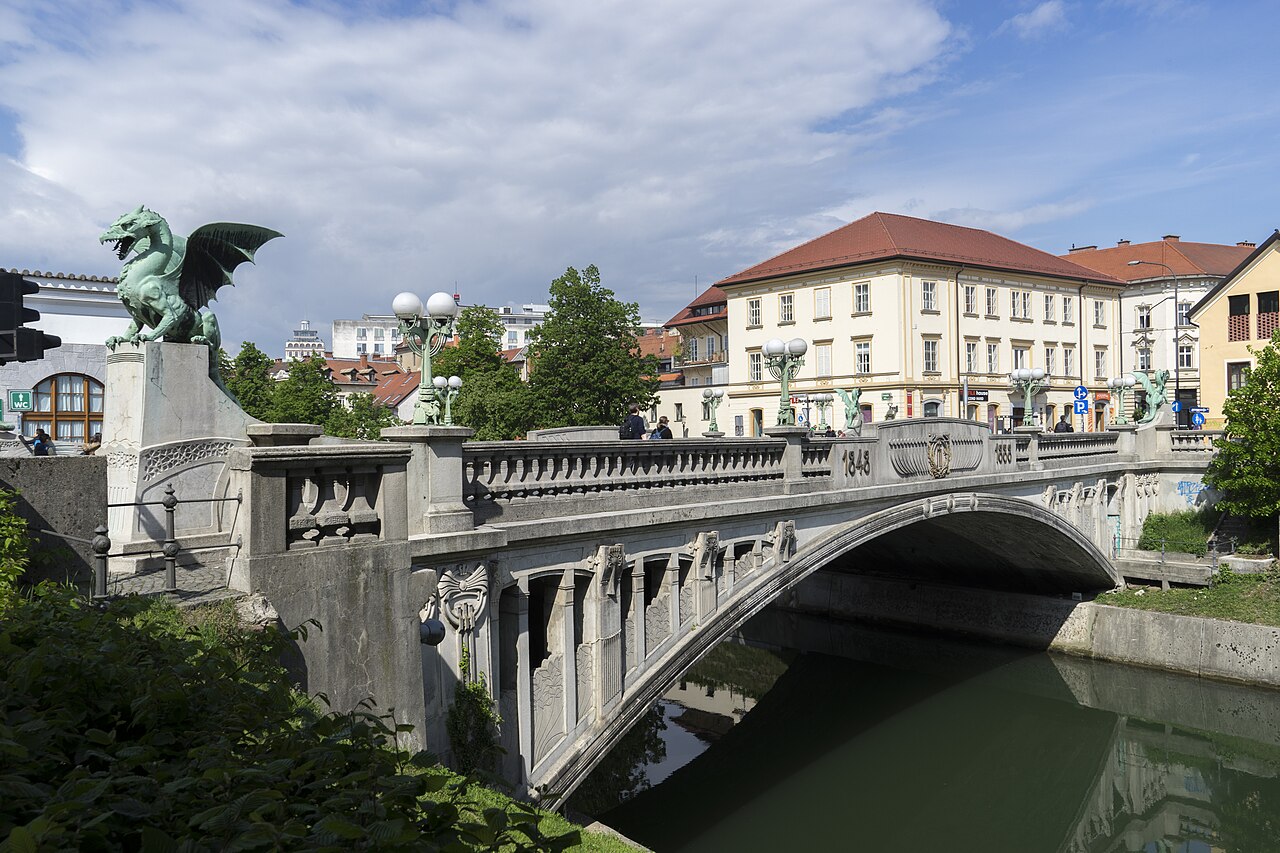
Ljubljana at 7 on a summer evening: the Ljubljanica green under the Triple Bridge, café umbrellas in Plečnik's arcades, dragon statues on their bridge, and castle light coming on above the rooftops.
The easily missed detail
Lesce-Bled, not Bled, is the lake's railway station — 4 km from the shore in the valley town of Lesce, with the connecting bus timed to the trains — and the traveler who books to "Bled" expecting to step onto the promenade steps off into a different town. The second detail is the alternative airport math: Venice Marco Polo to Ljubljana is a 2.5-hour shuttle, and many a Slovenia trip actually begins in Italy or ends in Vienna without a single backtrack — the open-jaw is the country's geographic gift.
A practical rhythm
- 3 bases, no transit days — Ljubljana, the lakes, and 1 corner (Soča or coast): the trip's whole geometry
- Icons at the edges of the day — Bled's island early, Vintgar at opening, Ljubljana's castle at dusk
- 1 valley, deeply — The Soča or the Vipava given a whole unscripted day rather than a drive-through
What could complicate the plan
The vignette, the Vršič and the weekend are the 3 traps. The e-vignette must be active before the motorway (checks are automated and fines heavy); the Vršič Pass closes in winter and after heavy snow well into spring, rerouting the Bled–Soča link through Italy; and Bled on summer weekends, plus Ljubljana's Friday Open Kitchen, concentrate the country's few crowds into predictable places that a shifted weekday dissolves. Season shapes the menu: gorge and swim seasons run roughly May to October, the ski country (Kranjska Gora, Vogel, Krvavec) takes December to March, and Triglav summits are a July-to-September, guide-and-ferrata undertaking, not a hiking add-on. Small-country logistics have 1 more quirk: Sunday public transport thins sharply, so the lakes-to-coast hop is a Saturday or a car.
What to do next
Book Ljubljana and a lakes base first, choose the third corner (Soča for mountains, Piran for sea), and buy the e-vignette the day the car is confirmed.
Sources
- U.S. Department of State, Slovenia travel information — Schengen 90/180 visa-free entry; passport 3 months beyond departure
- Statistical Office of the Republic of Slovenia — about 2.12 million residents; area 20,273 km²
- DARS (Motorway Company of the Republic of Slovenia) — the e-vignette requirement and durations
- Slovenian Railways / Ljubljana Airport — the Lesce-Bled station arrangement and the Bohinj (Transalpina) line; airport 25 km from the capital