Slovenia country guide Places and experiences
What should a first-time traveler see in Slovenia beyond the obvious highlights?
The short answer
The Soča valley's emerald river and First World War memory, the Škocjan underworld, Venetian Piran and its salt pans, Ptuj and Maribor's wine east, Lipica's white horses, and the herders' plateau of Velika Planina — the country's 4 corners beyond the Bled–Ljubljana axis.
The answer, with local context
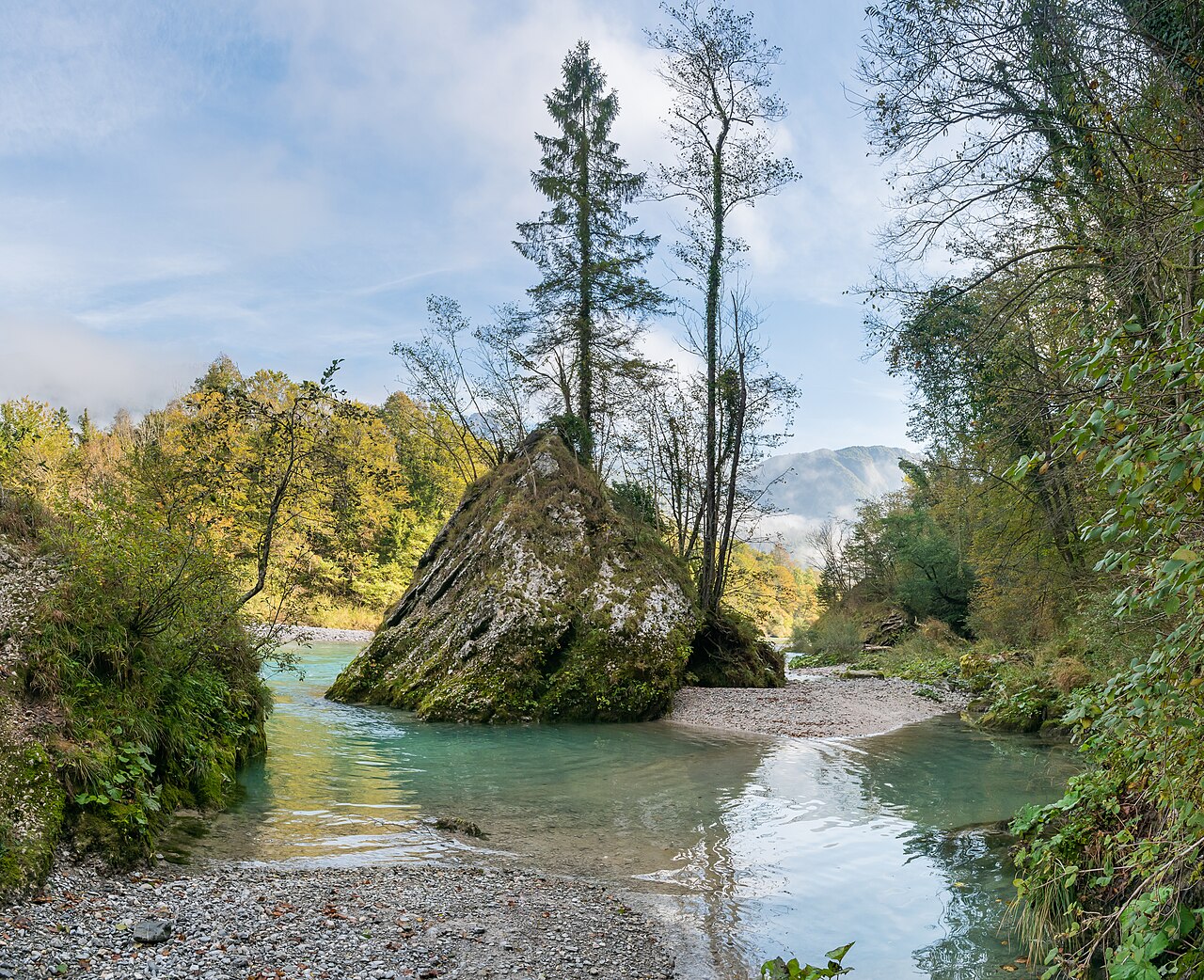
Begin where Slovenia keeps its epic: the Soča, a river of unreasonable color (a glacial-flour emerald) that cuts from Triglav National Park through Bovec and Kobarid to Italy. The valley is also a battlefield text: 12 Isonzo offensives were fought here in 1915–1917, and the Kobarid Museum tells the mountain war with a restraint that has won it European museum honours; the outdoor museums on the Kolovrat ridge and the Russian Chapel on the Vršič road (built by Russian prisoners of war, many killed by a 1916 avalanche) complete the story. In peacetime the river belongs to rafters and kayakers out of Bovec and to the marble trout, the Soča's endemic fish. Next, the karst underworld beyond Postojna: the Škocjan Caves, Slovenia's first UNESCO inscription (1986), where the Reka River runs through an underground canyon 146 m high — the largest in Europe — beneath a collapsed doline village; Postojna itself still matters (24 km of cave, a tourist railway running since 1872, the first in any cave, and the proteus, the blind "human fish" amphibian, in its tanks), and Predjama Castle, 9 km away, fills a 123-m cliff mouth and holds Guinness's record as the world's largest cave castle.
The coast is 46.6 km long and mostly Piran: a Venetian peninsula of marble lanes where the composer Giuseppe Tartini was born in 1692, walled above by ramparts with the country's best sunset, and flanked by the Sečovlje salt pans, where salt is still raked by hand as it has been since the 13th century and the fleur de sel reaches the table as Piran's white gold. Inland, the heritage deepens: Idrija (UNESCO, 2012) mined mercury from 1490 as 1 of the world's 2 great mercury towns, and its miners' wives made the lace that is now the town's second emblem; the Ljubljana Marshes yielded the world's oldest wooden wheel (about 5,200 years old, in the City Museum); and Lipica, on the Karst since 1580, is the original stud of the Lipizzaner horse, its breeding tradition inscribed by UNESCO in 2022.
The east is the beyond-highlights frontier most visitors never reach: Ptuj, Slovenia's oldest recorded town (Roman Poetovio, written into history in AD 69), whose February Kurentovanje carnival — the Kurents' sheepskin rounds, UNESCO-listed in 2017 — is the country's great winter rite; Maribor, where the Old Vine on the Drava bank, a Žametovka of more than 450 years, is certified the world's oldest living noble vine still bearing grapes; Lake Ptuj and the Jeruzalem wine terraces; and the Kočevje forests, where the Krokar primeval beech forest (UNESCO, 2017) stands unlogged and brown bears — several hundred live in Slovenia — still rule the south. Finish on Velika Planina, the herders' plateau above Kamnik, where oval wooden huts cluster in Europe's largest shepherds' settlement and trnič, the paired, decorated love-cheese, is still made each summer.
Picture the place
The Soča at Kobarid in late light: water the color of bottle glass over white limestone, a kayaker's paddle flashing, and the Kolovrat ridge — all trench lines and grass now — standing over the valley.
The easily missed detail
Postojna gets the coaches, but Škocjan is the greater cave and it runs on stricter rules: tours are guided only, photography is banned inside, and the walk exits up some 500 steps over the canyon bridge — travelers who schedule both caves on 1 day discover that Škocjan is a piece of mountaineering theater, not a stroll. The elegant solution is the pairing the locals know: Škocjan in the morning, then the coast, because the cave sits barely 15 km from the sea it eventually feeds.
A practical rhythm
- West arc — Bled → Vršič → Soča valley → Karst: the river and the underworld in 1 sweep
- Salt and stone — Škocjan at the first tour, Piran by lunch, the salt pans at golden hour
- The east given a night — Ptuj or Maribor slept in, not passed through, for the Old Vine and a Drava dinner
What could complicate the plan
Triglav National Park's wildness has protocols: swimming is barred in most of its lakes and rivers (Bohinj is the great exception), wild camping is forbidden, and the Soča's rafting is licensed and seasonal, with the river's mood changing by the day's rain. The Vršič road is winter-closed and motorcycle-serious in summer; the alternative route to the Soča runs through Italy (an extra border, if not a check). Bears are a real presence in the southern forests — the primeval-forest reserves like Krokar are entered guided or not at all. And Slovenia's compactness conceals its relief: the "beyond" places cluster in 4 different corners, so the beyond-highlights country is a week's geometry, not a long weekend's.
What to do next
Choose 2 corners beyond the Bled–Ljubljana axis (the Soča and the Karst-coast are the classic pair), and sleep a night in each.
Sources
- UNESCO World Heritage Centre — Škocjan Caves (1986); Idrija mercury (2012); beech forests with Krokar (2017); UNESCO ICH: Kurent rounds (2017) and Lipizzan breeding traditions (2022)
- Kobarid Museum / Walk of Peace Foundation — the 12 Isonzo offensives (1915–1917) and the valley's memorial landscape
- Škocjan Caves Park / Postojna Cave — the 146-m underground canyon; Postojna's cave railway (since 1872) and the proteus
- Old Vine House, Maribor / Sečovlje Salt Pans — the 450-year vine's certification and the pans' 13th-century method