Slovenia country guide Food and drink
What local dishes should I try in Slovenia, and where should I look for them?
The short answer
Štruklji and potica for the canon, Idrija's žlikrofi and the Karst's pršut and Teran for place, gibanica and pumpkin-seed oil in the east, and the osmica farm-openings and Ljubljana's gostilne and Friday open kitchen to eat them in — a cuisine assembled from Alpine, Karst, Pannonian and coastal kitchens.
The answer, with local context
Slovenia cooks in 4 dialects. The Alpine kitchen sends štruklji to every table in the country: rolled dumplings of pulled dough with fillings sweet and savoury — the tarragon (pehtran) štruklji are the connoisseur's order — beside žganci (buckwheat spoonbread with cracklings), ričet (the barley-and-bean stew), jota (sauerkraut or sour-turnip soup with beans) and the cheeses of the high pastures: Tolminc from the Soča valley, sharp Mohant from Bohinj and Nanos from its wind-scoured plateau. The Karst kitchen is the wind's work: kraški pršut, prosciutto dried by the bora in stone villages, and Teran, the iron-dark red from Refosco grown on red terra rossa soil, poured under an ivy branch at an osmica — the farm opening (descended from a Habsburg-era right) when a Karst farm sells its own wine and food for a short season. Idrija, the mercury town, contributes žlikrofi, small hat-shaped potato dumplings in a meat sauce (EU-protected, born as miners' food in the 19th century). The Pannonian east bakes prekmurska gibanica, the 8-layer festival cake (poppy seed, walnut, apple and cottage cheese in strata, EU-protected) and bograč, the 3-meat goulash of Prekmurje, and dresses everything in pumpkin-seed oil — the dark green oil of Štajerska and Prekmurje (EU-protected), dripped over salads and vanilla ice cream alike. The coast fries sardines, pours Malvasia and Refošk, and finishes with Piran salt.
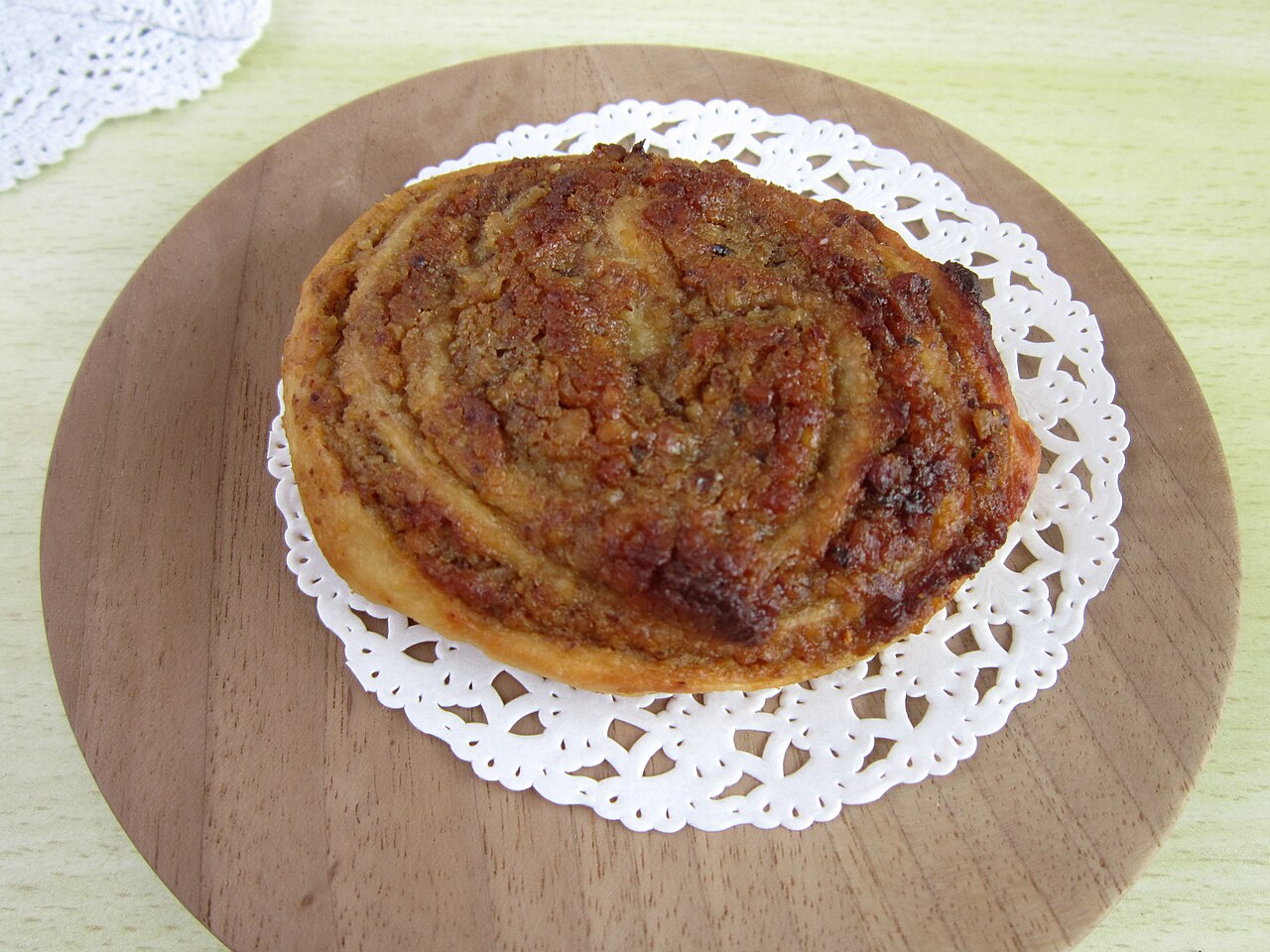
Above all of it sits potica, the festive walnut roll (protected as Slovenska potica), its dough wound around walnut, tarragon, honey or crackling fillings in more than 80 recorded variants — the Easter and Christmas loaf, served at farm stays and grandmothers' tables countrywide. Add kranjska klobasa, the Carniolan sausage (EU-protected, its name famously exported to Vienna as the Krainer), and the honey civilisation: Slovenia is a beekeeping nation (the Carniolan bee is native; the great apiarist Anton Janša's birthday, May 20, is now World Bee Day, and beekeeping sits on UNESCO's heritage list since 2022) — medica honey liqueur and painted beehive panels included. Wine pours mostly white (roughly 70% of production): Rebula in the Goriška Brda terraces, indigenous Zelen and Pinela in the Vipava valley (a valley of natural-wine pioneers), Šipon and Laški Rizling around Maribor and Ljutomer, and the spritzy mixed Cviček of Dolenjska. Beer is a 2-brewery nation: Laško (brewing since 1825) against Ljubljana's Union (since 1864), with a capital craft scene since.
Where: Ljubljana is the anthology — Plečnik's Central Market arcades, the Friday Odprta kuhna (Open Kitchen, running March to October) on Pogačarjev trg, and the gostilna shelf (Šestica serves since the 18th century's end; Sokol by the market). Beyond it: tourist farms (turistična kmetija) in the Brda and Vipava hills, Karst osmice flagged by ivy, Tolmin and Bohinj farm cheeses at source, and Ptuj and Maribor cellar doors in the east.
Picture the place
A Karst osmica at dusk: a long farmhouse table under the ivy branch, a board of pršut the color of old brick, Teran dark as ink in a small glass, and the bora moving in the linden tree.
The easily missed detail
The osmica is a calendar, not a restaurant: each Karst farm opens for a limited stretch (traditionally 8 days, the root of the name — osem is 8), marked only by the ivy branch (fraska) hung at the gate, and the local skill is reading the branch and the village noticeboard, not booking sites. The second detail is potica etiquette: a true potica is judged by the spiral — the filling should wind in continuous thin layers with no air gaps — and Slovenians can date a baker by the cross-section of a single slice.
A practical rhythm
- 1 dish per landscape — Žlikrofi in Idrija, pršut on the Karst, gibanica in Prekmurje: the plate follows the map
- Friday in Ljubljana — Odprta kuhna and the market as the capital's weekly food festival
- Farms over restaurants — A turistična kmetija lunch in the wine hills as the trip's best table
What could complicate the plan
Gostilne keep Slovenian hours: kitchens peak at lunch (the malica and the weekday set menu are the day's real cooking), Sunday afternoons and Mondays close many country kitchens, and the tourist farms and osmice run seasonal, weekend-weighted calendars that reward a phone call ahead. Teran has a legal doppelgänger problem (the name is contested across the Italian border, and Croatia's Teran is a different claim — the protected Slovenian wine is Kraški Teran from the Karst district specifically). Pumpkin-seed oil is a finishing oil (heat destroys it), so the east's salads arrive pre-dressed and the oil is bought, not cooked with. And potica is festive food: outside holidays it appears at farms, markets and good bakeries rather than on every café counter — ask for it by name.
What to do next
Plan 4 tables: a Ljubljana gostilna, a Karst osmica if the ivy is out, a Brda farm lunch, and potica with coffee in a market town.
Sources
- EU geographical indications — Slovenska potica; Idrijski žlikrofi; Prekmurska gibanica; Kraški pršut; Kranjska klobasa; Štajersko-prekmursko pumpkin-seed oil
- Slovenian Tourist Board / gastronomy regions — štruklji, žganci, jota and the 4 culinary landscapes; Odprta kuhna's season
- UNESCO ICH — beekeeping in Slovenia (2022); World Bee Day (May 20, Anton Janša's birthday)
- Wine of Slovenia — the 3 wine-growing regions (Primorska, Podravje, Posavje) and the white-wine majority