Suriname country guide Trip planning
How can I plan a memorable first trip to Suriname without rushing?
The short answer
Give Suriname 12–14 days in the long dry season: Paramaribo in 2 stays (3 + 2 nights), Commewijne by boat and bike (1–2 days), Brownsberg (1–2 nights) and 1 deep block — the Upper Suriname's Maroon lodges (4 nights) or Raleighvallen (4–5) — with the e-visa, entry fee and customs forms filed before you fly.
The answer, with local context
The constants: Johan Adolf Pengel International (PBM) sits 45 km south of the capital at Zanderij (the transfer is about an hour, arranged through hotels) and its route map explains the country: KLM from Amsterdam (the colonial artery, near-daily), Surinam Airways (Miami, Amsterdam, the Dutch Caribbean, Georgetown), Caribbean Airlines via Port of Spain, Copa via Panama and Fly AllWays regionally. Entry is the Guianas' paperwork champion (this guide's first answer): e-visa approval before travel, the US$50 entry fee online, the ICF form in both directions, passport 6 months valid — file everything the week before, screenshot the codes. Money is the Surinamese dollar (SRD; inflation has moved the rate hard in recent years, roughly 35–40 per U.S. dollar in the mid-2020s — check the central bank rate at booking): cards and ATMs work in Paramaribo (Dutch banking ties run deep), cash is king upriver, and euros are unusually welcome (the Amsterdam connection makes them a second travel currency here). Safety is the regional gift: Level 1, generally safe per the State Department, with ordinary capital-city care.
The shape that fits the map: Days 1–3, Paramaribo — the UNESCO core on foot (cathedral, Fort Zeelandia, Waterkant, Palmentuin), the Keizerstraat synagogue-and-mosque pairing, the Central Market morning, Blauwgrond on Sunday if the calendar lands, dolphins at Leonsberg at dusk. A Commewijne day (boat from Leonsberg or the Platte Brug: Fort Nieuw Amsterdam, Peperpot, Frederiksdorp by bike) and Brownsberg (1–2 nights, STINASU lodge or hammock camp) test the interior gently. Then the deep block, chosen once: the Upper Suriname (bus to Atjoni, korjaal upriver, 4 nights in 1 Saramaccan lodge — village days, rapids swims, forest walks) or Raleighvallen (charter flight in, 4–5 nights, Voltzberg climb, spider-monkey forest) for the wilderness-first traveler. Days 12–14, Paramaribo again: the buffer that river schedules deserve, the rum-and-roti farewell lap, home. Language is a pleasure here (Dutch official, English widely understood, Sranan Tongo for warmth — "fa waka?" earns its keep), and the country's small scale means the same guides and guesthouse owners recur across your trip — relationships compound, which is Suriname's actual luxury.
Picture the place
The korjaal sliding back into Atjoni at week's end: the river road behind you, village wood-smoke still in your clothes, and Paramaribo's lights 3 hours north feeling like another, smaller country.
The easily missed detail
Combine deliberately with the neighbours only if the days allow: Suriname pairs with French Guiana by the Maroni ferry (Albina–Saint-Laurent, an hour east-to-border then the crossing) and with Guyana by the Corantijn ferry at Nieuw Nickerie — the 3-Guianas overland is a classic, but each border consumes a day and Suriname alone fills a fortnight; the traveler who "adds Cayenne" usually subtracts the Upper Suriname. The second detail is the charter-flight economy: interior air strips (Raleighvallen, Kabalebo, the Sipaliwini) run on Gum Air and Blue Wing schedules that fill with lodge packages — independent seat-only bookings exist but the lodge bundles are the reliable product, booked weeks ahead in the dry season.
A practical rhythm
- 12–14 days, 4 blocks — Capital, river-plain, test interior, deep interior: variety by design
- Paperwork the week before — E-visa, entry fee, ICF: the unglamorous trio that boards your flight
- 1 deep block, chosen once — Maroon river culture OR granite-dome wilderness, not both in a fortnight
What could complicate the plan
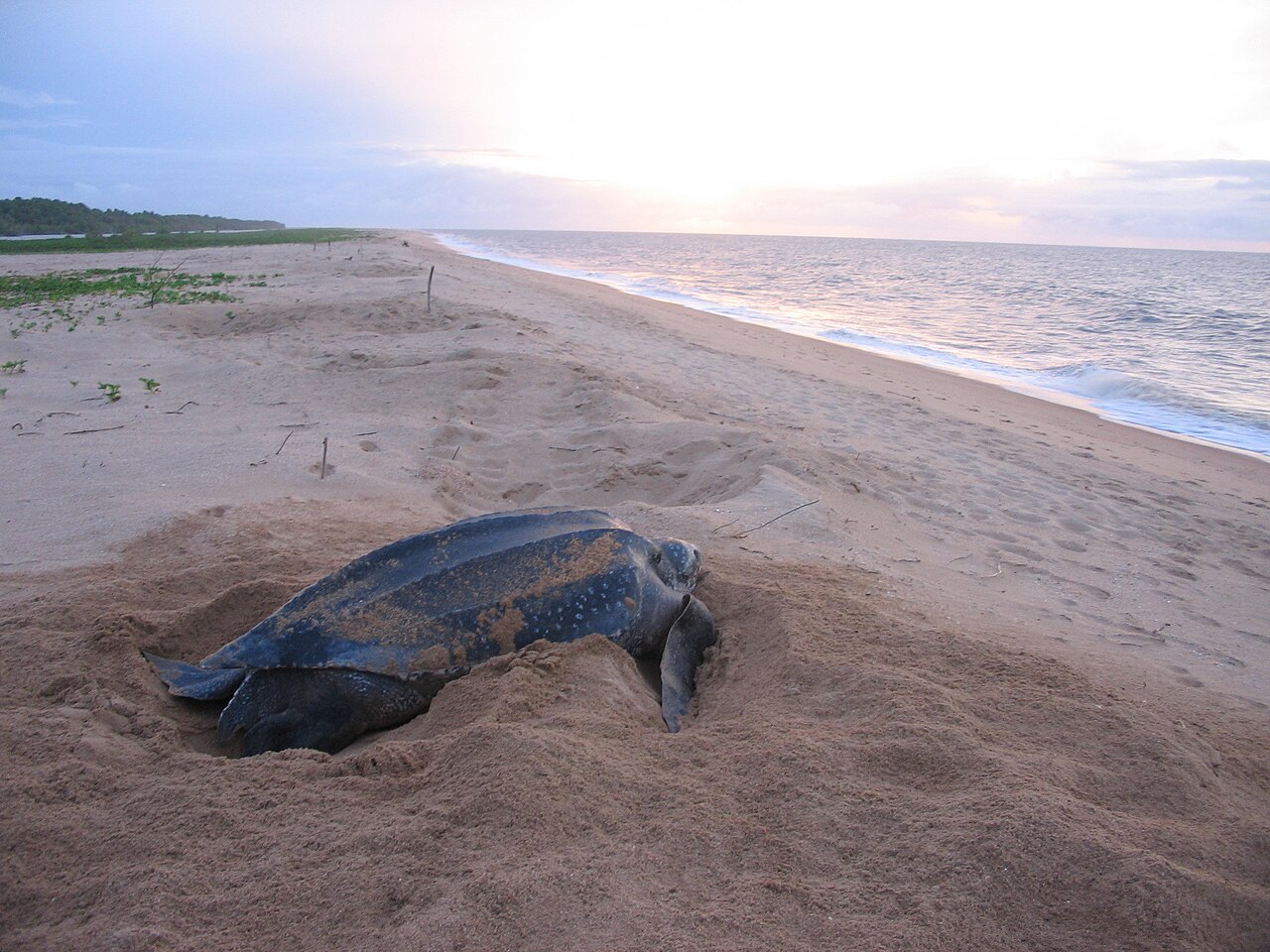
Forms and flights are the friction points: the e-visa/entry-fee/ICF stack (airlines verify at check-in; approvals can take days — never file on departure eve), KLM's Amsterdam pricing in Dutch holiday peaks (August is the expensive shoulder of the dry season; September is the value play this guide's first answer argues), and the small capital hotel stock (energy-sector demand from the offshore build — GranMorgu's first oil is targeted about 2028 — is tightening Paramaribo's rooms and restaurant scene already). River physics sets the interior's terms (late-dry low water stretches boat days; rainy-season trips trade firm trails for full rivers and nesting turtles — a legitimate alternative trip, planned as itself). Health planning is light but specific (no indigenous malaria since 2021; the CDC's chikungunya notice current at writing — vaccination conversation with your clinician; yellow fever certificate only for risk-country arrivals). The economy's volatility is the traveler's paperwork (SRD rates and card surcharges move; carry a euro/dollar cash reserve and price big items in hard currency at booking). And expectations: Suriname sells intimacy, not icons — 3 UNESCO sites but no single world-famous view; the trip's highlights will be a village evening, a dome at dawn, a soup at a plastic table — plan the pace that lets those land.
What to do next
Book September flights and the interior package together, file the 3 forms a week out, and let Paramaribo bookend a single, deep river block.
Sources
- U.S. Department of State, Suriname — Level 1 (August 6, 2026); e-visa, entry fee and ICF requirements; passport 6 months beyond arrival
- Route record — Johan Adolf Pengel International (PBM): KLM (Amsterdam), Surinam Airways, Caribbean Airlines, Copa, Fly AllWays
- STINASU / lodge operators — interior package structures (Atjoni boats, charter strips, Brownsberg and Raleighvallen programmes)
- U.S. CDC — no indigenous malaria since 2021; chikungunya travel notice for Suriname