Suriname country guide When to visit
When is the best time to visit Suriname for Paramaribo?
The short answer
September to October — the core of the long dry season, when Paramaribo's rainfall falls to its yearly floor (about 87–90 mm a month against May's 307), the river lodges run their full programme, and the Upper Suriname's rapids still carry enough water to run.
The answer, with local context
Suriname's year is 4 rainfall acts on a fixed equatorial stage — 84–91°F (29–33°C) by day all year, trade-wind cooled at night — and the Meteorological Service's calendar is the one to memorise: the short rainy season (December–early February), the short dry season (early February–mid-April), the long rainy season (late April–mid-August; May is Paramaribo's wettest month at about 307 mm), and the long dry season (mid-August–November), in which September and October bottom out at about 87–90 mm against an annual total near 2,136 mm at the capital's Zorg en Hoop station. The interior exaggerates both directions — more rain in the wet months, more dependence on river levels in the dry: by late October and November the Upper Suriname's rapids expose their rocks, and the korjaal (dugout) runs to Saramaccan villages slow, scrape and occasionally portage. September–October is the engineered compromise: trails at Brownsberg and Raleighvallen are firm, the rainforest lodges run full schedules, Galibi's beaches are calm between the turtle peak and the rains, Paramaribo's streets dry out between afternoon showers that mostly don't come, and the Dutch-school-holiday August premium has left the Amsterdam flights.
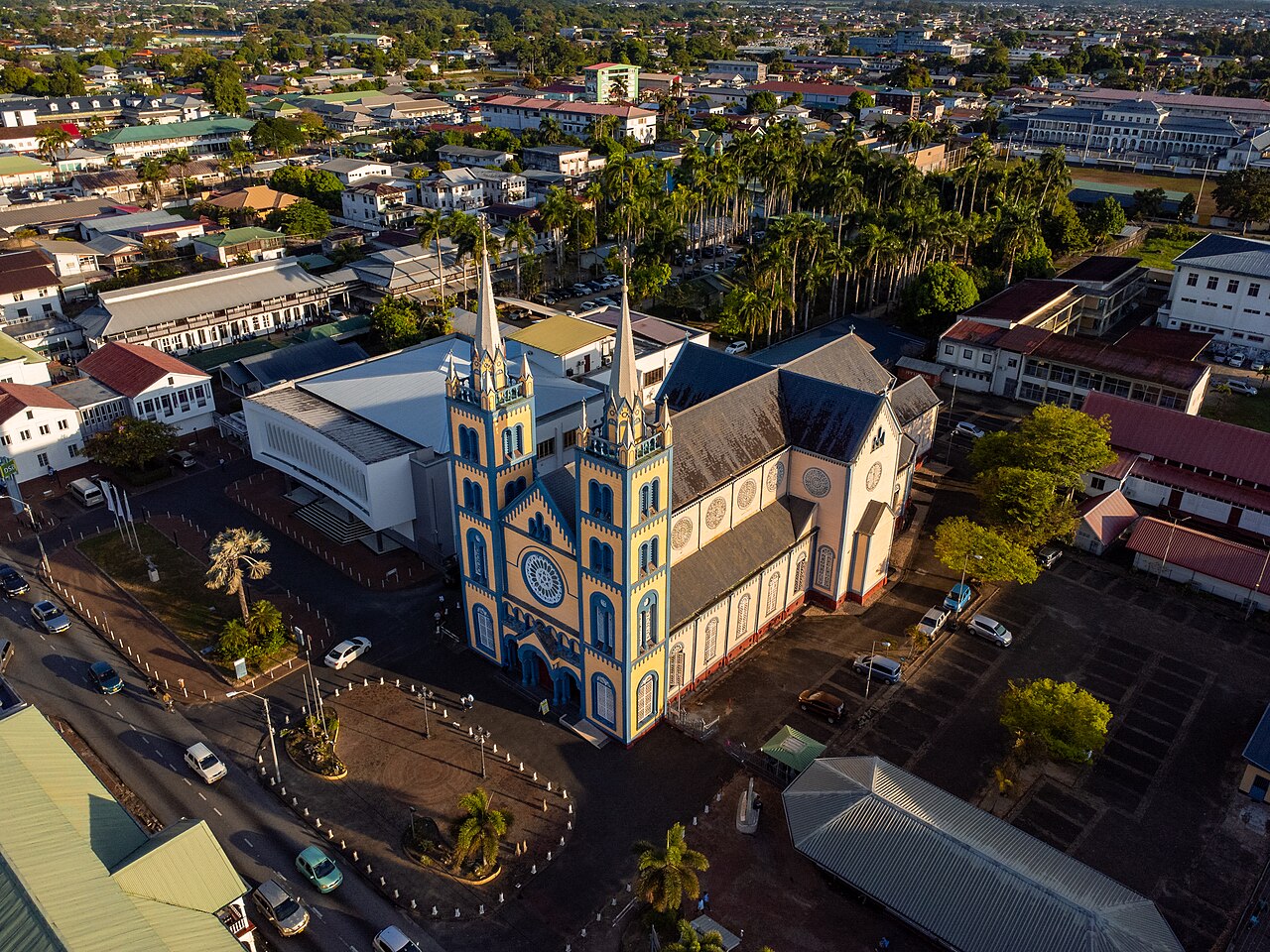
The anchor itself, with its published honours: Paramaribo's Historic Inner City is a UNESCO World Heritage property (inscribed 2002) — a Dutch colonial townscape of white timber houses on brick bases, laid out in the 17th and 18th centuries and remarkably intact. Its furniture is singular: the Sint-Petrus-en-Paulus Cathedral (built 1883–1885, among the largest wooden structures in the Americas, its interior a cedar vault), Fort Zeelandia (1667, the Surinaams Museum inside), the Palmentuin royal palm garden, the Waterkant riverfront street — and on Keizerstraat, the Neveh Shalom Synagogue and the Ahmadiyya mosque standing literally side by side, the city's famous postcard of its own pluralism. Entry, per the U.S. State Department: Suriname is Level 1 (Exercise Normal Precautions; the Department calls it generally safe) — but its paperwork is the Guianas' most demanding: U.S. citizens must complete the Suriname E-Visa tourist application and pay before travel (no visa on arrival), pay the separate Entry Fee of US$50 (in force since July 1, 2022) online, complete the digital Immigration and Customs Form before both entering and exiting, and hold a passport valid 6 months beyond arrival.
Picture the place
The Waterkant at 5 p.m. in September: white wooden facades taking the sun down the street, almendru trees over the river wall, and the Suriname River running brown and enormous toward a sky that, for once, has no plans.
The easily missed detail
Paramaribo's dry season is when its wooden city is safest to love: the UNESCO core's great enemy after rain is fire (the historic center burned repeatedly in the 19th century — 1821 and 1832 fires reshaped it), and the dry months are when restoration scaffolding comes off and the Waterkant's facades get their paint. The second detail is a calendar jewel: Keti Koti (July 1, emancipation's anniversary — Suriname abolished slavery on July 1, 1863, with a further 10-year "supervision" period) is the year's great Afro-Surinamese festival — it falls in the long rains, and travelers who want it should plan a wet-season trip with open eyes and join the street parties anyway; September's gift is different: perfect weather for the city's weekend cycling culture (the Dutch inheritance — Paramaribo cycles everywhere, and Commewijne plantation tours run by bike-and-boat).
A practical rhythm
- September–October, 10–14 days — Paramaribo 3–4, an interior lodge block 4–6, Commewijne and the coast in the margins
- E-visa first — Apply online at least several days before flying; the approval email is your boarding pass's companion
- Rivers before they drop — Put the Upper Suriname lodge early in the window, not at November's end
What could complicate the plan
The paperwork is a 3-lock door (e-visa approval, US$50 entry-fee voucher, ICF form for both directions) and airlines check it at check-in — the traveler who assumes "Level 1 means easy entry" meets this guide's most preventable failure at the departure gate; do the forms a week out, screenshot the QR codes. Health carries 2 current notes the CDC publishes: Suriname has recorded no indigenous malaria cases since 2021 (a genuine regional triumph — bite precautions remain the advice, prophylaxis generally not prescribed for standard itineraries) and a chikungunya outbreak notice (CDC Level 2 practice, with vaccination recommended for travelers — check status at booking). Low water is the dry season's own tax: October–November rapids can force slower boats and extra hours to the far lodges (Awarradam-class journeys stretch) — September is the safer river month within the verdict. Paramaribo itself is straightforward (Level 1; ordinary big-city care downtown at night, taxis arranged through hotels), but the capital's hotel stock is small (the Torarica group and a band of guesthouses carry most visitors) and fills around Dutch holidays and oil-sector rotations — book early. The interior's last word: everything upriver is a package (lodges bundle boats, flights to gravel strips and guides) — independent interior travel barely exists as a category.
What to do next
File the e-visa and entry fee the week you book September flights, and sequence Paramaribo first, the river lodges second, Commewijne last.
Sources
- Meteorological Service of Suriname / KNMI (via WMO 1991–2020 normals) — Paramaribo about 2,136 mm a year; May wettest (about 307 mm); September–October driest (about 87–90 mm); the 4-season calendar
- UNESCO — Historic Inner City of Paramaribo (inscribed 2002); Sint-Petrus-en-Paulus Cathedral wooden structure (1883–1885)
- U.S. Department of State, Suriname (advisory August 6, 2026; Level 1) — E-Visa required before travel for U.S. citizens; the Entry Fee (US$50, since July 1, 2022); the ICF form in both directions; passport 6 months beyond arrival
- U.S. CDC — no indigenous malaria cases since 2021; chikungunya outbreak travel notice