Uzbekistan country guide Food and drink
What local dishes should I try in Uzbekistan, and where should I look for them?
The short answer
Plov in its regional styles — UNESCO-listed as a culture in 2016 — samsa baked against tandoor walls, Jizzakh's giant samsa, horse-meat norin in Tashkent, Fergana's dark devzira-rice plov, and non bread pulled from a different tandoor in every city, with the bazaars and plov centers as your map.
The answer, with local context
Uzbek food is a federal cuisine: the dishes are national, but each oasis cooks them its own way, and eating across the country means tasting the variations in order. The sovereign dish is plov — rice pilaf with meat, carrots and onions in a vast kazan cauldron — inscribed by UNESCO in 2016 ("Palov culture and tradition") and served at dedicated plov centers (osh markazi) in every city, where the cauldrons come out at midday and sell out by early afternoon. In Tashkent the wedding style rules: chickpeas, raisins, quince and yellow carrots in a lighter hand. In the Fergana Valley the plov turns dark and rich, built on devzira, the valley's own reddish rice, with garlic heads steamed whole on top. Bukhara's osh-i sofi is the gentle aristocrat of the family, its ingredients layered and steamed rather than fried together. Treat the three as separate dishes sharing a name, and you understand the country.
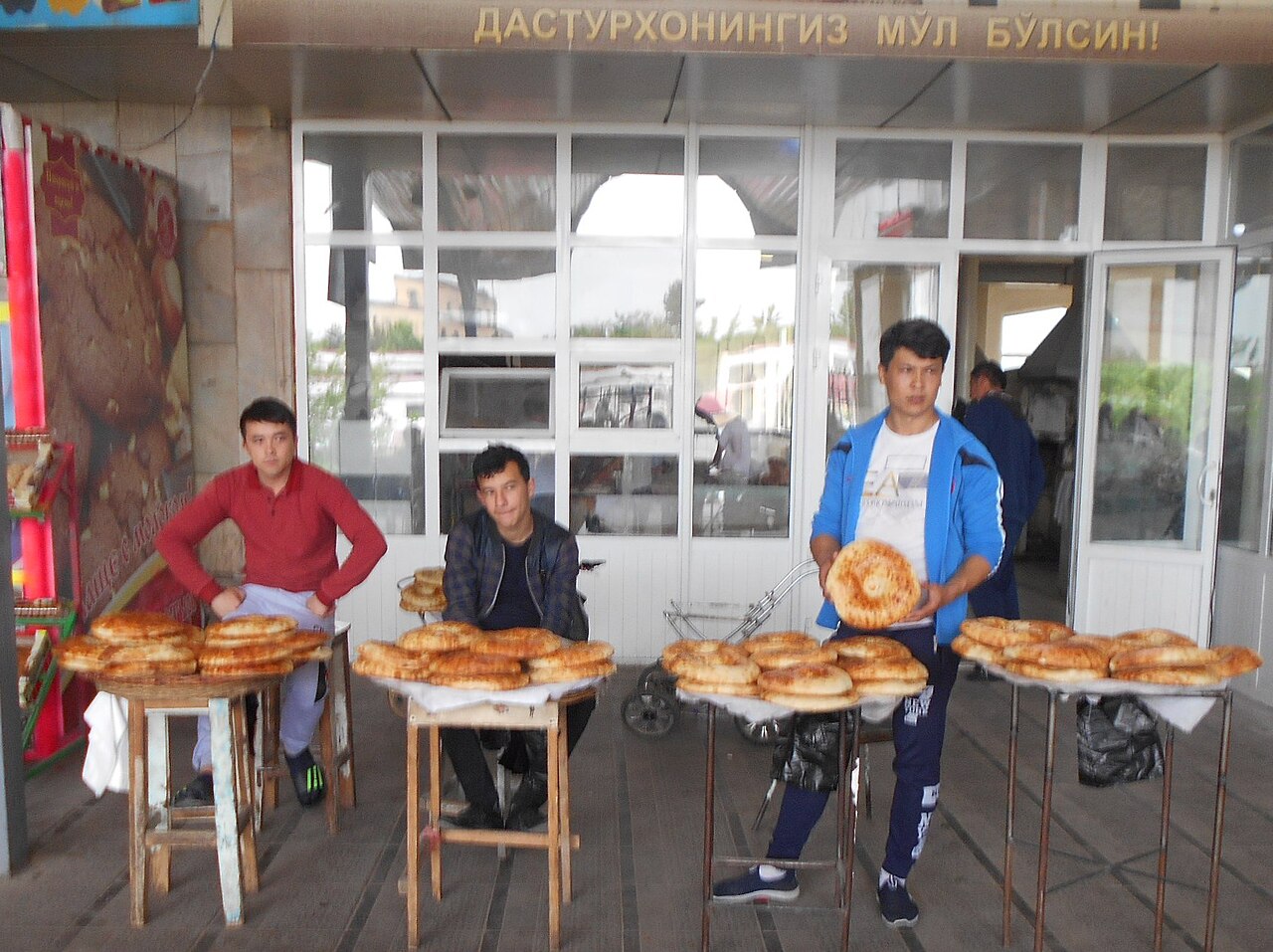
Around the plov, the tandoor rules. Non, the round stamped bread, is baked slapped onto clay-oven walls and never cut with a knife — it is torn, and it is treated with near-sacred respect (a loaf is never placed face-down or stepped over). Samsa, the triangular meat pastry, comes from the same ovens; the town of Jizzakh, on the Tashkent–Samarkand road, makes a giant version famous nationwide. Then the Silk Road's other inheritances: lagman, hand-stretched noodles in a peppery meat-and-vegetable sauce from the Uyghur kitchen; manti, great steamed dumplings; shurpa, the clear ceremonial soup; mastava, rice soup for ordinary days; dimlama, the autumn stew of meat and layered vegetables; shashlik over charcoal everywhere. In Tashkent look for norin — hand-sliced noodles with horse meat, a winter celebration dish — and know that horse also arrives as qazi sausage at bazaar stalls and weddings. The drinks are green tea above all: the choikhona teahouse is the country's social institution, tea comes in the piala bowl with no handle, and in Bukhara the teahouses around the Lyab-i Hauz pool are the seats to aim for.
Where to look is a system, not a list. Eat plov at a plov center at noon, not a restaurant at night. Graze the bazaars — Tashkent's Chorsu, under its great blue dome, for bread, qazi, halva, dried fruit and the melon-sellers' free tastes; every oasis city's bazaar at breakfast for hot non and kaymak cream. Use the chaikhanas at Lyab-i Hauz and around Samarkand's monuments for tea and shashlik at local prices. And chase the sweets: Bukhara's halva, navat (rock sugar crystals) with tea, and in autumn the fruit itself — melons, pomegranates, grapes — at a standard few imports will ever meet.
Picture the place
At a Tashkent plov center the oshpaz lifts the kazan's lid at noon and the steam takes the whole hall; a hundred plates move out in twenty minutes, each with its shaving of qazi and its spoonful of achichuk tomato salad, and by two o'clock the cauldron is scraped and done.
The easily missed detail
The bread stamp is a signature. Every baker's non carries the pattern of his chekich stamp at its center, and the loaves are regional dialects in dough — Tashkent's obi non, thinner festive loaves elsewhere, the great wedding non of the Fergana. A bazaar bread row is a map of the country; photograph it before you eat it.
A practical rhythm
- Breakfast — Bazaar-side: hot non, kaymak, honey and green tea, eaten standing where the ovens are.
- Midday — The plov center, whatever city you are in, ordered before 1 p.m. — plov is a lunch institution, and latecomers get the scraping.
- Evening — Chaikhana dining: shashlik, samsa from the evening tandoor batch, salads and endless tea around a low table.
What could complicate the plan
Richness is the cuisine's premise: cottonseed and sheep-tail fat (kurdyuk) power the traditional kazan, and light eaters should lean on the salads, soups and breads. Horse meat appears without fanfare in norin, qazi and some samsa — ask before ordering if that is a line for you. Vegetarian eating is possible (the bazaars' produce, lagman without meat, pumpkin manti in season) but requires sentences, not gestures: learn "go'shtsiz" (without meat) and deploy it kindly and early.
What to do next
Plan one plov per city, never two in a day; arrive at bazaars hungry at 8 a.m.; and let a chaikhana lunch in Bukhara run long — it is the national art form.
Sources
- UNESCO Intangible Cultural Heritage (2016) — Palov culture and tradition, Uzbekistan's plov inscribed as a cultural practice
- Uzbekistan's regional plovs — Tashkent wedding plov (chickpeas, raisins, quince); Fergana Valley plov with devzira rice; Bukhara's layered osh-i sofi; the osh markazi plov centers serving at midday
- Uzbek food traditions — non bread stamped with the baker's chekich and never cut with a knife; Jizzakh's giant samsa; norin with horse meat and qazi sausage; Uyghur-descended lagman; the choikhona teahouse and handleless piala
- Chorsu Bazaar, Tashkent — the domed market's bread, halva, dried-fruit and produce rows