Vatican City country guide Food and drink
What local dishes should I try in Vatican City, and where should I look for them?
The short answer
Inside the walls there is effectively no restaurant scene — so the Vatican table is Rome's Prati and Borgo kitchens: pizza al taglio and supplì, the Roman pasta canon (carbonara, amatriciana, cacio e pepe), maritozzi with morning coffee, and the Museums' own cafeteria and Castel Gandolfo's farm country for the in-state footnotes.
The answer, with local context
Honesty first: Vatican City, 44 hectares of palaces, gardens and offices, has no public restaurants. What it has is a Museums cafeteria and coffee bars for the millions passing through, a canteen culture for its 882 residents and staff, and one of the world's great eating districts wrapped around its walls — Borgo and Prati, the 2 Roman quarters that have fed pilgrims for 500 years. The pilgrim canon is Roman, and it is specific. The pastas: carbonara (guanciale, pecorino romano, egg — no cream, ever, in Rome), amatriciana (the Amatrice recipe of guanciale, tomato and pecorino), cacio e pepe (pasta water, black pepper, pecorino — the technique dish) and gricia, the white amatriciana that completes the set of 4. The street shelf: pizza al taglio sold by weight (Gabriele Bonci's Pizzarium, by the Cipro metro a few streets from the Museums' exit, is the modern temple of it — slow-fermented doughs and seasonal toppings since 2003), supplì (fried rice balls with a mozzarella heart, the telefonino effect when pulled apart), filetti di baccalà (battered salt cod) and trapizzino, the stuffed pizza pocket invented in Testaccio in 2008 and now all over Prati. The bakery shelf: maritozzo (the brioche bun split and filled with whipped cream — Rome's breakfast of celebration), pangiallo at Christmas, and ciambelline al vino from the Castelli towns.
The Vatican's own food stories run through its institutions. Castel Gandolfo's pontifical farm — cows, olive groves and gardens across its 55 hectares — supplies the papal household and sells its produce at the estate, and the Alban Hills around it pour Frascati and Marino's dry whites and bake the porchetta of Ariccia (the roast pork, IGP-protected, eaten in the fraschette wine taverns of the Castelli Romani). Inside the Museums, the cafeteria and the Pinacoteca's coffee bar are tactical stops rather than destinations — the correct Vatican food strategy is a 7 a.m. basilica, a maritozzo in Borgo Pio (the little Renaissance street of taverns just outside the walls), the Museums, and lunch in Prati on the far side: Via Cola di Rienzo and the streets behind the Museums hold the neighborhood's working trattorias, and the Trionfale market (one of Rome's largest covered food markets, a few streets north) is where the quarter actually shops.
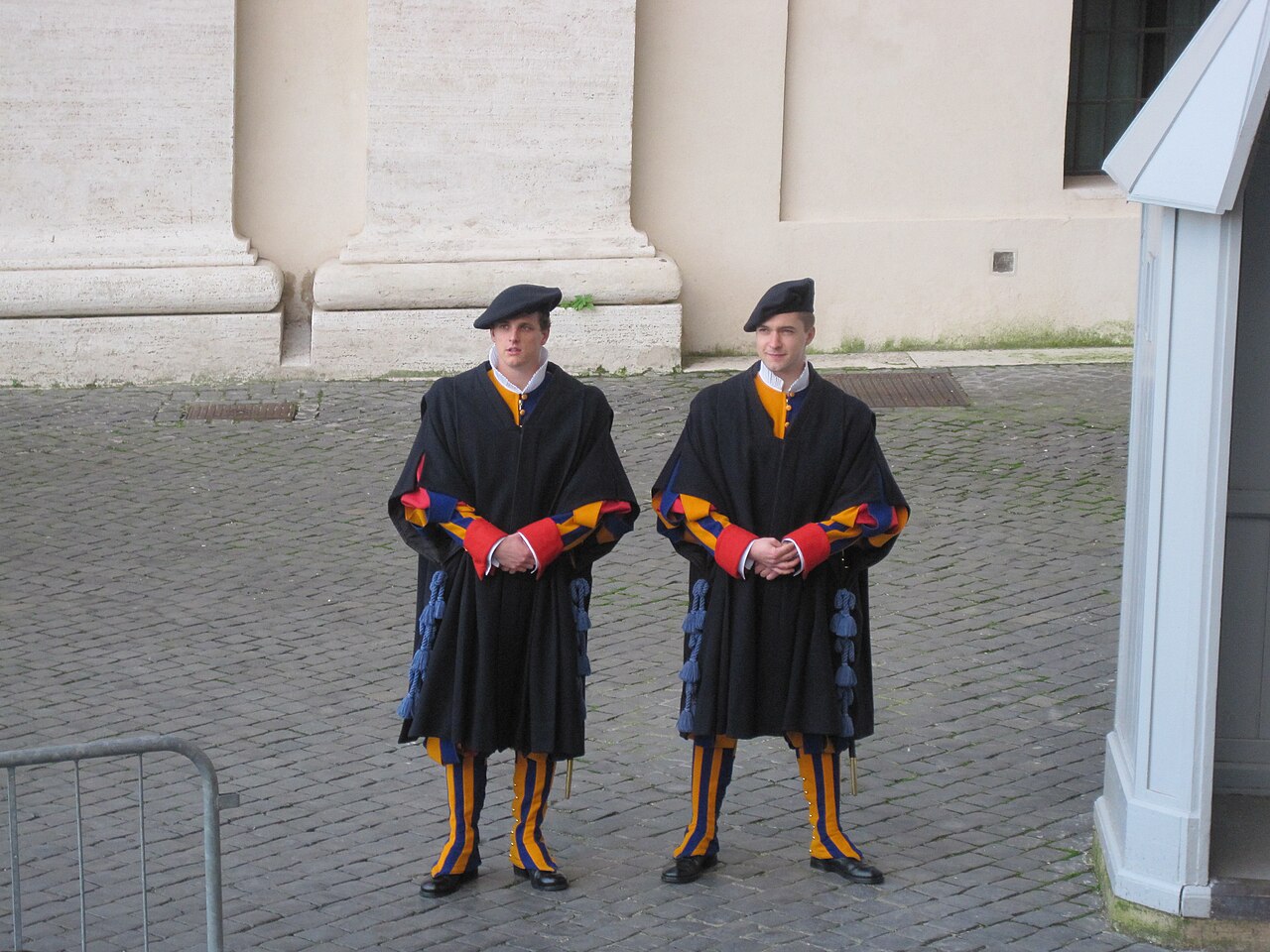
Dessert closes the circuit: gelato in Prati's artisan shops (the quarter's standard is high and the chains thin out north of Via Ottaviano), a granita or an espresso at the counters along Borgo Santo Spirito, and — for the true completist — the Swiss Guard's canteen is not open to you, but the guards' own day (May 6) fills Borgo with fondue stands and festival food at the one moment of the year the microstate eats in public.
Picture the place
Borgo Pio at 8 in the morning: a bar counter, a maritozzo split and heaped with cream, nuns and museum staff taking espresso standing, and the dome filling the top of the street.
The easily missed detail
The Vatican Museums' food geography rewards the early strategy: entering at the 8:00 opening puts you 1 corridor ahead of the crowds and lets the cafeteria serve as a mid-morning coffee rather than a noon siege — while the famous error is exiting through the Sistine Chapel's group door into St. Peter's (a shortcut that is legitimate only for guided groups) and finding yourself at the basilica at the day's worst security queue with no lunch. The second detail is Borgo Pio's clock: the street feeds pilgrims early and closes early — its kitchens are lunch institutions, and by 9 p.m. the quarter's table has moved across to Prati.
A practical rhythm
- Maritozzo before the dome — Borgo Pio breakfast as the Vatican day's opening rite
- Prati for lunch — The trattorias and the Trionfale market streets on the Museums' far side
- Castelli for the excursion — Porchetta in Ariccia and Frascati in the glass on the Castel Gandolfo day
What could complicate the plan
Feast days empty the neighborhood: on the great Vatican solemnities (Christmas, Easter, June 29) Borgo and Prati fill to capacity at lunch and shut early, and the Museums' closures (Sundays except the last, plus the official feast-day list) rearrange the eating map entirely. Roman pasta has rules that are enforced socially if not legally — carbonara with cream or chicken on pasta will be served to you nowhere respectable, and asking marks the table. Portions and prices near St. Peter's Square carry the pilgrim premium on the 2 streets facing it; 3 streets north the same lunch is the neighborhood's. And the Museums' internal cafeteria is a refuelling stop with a captive queue — plan food outside the walls whenever the itinerary allows.
What to do next
Eat 4 things on purpose: a Borgo maritozzo, Bonci's pizza al taglio, a Prati trattoria carbonara, and porchetta in Ariccia on the palace day.
Sources
- Vatican City State / Pontifical Villas — the Castel Gandolfo farm and estate (55 ha) and the state's resident scale (882)
- Rome food institutions — Pizzarium (Bonci, since 2003), the Trionfale market, and the Roman pasta canon (carbonara, amatriciana, gricia, cacio e pepe)
- EU geographical indication — Porchetta di Ariccia IGP; Castelli Romani wine tradition (Frascati DOC)
- Vatican Museums visitor services — the internal cafeteria and coffee bars