Venezuela country guide Trip planning
How can I plan a memorable first trip to Venezuela without rushing?
The short answer
Plan it as a specialist operation wrapped around a holiday: the visa filed 1–2 months out, 12–14 days split between Caracas (2 + 2 nights, vetted districts), Canaima (3 nights, Pemón package) and Los Roques (4 nights), U.S. dollars in small bills, evacuation insurance that names Venezuela — and the discipline to drop any element the current advisory has moved against.
The answer, with local context
The constants, post-transition edition: the gateway is Maiquetía — Simón Bolívar International (CCS), serving Caracas from the coast 45–60 minutes away (transfers arranged, always; the airport road is not a flag-down environment). International access is rebuilding (Copa via Panama, Turkish via Istanbul, LATAM and regional carriers on returning patterns; no U.S. carrier serves Caracas at this writing — American routings run via Bogotá, Panama or the Caribbean). Entry for U.S. citizens is the long pole: a tourist visa in advance via Venezuela's online Cancillería e-visa process (no Venezuelan consulate operates in the U.S.; processing runs about 7–30 days; visas are never issued on arrival, and arriving without one risks detention, not a fine) — start 2 months out and hold no non-refundable bookings until the visa is in hand. The consular map flipped in 2026: the U.S. Embassy in Caracas reopened March 30, 2026 (emergency services only; routine matters still via Bogotá) — register in STEP before departure. Money: the economy transacts in U.S. dollars (cash, small denominations, crisp bills — torn notes are refused), bolívares exist for small change at a rate that moves (check the BCV official rate at travel time), foreign cards work patchily in Caracas' formal sector and almost nowhere else. The advisory frame governs all of it (Level 3 nationally, Level 4 regions listed in this guide's first answer; FCDO: all but essential only).
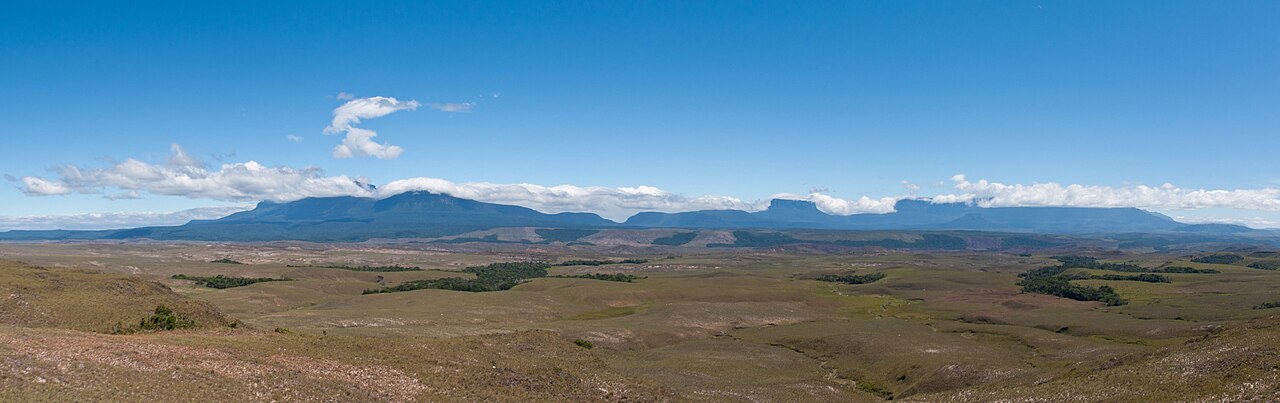
The itinerary that respects all of the above: Days 1–2, Caracas in its vetted arc (Altamira, Los Palos Grandes, Las Mercedes, El Hatillo — the UCV's UNESCO campus with a guide, El Ávila's cable car on a clear morning, the arepera circuit at sane hours) with a fixer-driver engaged through your hotel or operator from wheels-down. Days 3–5 or 6, Canaima by the Conviasa pattern (this guide's first answer: fly in on the Thursday or Sunday rotation, curiara to the falls, lagoon falls on the spare day) — booked as 1 package from Caracas, Pemón-run at the park end. Days 7–10, Los Roques (the Maiquetía hop to Gran Roque; posada days, a cay a day) — the trip's exhale. Days 11–12 or 13–14, Caracas again: the buffer the country's flight patterns demand, the rum and chocolate run, the El Hatillo afternoon — out. What is deliberately not in this plan: overland touring (checkpoints, fuel, road crime and advisory regions make the classic road trip a specialists' genre), the Colombian borderlands and Zulia (Level 4 / FCDO no-go), Gran Sabana road expeditions from Ciudad Bolívar without a top-tier operator (rural Bolívar's designation), and any night-time self-navigation anywhere. Pack for fragility: power bank, offline maps, printed documents (visa, insurance, bookings), medications in full supply (pharmacies stock unevenly), and a communications plan your family holds.
Picture the place
Gran Roque at dusk on the last island evening: the lighthouse hill behind the village, pelicans working the harbor, and the whole improbable trip — falls, tepuis, cays — sitting finished in your camera roll.
The easily missed detail
Venezuela rewards the traveler who hires Venezuelans: the fixer-driver in Caracas, the Pemón captains in Canaima, the Roques posada family — in a country where systems are weak, people are the infrastructure, and a good operator's network (which checkpoint commander, which fuel station, which clinic) is the real itinerary. Book the humans first and the hotels second. The second detail is photographic manners with paperwork: never photograph checkpoints, military installations, bridges' approaches or officials (detention risk is the country's documented hazard, and a camera at an alcabala is the classic unforced error) — keep the phone in your pocket at every control point and let your driver do the talking.
A practical rhythm
- Visa 2 months out — The e-visa is the trip's first booking; flights wait for it
- 3 circuits, no roads — Caracas, Canaima, Los Roques, all by air and package
- Buffer at both Caracas ends — 2 nights in, 2 nights out: the schedule's shock absorbers
What could complicate the plan
Everything in this guide converges here, so the short honest list: the advisory can move again in either direction (a single incident re-escalates levels, as the 2019–2026 Level 4 years proved — flexible bookings and insurance with Venezuela named are structural, and the trip should be postponable without pain); wrongful detention is the documented tail-risk for U.S. citizens specifically (a clean visa, a low profile, no border zones, no photography of anything official, no political commentary in-country — the rules are absolute); the June 24, 2026 earthquakes left infrastructure and emergency services strained in the affected center-northwest (routes and hospitals there carry recovery caveats at this writing — verify at booking); domestic aviation is thin (Conviasa's patterns shift, Los Roques charters weather-cancel, and every internal leg deserves a day of slack downstream); the dollar economy has its own physics (prices drift weekly, small bills rule, a torn $20 is a souvenir); and health infrastructure outside Caracas' private clinics is poor (the evacuation policy is the plan's foundation — medevac to Bogotá or Miami must be a phone call, not a hope). None of this erases the country's case — Canaima, Roques and the capital's warmth are real, and the post-2026 thaw is real — but a first trip here is a managed expedition with a holiday inside it, never the reverse.
What to do next
Start the e-visa today, engage a Caracas operator with current references, and build the 3-circuit trip — Caracas, Canaima, Los Roques — on refundable bones.
Sources
- U.S. Department of State, Venezuela (May 16, 2026) — Level 3 with Level 4 regions; Embassy Caracas reopened March 30, 2026 (emergency services only); visa services via Bogotá; June 24, 2026 earthquake damage
- Venezuelan Cancillería e-visa record — U.S. citizens' tourist visas in advance only (about 7–30 days processing); no visa on arrival; no Venezuelan consulate in the U.S.
- Operator record — Caracas fixer-driver practice; Canaima packages on Conviasa rotations; Los Roques flights and posadas; checkpoint photography prohibitions
- Route record — Maiquetía (CCS) gateways via Panama, Istanbul and Bogotá; no U.S. carrier service at this writing