Venezuela country guide Places and experiences
What should a first-time traveler see in Venezuela beyond the obvious highlights?
The short answer
Los Roques' empty cays, the Llanos' wildlife plains, Mérida's cable car to 15,600 ft, and the Catatumbo lightning: beyond Canaima, Venezuela packs a Caribbean archipelago, an Andean cordillera and a safari plain into 1 difficult, dazzling country.
The answer, with local context
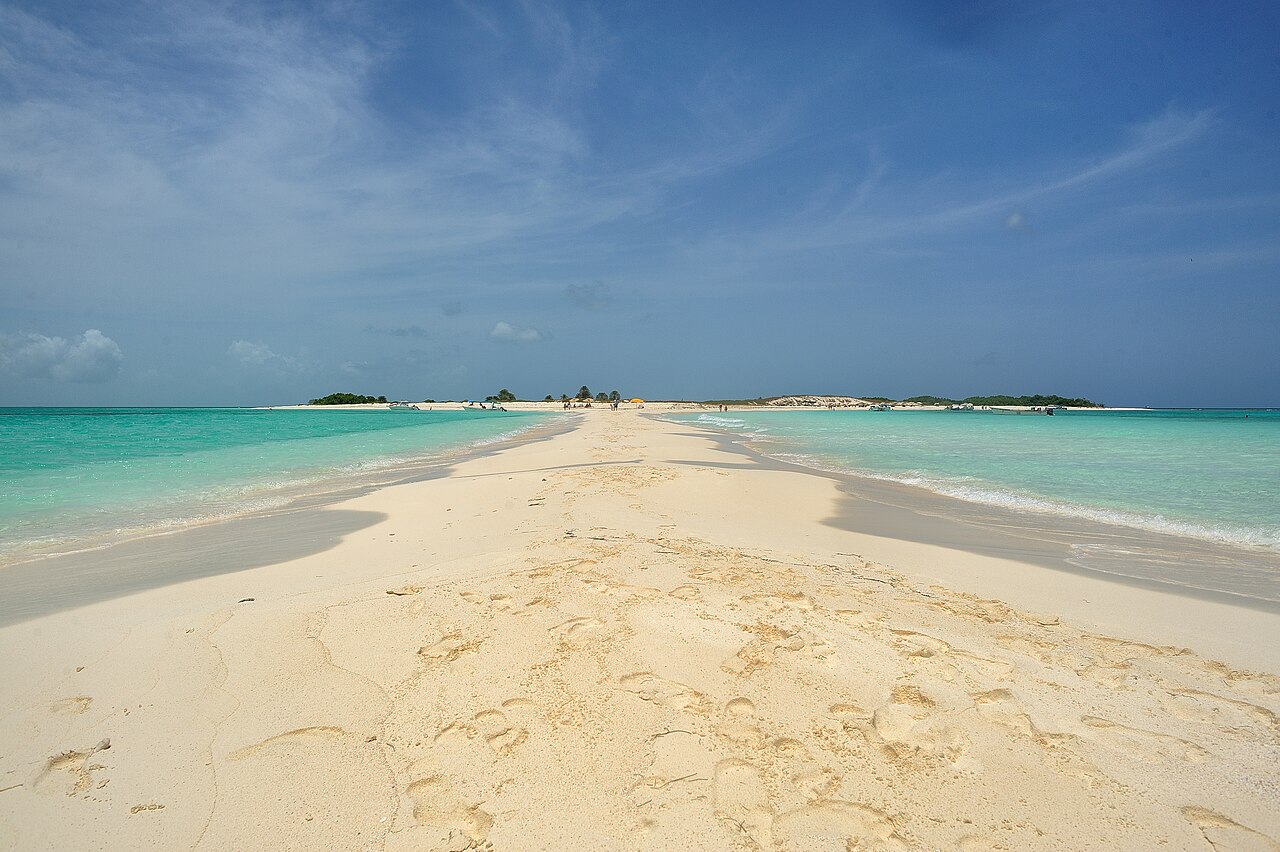
The map the traveler actually uses is an archipelago of safe-ish circuits in a country of 352,000 sq mi (916,445 km²) and about 28 million people (with nearly 8 million more in the diaspora of the crisis years, by UN counts). Los Roques is the circuit that works most like classic tourism: a national park since 1972 — some 221,120 hectares of marine reserve — of 300+ cays and sandbars 80 miles north of Caracas, flown in 35–40 minutes to Gran Roque, the only inhabited island, whose posadas (a dozen-plus small lodges in a fishing village) run the days: Cayo de Agua's sand-bridge isthmus, Francisquí's natural pool, kitesurfing at Saki Saki, bonefishing on the flats, turtles and the September–November lobster season's aftermath on the menus. The park levies an entry fee on arrival and caps development at village scale — no resorts, no cruise piers — which is precisely its preservation. The Andes give the altitude counterpoint: Mérida (a university city at 5,380 ft / 1,640 m) and the Mukumbarí cable car — 5 stations climbing to Pico Espejo at 4,765 m (15,633 ft), among the world's highest cable systems — above a state of páramo villages, trout farms and the country's best coffee country (operations have been intermittent across the crisis years — current running status is a booking-time check, not an assumption).
The Llanos (the Orinoco plains, Apure and Barinas states — note this guide's advisory geography below) run the safari: hatos (cattle ranches turned lodges, El Cedral and Piñero the classics) where the wet season's flooded savannah and the dry season's shrinking lagoons (November–April for access; late dry season for concentration) deliver capybaras by the hundred, giant anteaters, Orinoco crocodiles, scarlet ibis and anaconda hunts by boat and truck. The northwest keeps the strangest phenomenon in the Americas: the Catatumbo lightning — a near-nightly electrical storm over the Maracaibo lake mouth (some 160+ nights a year at its core, recognised by Guinness as the world's highest concentration of lightning), watched from stilt villages (Ologá, Congo Mirador) at the lake's south end — a boat-access expedition out of Zulia state, which several advisories specifically restrict (the FCDO names Zulia for no travel; plan only with current advice and specialist fixers). Add Caracas itself, when there: the Ciudad Universitaria (UNESCO 2000 — Carlos Raúl Villanueva's modernist campus, Calder's Floating Clouds in the Aula Magna), El Ávila's cable car to the Humboldt Hotel, El Hatillo's colonial streets — and Coro (UNESCO 1993, the earthen colonial city, on the Danger List since 2005) with the Médanos dunes at its door, for the traveler whose route runs west.
Picture the place
Cayo de Agua at noon: a ribbon of white sand between 2 incompatible blues, 1 palapa, no other boat on the water — the Caribbean as it was sold in 1975, still unsold.
The easily missed detail
Los Roques runs on a lobster-and-fish economy wearing a tourism hat: Gran Roque is a working fishing village (its fleet supplies much of Venezuela's lobster and queen conch — both closed-season protected: lobster veda runs roughly May–October), the posadas are family houses extended room by room, and the park's no-take zones (the integral protection area at Dos Mosquises, with its turtle research station) are patrolled by the same community. Travelers who eat lobster out of season or pocket shells are breaking the village's own rules, not just the park's. The second detail is Mérida's ice-cream footnote: Heladería Coromoto holds Guinness records for flavours offered (800+ claimed across its history, from avocado to trout) — the Andes' sweetest paragraph, and still going.
A practical rhythm
- Los Roques 3–4 nights — Gran Roque base, a different cay each day, the sand-bridge at Cayo de Agua saved for the calmest morning
- The Andes in 3 days — Mérida city, the cable car when running, a páramo village (Mucuchíes) and the trout-and-coffee valley
- Llanos in the dry — November–April only, hato-based, 3 nights minimum for the wildlife to find you
What could complicate the plan
Advisory geography rules the map (this guide's first answer): Apure and the border states sit at Level 4 in the current U.S. advice — which puts classic Llanos hatos and the Catatumbo's Zulia approach inside or beside no-go designations: these circuits are listed because they are Venezuela's glories, but a first trip under the current advisory honestly weights Los Roques, Canaima (operator-run) and Mérida (with checks), and treats Llanos and Catatumbo as verify-at-booking expeditions with specialist advice, or as the second trip's. Infrastructure brittleness is the second system: domestic flights (Conviasa and private carriers) cancel and retime, the Mérida cable car's running days are announced close-in, fuel shortages recur outside the capital, the June 2026 earthquake's damage is still being repaired in the northwest-center, and blackouts, though rarer than in 2019, remain a planning fact (hotels with generators are a filter, not a luxury). Caracas carries its own discipline (airport transfers arranged, no street wandering in unfamiliar districts, Petare and the west side off the itinerary, valuables invisible). Money: bring U.S. dollars in small bills (the de facto currency), expect card acceptance only in formal Caracas and island businesses, and never rely on ATMs. Everywhere, the honest frame holds: Venezuela's tourism plant is rebuilding from a decade of collapse — staffing, maintenance and supply chains vary wildly between the polished circuits and everywhere else, and the operator you choose is the single biggest safety variable in the country.
What to do next
Weight a first trip toward Los Roques and Canaima, confirm Mérida's cable car is actually running before routing through the Andes, and leave the Llanos and Catatumbo to verified specialist advice.
Sources
- INPARQUES — Los Roques Archipelago National Park (1972; 221,120 ha); Canaima; park entry fees and closed seasons (lobster veda about May–October)
- UNESCO — Venezuela's 3 properties: Canaima (1994), Coro and its Port (1993; Danger List since 2005), Ciudad Universitaria de Caracas (2000)
- Mukumbarí / Mérida record — the cable car to Pico Espejo (4,765 m); Mérida at 1,640 m; Heladería Coromoto's flavour records
- U.S. Department of State (May 16, 2026) and UK FCDO — Level 3 nationally with Level 4 regions incl. Apure and rural Bolívar; FCDO against all travel to Zulia and the Colombia border zone