Venezuela country guide Food and drink
What local dishes should I try in Venezuela, and where should I look for them?
The short answer
Arepas in their infinite fillings, pabellón criollo, hallacas at Christmas, cachapas with queso de mano, and a glass of Santa Teresa rum: Venezuela's table is corn, black beans, plantain and cheese — served in areperas that never quite close.
The answer, with local context
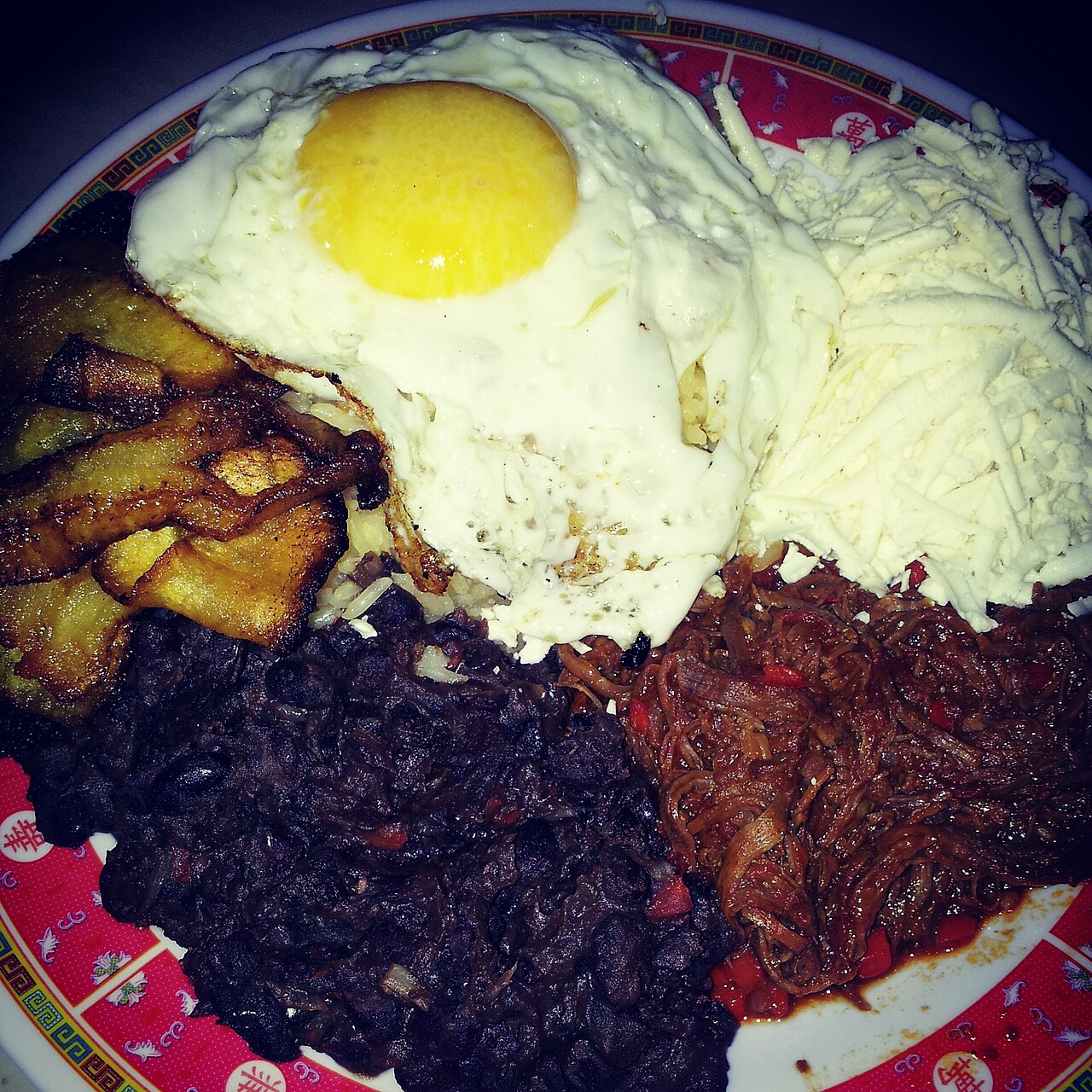
The arepa is the constitution: a grilled or fried corn cake (Harina P.A.N., the pre-cooked flour industrialised in 1960, made it a 20-minute staple) split and filled — the canon has names like dishes: Reina Pepiada (chicken and avocado, created in the 1950s at the Hermanos Álvarez arepera and named for Susana Dujm, Venezuela's first Miss World, 1955), pelúa (shredded beef and gouda), catira (chicken and cheese), dominó (black beans and white cheese), pabellón (the full flag), perico (scrambled eggs with tomato and onion — breakfast's own). Pabellón criollo is the formal national plate: shredded beef (carne mechada), black beans (caraotas negras, sweetened in the east, salted in the west — a genuine regional schism), white rice and tajadas (fried ripe plantain), with a fried egg ("a caballo") in the deluxe register. Hallaca is Christmas itself: a corn dough parcel with a beef-pork-chicken guiso, olives, raisins and capers, wrapped in plantain leaf and boiled — made in family assembly lines each December, gifted between households, and argued over regionally (the Andean version adds chickpeas; the eastern, seafood twists). Cachapas (sweet corn pancakes folded over queso de mano, the stretchy hand-pulled cheese) rule the roadside; empanadas (crisp corn half-moons — cazón shark on Margarita, cheese everywhere) rule the beach; tequeños (fried cheese sticks) rule every party and wedding in the country; and asado negro (beef slow-braised in a dark papelón-sugar crust) rules Sunday lunch in Caracas.
The geography of taste: Caracas eats in areperas (24-hour institutions — the classic chains and independents around Las Mercedes, Chacao and El Hatillo) and in a restaurant scene that kept a brave core (Alto long held the fine-dining flag; the modern bistros of Las Mercedes and Los Palos Grandes carry the revival), with the Mercado de Chacao for produce and Quinta Crespo for the working city's market lunch. The coast does fish (pargo and corvina at the beach shacks; Maracaibo's patacón — the plantain sandwich — in the west), the Andes do trout and pisca andina (the potato-milk-egg breakfast soup of Mérida), the Llanos do carne en vara (beef roasted on stakes around a fire) and pisillo de chigüire (capybara, the Lenten tradition — Church-permitted "fish" by an old dispensation). Drink closes it: Ron de Venezuela carries a Denominación de Origen (2003) — Santa Teresa (estate since 1796) and Diplomático are the aged flagships; fresh guarapo de caña and papelón con limón run the streets; and Venezuelan cacao (criollo beans — Chuao the legendary village) feeds a chocolate revival (bean-to-bar makers like El Rey and the Chuao cooperatives) worth the souvenir space.
Picture the place
An arepera at 1 a.m. in Las Mercedes: the plancha hissing, a reina pepiada landing with its avocado-green filling, tequeños circulating like a second currency, and the city eating its constitution standing up.
The easily missed detail
The hallaca is a calendar, not a menu: it exists from late November to early January (with frozen outliers beyond) — a trip outside December that hunts hallacas is hunting last Christmas; in season, the hunt is unnecessary, because every household, arepera and market in the country is making them, and the correct move is to accept any invitation to a hallaca-making day (you will be put to work tying parcels, fed continuously, and sent home with 3). The second detail is the bean schism: caraotas sweetened with papelón in Caracas and the east, unsweetened in the west — Venezuelans identify each other by it; ask your table which side they're on and enjoy the argument more than the beans.
A practical rhythm
- Arepera late — The 11 p.m. session is the institution; order reina pepiada first, pelúa second
- Pabellón at lunch — The midday plate in a fonda or market comedor, egg on top
- December if you can — Hallaca season, or buy the frozen solidarity of a January market stall
What could complicate the plan
The crisis decade rewired the food system, and the traveler eats inside that fact: imported goods and restaurant menus fluctuate with supply (the polished districts of Caracas eat well; provincial menus narrow to what's running), prices are quoted and largely paid in U.S. dollars (cash small bills again), and street-food hygiene needs the busy-stall rule sharpened by infrastructure reality (water and power interruptions make the fresh-and-hot discipline stricter than elsewhere — eat where turnover is visibly high, drink bottled or treated water outside the best hotels). Regional specialities are genuinely regional (cazón empanadas belong to Margarita's beaches, pisca andina to Andean mornings, carne en vara to the Llanos' hatos — the Caracas versions are echoes), and capybara (chigüire) season is Lent-bound and hato-served, not a city order. Safety shapes the evening map: the arepera culture runs late, but the traveler's version of it runs in the vetted districts with arranged transport (this guide's first answer) — do not chase a 2 a.m. arepa across unfamiliar Caracas. Chocolate and rum souvenirs travel well (Chuao cacao products, Santa Teresa 1796) — buy at source or formal shops; airport prices post-crisis are negotiable in spirit if not in fact.
What to do next
Eat your first arepa standing at a plancha in Las Mercedes, take pabellón at a market lunch, and put a bottle of Santa Teresa and a bar of criollo chocolate in the bag home.
Sources
- Venezuelan culinary record — the arepa canon (Reina Pepiada and Susana Dujm, 1955); pabellón criollo; hallaca; cachapa and queso de mano; tequeños; asado negro
- Denominación de Origen Ron de Venezuela (2003) — Santa Teresa (estate since 1796); Diplomático
- Caracas listings — the areperas of Las Mercedes and Chacao; Mercado de Chacao; Alto and the Los Palos Grandes bistros; El Hatillo
- Regional record — Maracaibo's patacón; Mérida's pisca andina; Margarita's cazón empanadas; Chuao cacao (criollo)