Yemen country guide Trip planning
How can I plan a memorable first trip to Yemen without rushing?
The short answer
The planning begins and ends with an advisory — the FCDO advises against all travel to Yemen, so the honest first step is understanding that advice rather than building an itinerary around it.
The answer, with local context
Two documents govern a Yemen trip. The first is the FCDO country page, updated on 30 October 2026, which advises against all travel and sets out the entry mechanics: a visa is mandatory, applications go through the Yemeni embassy rather than any border post, and a passport must carry an expiry date at least 6 months beyond the arrival date. Travelers can be refused entry on a document reported lost or stolen. The page lists no compulsory vaccinations and refers medical entry questions onward.
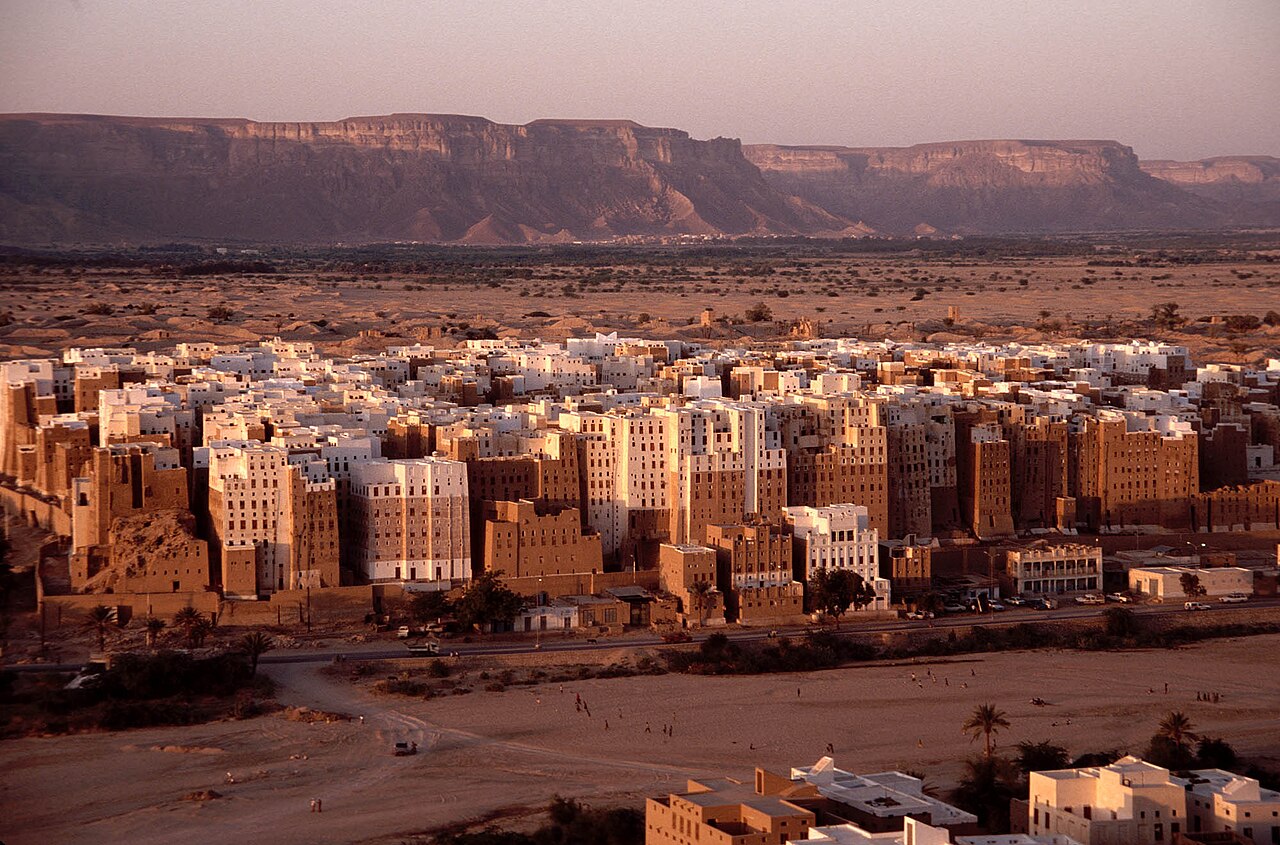
The second is UNESCO's record, which explains what a slower trip would be slow for. Yemen accepted the World Heritage Convention on 7 October 1980 and now has 5 inscribed properties, with 35 further sites on its Tentative List. Of the five, Old Sana'a has been on the List of World Heritage in Danger since 2015; Shibam, inscribed in 1982, has appeared in the Committee's Danger List updates every session from 2015 to 2025; and Marib's Landmarks of the Ancient Kingdom of Saba were inscribed in 2023 under the emergency procedure and placed on the Danger List at the same session.
Distances are the third constraint. Socotra, inscribed in 2008, is an archipelago reached separately from the mainland, and the mainland sites run from the Tihama coast at Zabid to the highland capital and the wadi towns of the interior. There is no version of this where 5 properties fit comfortably into one unhurried loop.
The easily missed detail
A trip to Yemen would be planned around food security as much as sightseeing. FAO's brief of 13 October 2026 projects about 5.4 million people at IPC Phase 3 or above from October to December 2026 in government-controlled areas, with about 1.8 million at Phase 4, and forecasts a 2026 cereal import requirement of 5.2 million tonnes. Self-sufficiency in fuel, water and medical supplies is not a precaution here; it is the baseline.
A practical rhythm
- Paperwork first — The embassy visa and the 6-month passport rule are fixed requirements, independent of any security change.
- Pick one geography — Socotra or the mainland. Treating them as a single itinerary underestimates both.
- Watch the Committee — Danger List updates run annually, and Shibam has featured in each one from 2015 to 2025.
What could complicate the plan
The all-travel advice is the headline, but the detail underneath it is what reshapes a plan: insurance that excludes countries under such advice, consular assistance that may be unavailable, and the IUCN's 2025 Socotra assessment naming conflict and security activity as a very high current threat to the archipelago itself. Yemen's protected sites are not static either — 1 of the 5 was inscribed and danger-listed in the same 2023 decision, which is the Committee's way of saying the clock is running.
What to do next
Read the Yemen when-to-visit question for the highland seasonal calendar around Old Sana'a, and the food question for how grain imports and harvests shape daily eating.
Sources
- UK Foreign, Commonwealth and Development Office — advice wording, visa route, passport validity, vaccination position, update date
- UNESCO World Heritage Centre — Convention date, national totals, Danger List years, Marib decision
- FAO Global Information and Early Warning System — food security projections and cereal import forecast
- IUCN World Heritage Outlook — Socotra threat ratings and assessment date