Yemen country guide Places and experiences
What should a first-time traveler see in Yemen beyond the obvious highlights?
The short answer
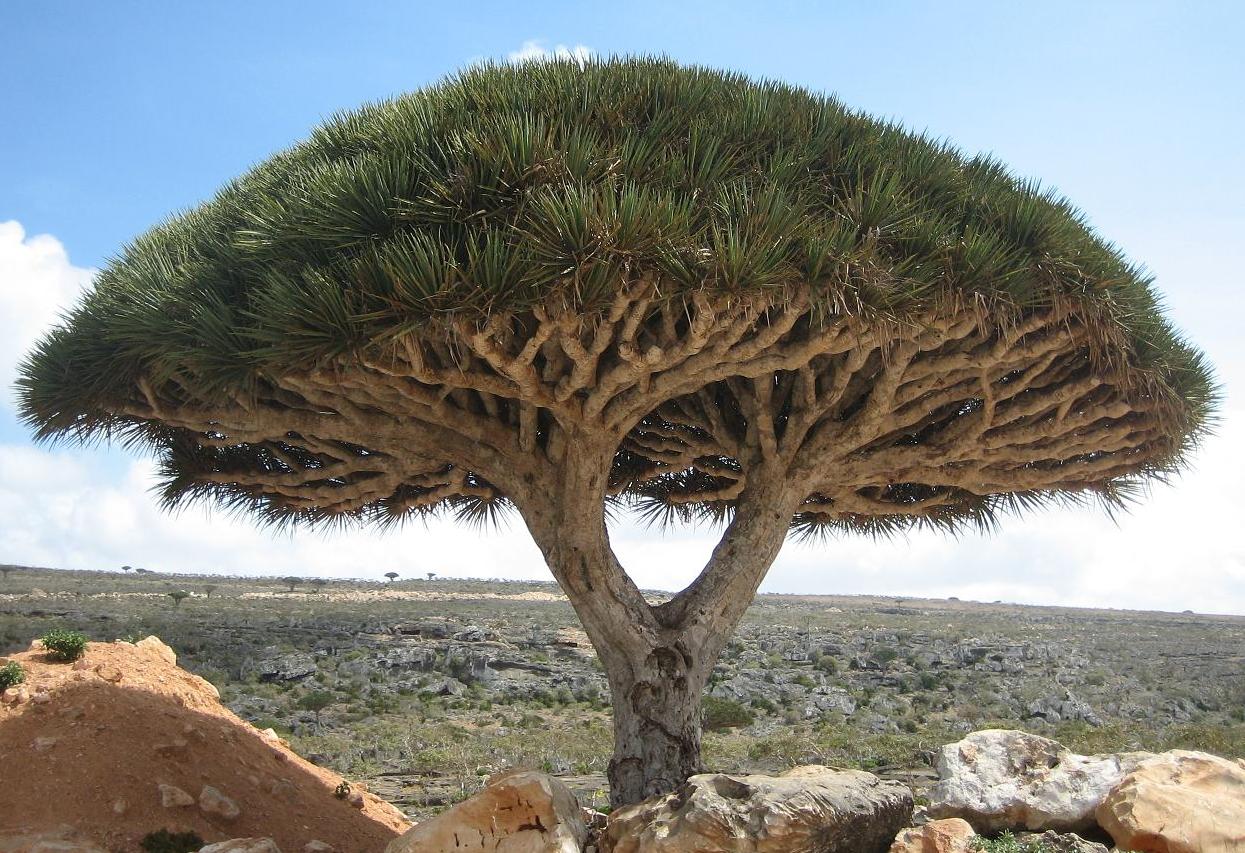
Socotra — an island archipelago inscribed on the World Heritage List in 2008 under criterion (x), holding at least 310 endemic plant species and 11 endemic birds among 192 recorded species, and an entirely different proposition from the mainland's walled cities.
The answer, with local context
Yemen's 5 World Heritage properties are spread so widely that no single trip could reasonably take them all, and they divide neatly into the architectural and the biological. Socotra is the biological half. The IUCN's World Heritage Outlook assessment, finalized on 11 October 2025, rates its conservation outlook as of significant concern, and lists 4 threats at its highest category: armed conflict and security activity, severe weather events, overgrazing by livestock, and shifts in temperature and rainfall regimes.
On the mainland, the Old Walled City of Shibam is the property that surprises people who arrived expecting Sana'a. It was inscribed in 1982 under Decision 06COM VIII.20, and the Committee has twice voted it emergency assistance — in 1982 under 06BUR IV15, and again in 1993 under 17EXTBUR VB.2.3.1 and 17COM XIIIC. Those two dates, 11 years apart, are the shortest account of Shibam's fragility anyone has written.
Marib is the newest addition and the most pointed. The Landmarks of the Ancient Kingdom of Saba were inscribed in 2023 at the 18th extraordinary session, Decision 18 EXT.COM 5.3, on criteria (iii) and (iv) — and the Committee used its emergency procedure, inscribing the property on the World Heritage List and the List of World Heritage in Danger simultaneously. The Historic Town of Zabid completes the five.
Behind those 5 sit 35 more on Yemen's Tentative List, a queue assembled since the country accepted the World Heritage Convention on 7 October 1980.
Picture the place
Socotra's distinctiveness is measurable rather than impressionistic: a flora in which at least 310 species occur nowhere else on earth, on an island small enough that a single day's drive crosses several of its vegetation zones. The birds are the counterpoint — 192 species recorded, but only 11 of them endemic, so the sky is far less singular than the ground.
The easily missed detail
The IUCN and UNESCO are separate bodies, and on Socotra they say different kinds of thing. UNESCO fixes the designation — 2008, criterion (x), biodiversity. The IUCN's 2025 assessment is what tells you overgrazing ranks alongside armed conflict in the threat table, which is the sort of detail that decides whether a landscape still looks the way its nomination described it.
A practical rhythm
- Island versus mainland — Socotra and the mainland properties are separate journeys with separate logistics, not stops on one route.
- Reading the designations — Marib's 2023 danger listing was simultaneous with its inscription, so its protected status and its emergency status have the same start date.
- Expectation setting — 4 of Socotra's current threats are rated at the IUCN's highest level, which shapes what a visitor would actually find.
What could complicate the plan
The FCDO advises against all travel to Yemen, and that advice covers the archipelago as well as the mainland. A visa must be obtained in advance through a Yemeni embassy, and the FCDO specifies a passport valid for at least 6 months beyond the arrival date. Conflict and security activity appear in the IUCN's threat table as a very high current threat, which is an unusual thing to find in a conservation assessment and a plain statement of the obstacle.
What to do next
The Yemen when-to-visit question deals with Old Sana'a and the highland harvest calendar; the trip-planning question covers the entry formalities that gate every one of these sites.
Sources
- UNESCO World Heritage Centre — inscription years, decision codes, criteria, emergency assistance dates, national totals, Convention date
- IUCN World Heritage Outlook — Socotra outlook rating, assessment date, endemic species counts, threat ratings
- UK Foreign, Commonwealth and Development Office — travel advice, visa and passport rules