Zimbabwe country guide When to visit
When is the best time to visit Zimbabwe for Victoria Falls?
The short answer
April through August is a strong period for visiting Zimbabwe's Victoria Falls, with April and May favoring powerful water flow and July or August offering clearer views of the basalt gorge as the river level falls.
The answer, with local context
Victoria Falls lies on the Zambezi River at the border between Zimbabwe and Zambia. UNESCO inscribed Mosi-oa-Tunya / Victoria Falls in 1989, under natural criteria (vii) and (viii). The designated World Heritage property covers 6,860 hectares across the two countries.
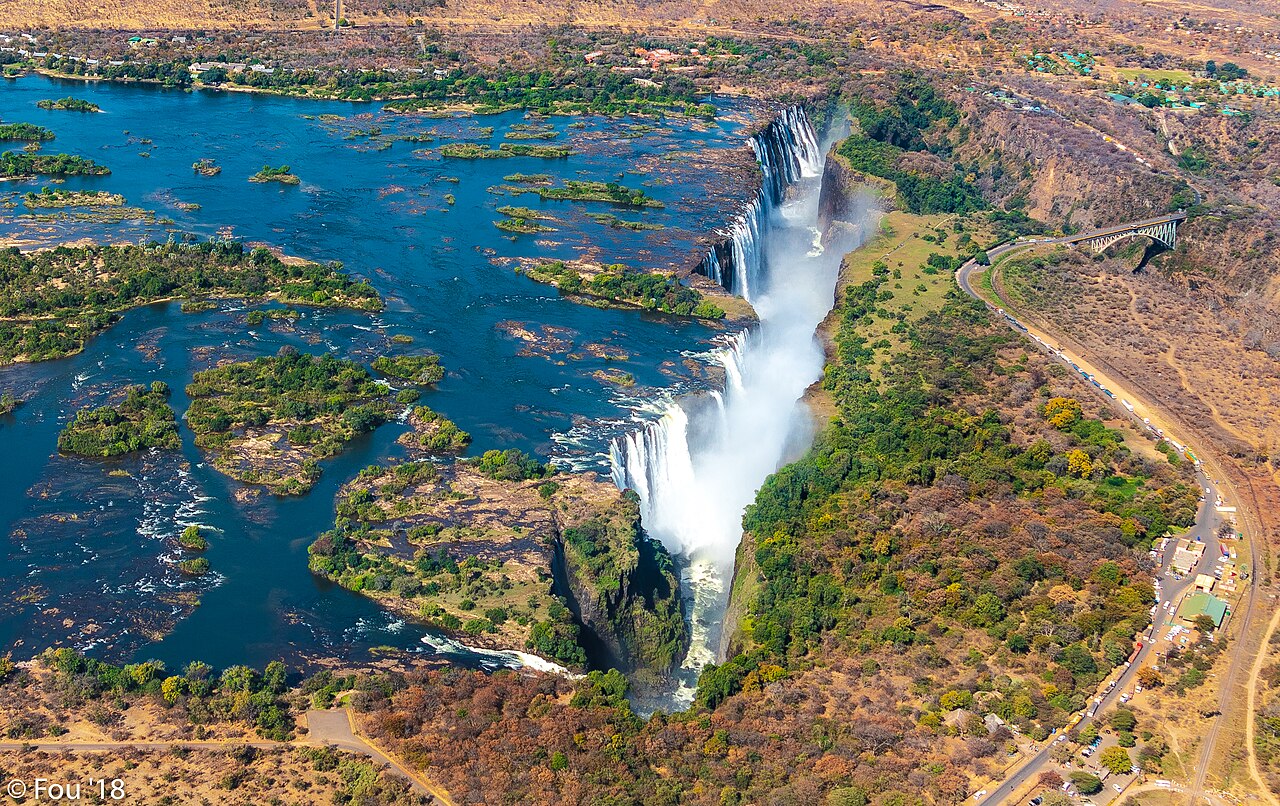
The river's flow changes dramatically during the year. After the summer rains, high water generally reaches the falls around April and May. The curtain of falling water becomes spectacular, but the immense spray can obscure the opposite cliff. Visitors should expect wet paths, substantial mist and restricted visibility at certain viewpoints.
As the dry season advances, water levels fall. July and August often provide a useful compromise between a substantial waterfall and clearer views. By October and November, sections of the waterfall may carry little or no water, exposing much more of the underlying rock formations.
This pattern contrasts with Zimbabwe's inland wildlife destinations. The dry months, particularly June through October, are generally favorable for wildlife viewing around Hwange and other savanna regions because animals increasingly concentrate around available water.
Picture the place
The Zambezi plunges into a narrow basalt gorge, producing columns of spray above a series of waterfalls. A rainforest-like strip of vegetation grows where the persistent mist reaches the opposite cliffs.
The easily missed detail
Victoria Falls is not one uniform waterfall. During low-water months, some sections can become nearly dry while others continue flowing. A traveler expecting a continuous curtain of water in November may encounter a very different scene.
A practical rhythm
Morning — Victoria Falls: Walk the Zimbabwean viewing paths, allowing time for changing visibility.
Afternoon — Zambezi River: Explore the upstream river landscape from an authorized excursion.
Following day — Hwange region: Begin a separate wildlife-focused portion of the trip.
What could complicate the plan
Spray and slippery paths can make photography difficult during peak flow. Zimbabwe's national parks charge admission, while activities such as scenic flights and river excursions are separately operated. Travelers crossing to Zambia must also account for border and visa requirements. On the Zimbabwean side the visa is obtained at the port of entry rather than in advance, and the standing US advisory asks visitors to exercise increased caution because of crime and official harassment of U.S. citizens.
What to do next
explores Zimbabwe's archaeological landscapes, wildlife reserves and cultural heritage beyond Victoria Falls.
Sources
- UNESCO World Heritage Centre — inscription year, criteria and geographic significance.
- Zambia Tourism Agency — seasonal changes in the shared waterfall system.
- UNESCO Zimbabwe country profile — national World Heritage inventory.
- U.S. Department of State, Zimbabwe country information — "Exercise increased caution in Zimbabwe due to crime and official harassment of U.S. citizens" and the visa obtained at port of entry (retrieved 5 November 2026)