Worldwide travel / Worldwide Food and drink
How can I choose a wine region itinerary that includes local food rather than only tastings?
The short answer
Build the route around where a region eats — market towns, farm stays and winery restaurants — and cap formal tastings at two a day, at least one of them bolted to a meal.
The answer, with local context
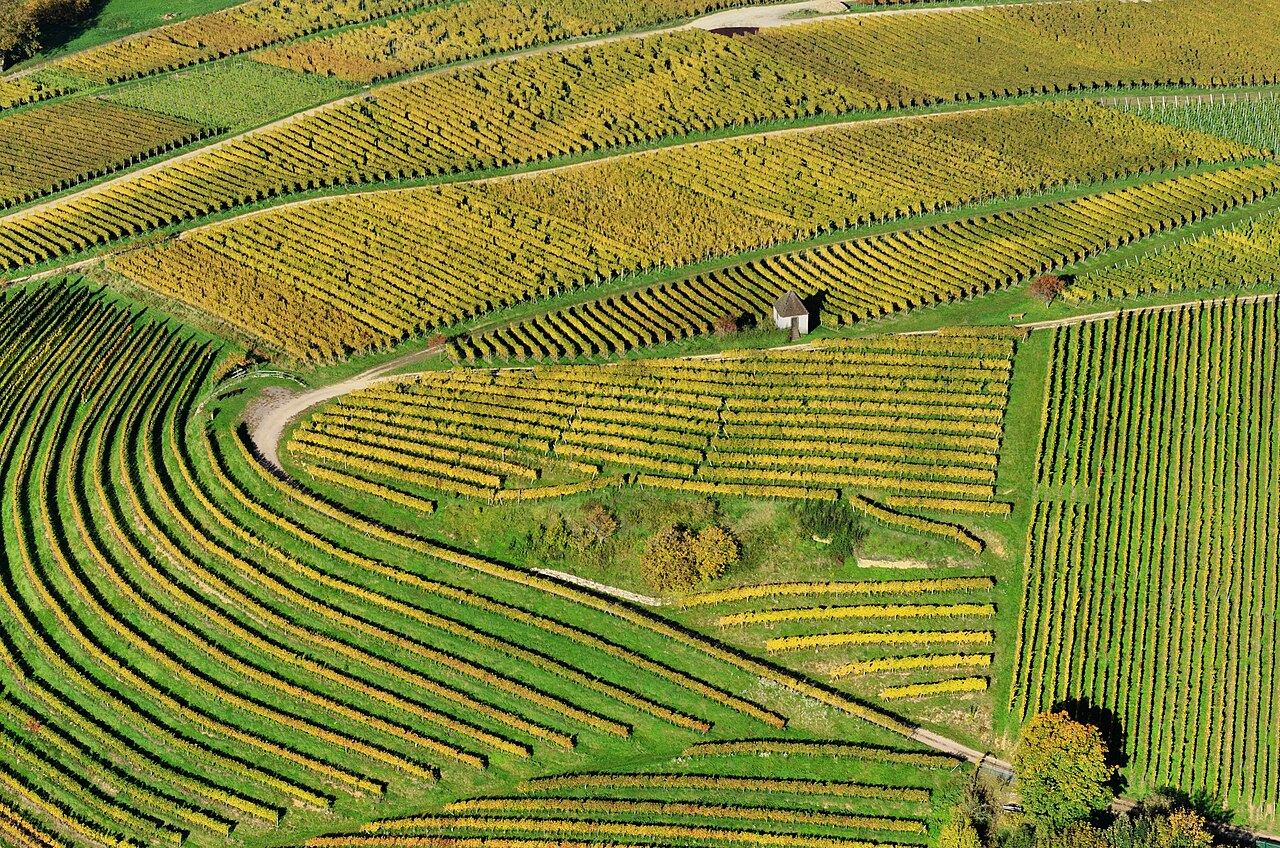
Wine regions are farming regions wearing their Sunday clothes, and the itinerary trick is to plan them as food country first. Start with the structural choice: base in the region's working market town, not its tasting-room village — the town has the bakery, the market day, the bistro the growers use. Then use the official wine routes as scaffolding (France's Alsace Wine Route, signposted since 1953 over 105 miles — 170 km — of villages, is the prototype: a tourism authority's spine you hang meals on) rather than a checklist of cellar doors. The day's mathematics defends itself: a serious tasting pours 4–6 wines; three cellars is a bottle and a half before lunch, so the working rule is two appointments a day, with the midday one at a winery that cooks — the estate restaurant, the farmhouse table, the harvest kitchen — where the region's dishes meet the region's bottles in the order locals actually eat them.
The food anchors are findable in every serious region once you look by category: the agriturismo or farm stay (in Italy a legal category since 1985, requiring the farm to work and to serve substantially its own or local produce), the cooperative cellar (growers' own wines at farm-gate prices and farm-gate gossip about where to eat), the vendange-season harvest menus (September–October in the northern hemisphere, February–April in the south), and the market morning that stocks the picnic. In Mendoza that means the winery-lunch circuit of the Uco Valley; in the Cape Winelands, the farm stalls of Stellenbosch and Franschhoek; in Rioja, the wine street of Haro ending in a mesón, not a tasting bar. The itinerary's spine is three fixed points per day — market or bakery at nine, a cooking winery at one, the town's table at eight — and the tastings are what you fit between them, which is exactly how the people who live there experience their own region.
Picture the place
A long table in a barrel hall at 1 p.m.: the estate's cook carrying out the roast, the winemaker opening the vintage he made from the slope you can see through the door.
The easily missed detail
The harvest calendar quietly decides the food as much as the wine: during the vendange, many estates close to casual tastings (the cellar is working) but the villages run harvest festivals and workers' menus that no other month offers — arriving for the harvest without booking the food events is the classic near-miss. The second lever is the region's non-wine larder: every wine valley has a cheese, a cured meat, a river fish or a bread with a protected name (the DOC/DOP registers are public), and an itinerary that pairs one protected food a day with the wines will never feel like a tasting crawl.
A practical rhythm
- Two tastings, one with lunch — The midday appointment is at a winery that cooks; the second is a single estate, chosen deeply
- Market town base — Sleep where the growers shop; the tasting villages are day trips from the table, not the reverse
- One larder item daily — A protected cheese, oil, ham or bread sourced at its home address each day
What could complicate the plan
Three limits bite harder in wine country than anywhere else. The first is the harvest: during the vendange many estates suspend casual tastings because the cellar is in production, so an October route built on walk-in visits can turn into a week of locked gates and a phone number nobody answers. The second is the driving. France sets its legal ceiling at 0.5 grams of alcohol per liter of blood, equivalent to 0.25 milligrams per liter of exhaled air, and at 0.2 grams for drivers still inside their probationary period — a threshold a tasting morning can cross without anyone feeling drunk, which is why the route wants a bus, a bicycle, a hired driver or a village you can walk out of. The third is the suitcase: a returning US traveler's duty-free allowance is 2 liters of alcohol inside the $800 personal exemption, and a trip of under 48 hours drops that to the $200 tier and 150 milliliters, so the case bought at the cellar door is a declarable item rather than a souvenir.
What to do next
Choose the region's market town as base, book the cooking winery first, and let the cellar doors compete for the two remaining slots.
Sources
- Alsace wine route authority (CIVA) — the Route des Vins d'Alsace (established 1953, 170 km) as the model signposted wine route
- Italian agriturismo law (Law 730/1985 framework) — the farm-stay category tying lodging to working farms and local produce
- UN Tourism (gastronomy tourism programme) — wine-and-food route development guidance
- EU quality-schemes register (eAmbrosia) — the protected food names (PDO/PGI) of wine regions
- US Customs and Border Protection — the $800 and $200 personal exemptions and their alcohol allowances (retrieved 2026)
- Service-Public, French government — the statutory blood- and breath-alcohol limits for drivers, including the probationary rate