Worldwide travel / Worldwide Responsible travel
What is the difference between animal watching and an exploitative wildlife encounter?
The short answer
Animal watching leaves the animal wild, free to leave, and unhandled — at a distance set by regulation or accreditation; exploitation begins the moment the animal is touched, fed, ridden, baited, captive-bred for contact, or made to perform.
The answer, with local context
The line is behavioural, and the credible authorities draw it in the same place. Watching looks like this: wild animals in their habitat, viewed from regulated distances (US federal guidance under the Marine Mammal Protection Act asks 100 yards from whales and 50 yards from dolphins and seals; reputable safari codes keep vehicles at set distances and cap their number at a sighting), with no touching, no feeding, no calling-in, and the animal free to end the encounter. The operator's money buys expertise and access, not contact. Accreditation separates the sanctuaries from the shows: the Global Federation of Animal Sanctuaries (GFAS) accredits facilities that prohibit breeding for trade, public contact and performance; ABTA's animal-welfare guidelines (the UK travel industry's framework, published 2013 and revised since) classify direct-contact attractions as unacceptable practice for member companies to promote.
Exploitation has a recognisable inventory, documented by World Animal Protection's investigations: elephant riding and bathing (the training behind tractable elephants — the "crush" — is the industry's open secret; WAP's research has tracked thousands of captive elephants in Asian tourism), cub petting and lion walks (cubs bred for handling graduate to hunting operations), selfie props (sloths, tigers, monkeys passed hand to hand), performing animals, and any "sanctuary" that breeds, trades, or lets visitors handle residents. The captive math is the tell: a genuine sanctuary's animals are rescues that cannot be released; an exploitative one's are inventory that must be replaced as they age out of cuteness. 2 field tests settle most cases in 1 minute: can the animal walk away from you — and does the business advertise your hands on it? If either answer fails, your money is the demand side of the problem. Choose instead the watching economy — the accredited sanctuary tour behind the fence, the regulated whale watch, the walking safari with an armed ranger where you are the vulnerable one — which pays for habitat and expertise and leaves the wild where it belongs.
Picture the place
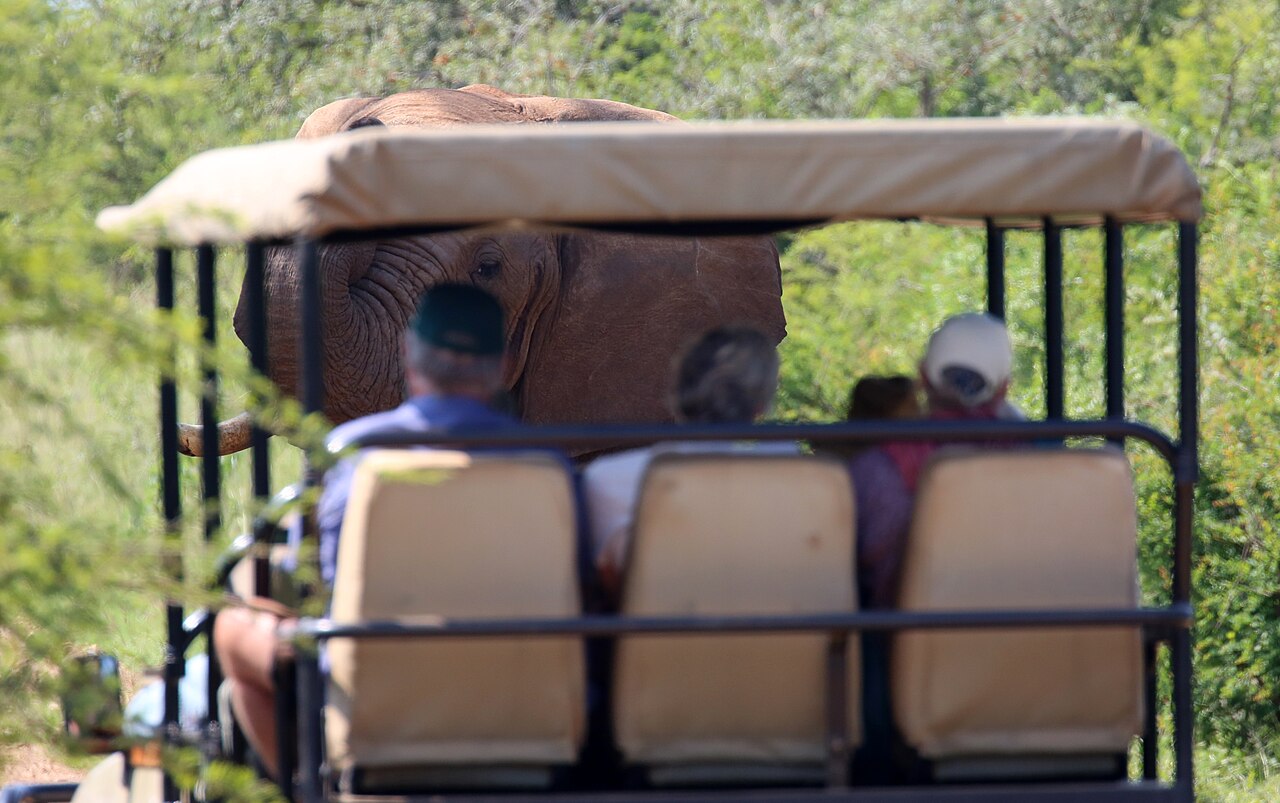
A game vehicle stopped at regulation distance, engine off, while an elephant decides — entirely for herself — whether the road is hers or yours. The watching is the privilege; the waiting is the proof.
The easily missed detail
Feeding is the exploitation that photographs as kindness: baited shark dives, bread-fed monkeys and provisioned stingrays all rewire wild behaviour, create dependence and aggression, and are banned in a growing list of jurisdictions (Hawaii state law has prohibited shark feeding since 2002; Florida bans feeding of many wild species including alligators and monkeys). The respectable version of "close" is time, not food: patient watching at waterholes, hides and migration bottlenecks yields the proximity that baiting fakes.
A practical rhythm
- 2 questions, 1 minute — Can it leave? Are hands advertised? — before any booking
- Accreditation over adjectives — GFAS for sanctuaries, ABTA-aligned operators, national park concessions for the wild product
- Distance is the product — Choose operators who publish their approach distances and sighting caps
What could complicate the plan
The encounter is only half the audit; what you carry home is the other half. Wildlife trade runs on CITES, signed by more than 183 nations, and the souvenir rack at the harbor is where tourism collides with it: every sea turtle product is barred from import into the United States, along with spotted-cat skins, teeth and claws, most live wild birds, wild bird feathers, mounted birds and nests, while corals, shells, reptile leather and some caviar are restricted rather than free. Queen conch is capped at 3 shells in personal baggage under treaty, and sturgeon caviar at 125 grams, about 4 ounces, per person per trip without a permit. In-water encounters carry their own risk arithmetic — US travel-health guidance puts scuba fatalities at roughly 16 deaths per 100,000 divers a year, which is the context for any operator selling proximity to large animals underwater. And the ethical choice is slower by design: regulated distances and sighting caps mean a 1-day booking in a short season is exactly the pressure point that contact products are sold into.
What to do next
Audit the next wildlife item on your itinerary against the two questions, and replace any failure with the nearest accredited or park-run equivalent.
Sources
- Global Federation of Animal Sanctuaries — accreditation standards prohibiting contact, breeding for trade and performance
- ABTA — the UK travel industry's animal-welfare guidelines and unacceptable-practice classifications
- World Animal Protection — investigations into elephant tourism and captive wildlife attractions
- NOAA Fisheries — federal marine-life viewing distances (100 yards whales, 50 yards dolphins) under the Marine Mammal Protection Act
- US Fish and Wildlife Service, Buyer Beware guidance for travelers — CITES membership, prohibited and restricted wildlife souvenirs, the 3-shell conch and 125-gram caviar limits (retrieved 2026)
- CDC Yellow Book 2026, Injury and Death During Travel — worldwide scuba diving fatality rate (retrieved 2026)