Worldwide travel / Worldwide Places and experiences
What should I compare when choosing a thermal bath or wellness destination?
The short answer
Compare the water itself — source temperature, mineral chemistry and whether the pools are true source water — then the bathing culture that comes with it: nude or suited, silent or social, medical or recreational.
The answer, with local context
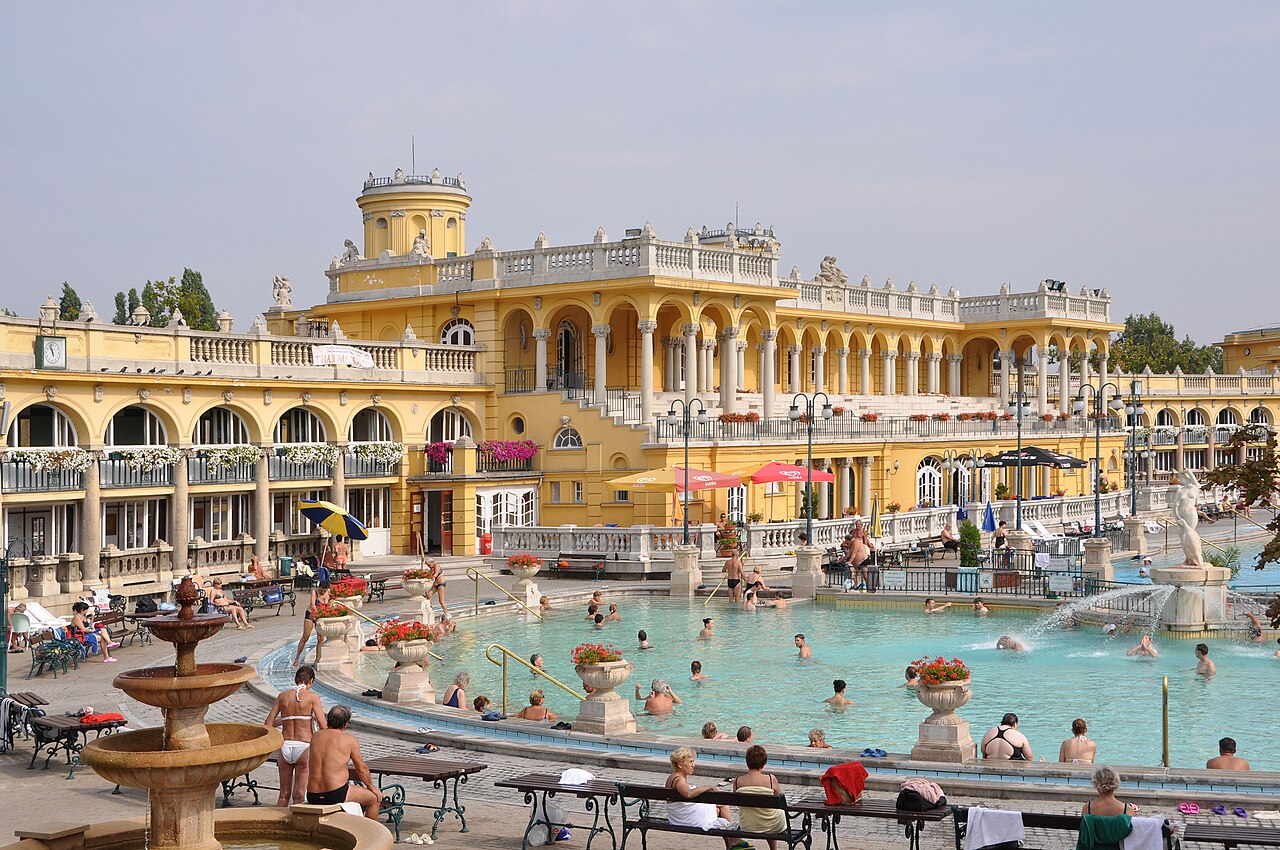
Thermal destinations sell "healing waters" as a single category; the waters are not interchangeable. The first comparison is chemical and thermal: source waters are classified by their dominant minerals (sulphur, radon, bicarbonate, silica, iron, brine) and emerge at their own temperatures — Budapest's Széchenyi draws on wells at roughly 165–171°F (74–77°C) and cools them into pools between 64 and 100°F (18–38°C); Iceland's Blue Lagoon is silica-rich geothermal seawater held around 98–104°F (37–40°C), a by-product of the Svartsengi power plant (the lagoon formed in 1976); Japan's onsen law defines a hot spring by source temperature (25°C+) or specified mineral content, and the great onsen towns trade on their water's named profile (Beppu's variety, Kusatsu's acidity). Whether a facility uses flowing source water (Japan's gensens kakenagashi — free-flowing, unrecirculated — is the connoisseur's term) or reheats and recirculates municipal water is the deepest quality divide in the industry, and the honest houses state it.
The second comparison is cultural, and it decides the experience more than the chemistry. Japan's onsen are nude, gender-separated, wash-first, tattoo-restricted by tradition (softening at many facilities; the Japan National Tourism Organization publishes guidance) — a bathing ritual, not a pool party. Hungary's great baths are suited, mixed and social, chess on floating boards at Széchenyi included; Germany's Therme culture mixes suited family zones with nude sauna worlds and grades its towns by state-recognised titles (Heilbad, Kneippkurort) under a formal Kur system; Iceland's lagoons are suited, bar-served and sociable. Third, the medical layer: genuine Kur and rehabilitation towns run doctor-led programmes (drinking cures, prescribed bathing times — thermal water is dosed, with standard guidance limiting hot immersion to about 20 minutes at a stretch and cautioning cardiac and pregnant bathers), while pure leisure spas borrow the vocabulary. Compare water, culture and intent against your own purpose — soak, cure or celebrate — and the destination chooses itself.
Picture the place
Széchenyi at dusk in January: steam rolling off water the color of pale tea, chess games floating, the neo-baroque walls lit amber — Budapest bathing as it has run since 1913.
The easily missed detail
The water's fame often belongs to a different address than the famous building: many celebrated baths blend or truck waters, and Japan's kakenagashi distinction (and its opposite, recirculated) is legally displayed at the entrance if you know to look for the onsen-analysis certificate (onsen bunsekisho) posted by law. The health corollary is real: the same minerals that sell the bath make some waters wrong for some bodies (radon baths are a therapy in Germany and Austria and a controversy elsewhere) — the comparison is medicinal, not just aesthetic.
A practical rhythm
- Chemistry before architecture — Read the water analysis (temperature, minerals, flow-through or recirculated) before the photo gallery
- Culture matched to comfort — Nude-ritual Japan, social Hungary, sauna Germany: choose the bathing etiquette you will actually enjoy
- Dose like the Kur — Twenty-minute immersions, rest between, hydrate: the medical towns' rhythm works for pleasure too
What could complicate the plan
Bathing destinations carry rules that are public-health law rather than house style. Thermal immersion is dosed: the Kur tradition caps a hot soak at roughly 20 minutes at a stretch with rest between, and cardiac and pregnant bathers are cautioned specifically. Treatment chemistry is regulated wherever the water is not a flowing source, and it is the clearest tell of a recirculating house: public pools and splash pads are run at 1 to 10 parts per million of free chlorine, hot tubs at 3 to 10 parts per million of free chlorine or 4 to 8 parts per million of total bromine, which is a very different thing from source water arriving and leaving. Access is the third complication, and it varies house by house: nude or gender-separated bathing, compulsory caps, wash-first protocols, tattoo restrictions and booked time slots are all local rules, and the famous addresses now sell timed entry that sells out in the winter weeks they are most worth visiting. The medical layer is the one travelers skip — several named waters are therapies with contraindications, so a radon or strongly sulphurous bath is a decision rather than an amenity.
What to do next
Shortlist three baths and write their water profiles side by side — source temperature, minerals, flow system — then pick on the water, not the wallpaper.
Sources
- Japan Onsen Association / JNTO — the Onsen Law definition, kakenagashi flow categories and tattoo guidance
- Budapest Gyógyfürdői (Budapest Spas) — Széchenyi's source temperatures, pool range and 1913 history
- European Spas Association (ESPA) — Kur town classifications and balneology standards
- Blue Lagoon Iceland / Svartsengi — the lagoon's 1976 formation and silica water profile
- CDC Yellow Book 2026, Food and Water Precautions for Travelers — free chlorine and total bromine ranges for treated pools, splash pads and hot tubs (retrieved 2026)