Worldwide travel / Worldwide When to visit
How can I plan a northern-lights trip without expecting a guaranteed sighting?
The short answer
Plan a stay of 4 or 5 nights inside the auroral oval in the dark season, choose the destination for its other pleasures, and treat the lights as a lottery you enter nightly — not a product anyone can promise.
The answer, with local context
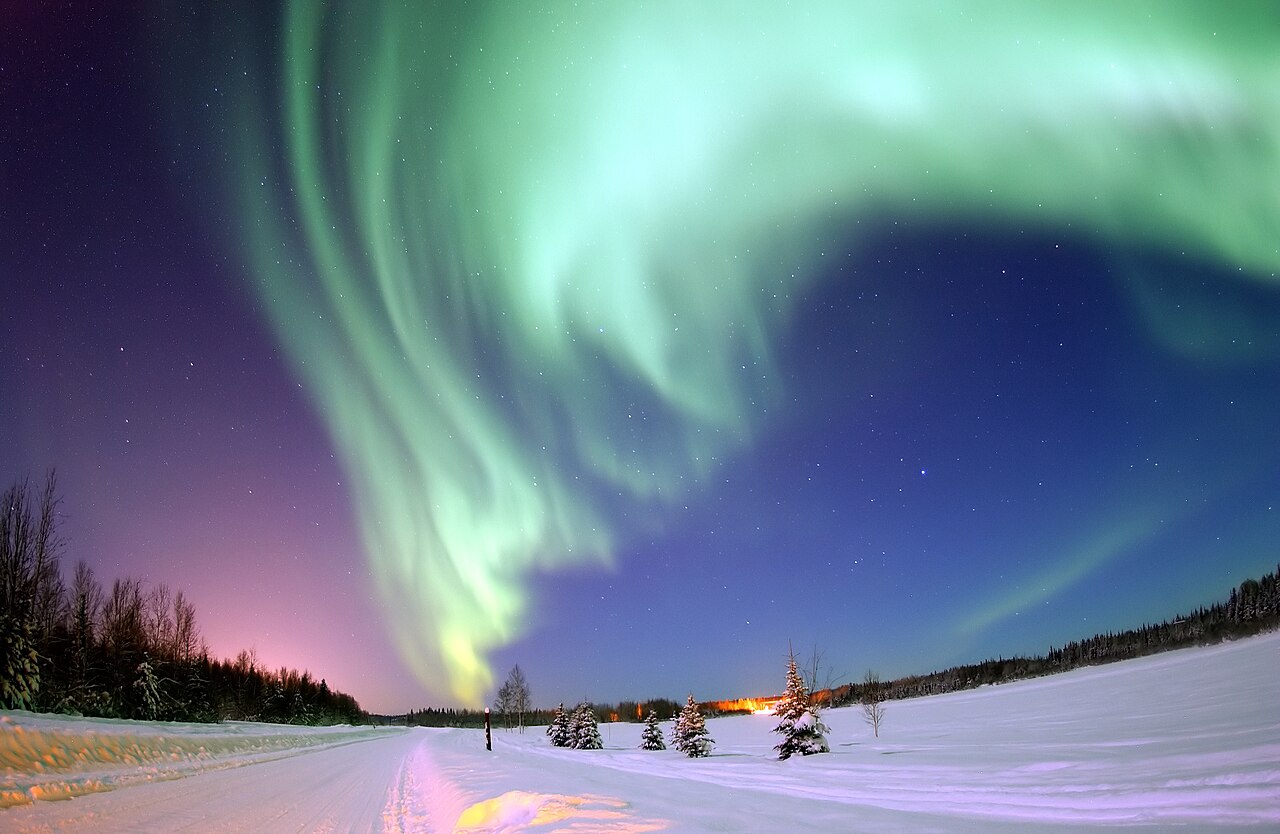
The aurora is weather in space, and honest planning starts with its geography. The lights circle the magnetic pole in an oval that, on an average night, sits over roughly 65–72°N — which is why the reliable addresses are Tromsø (69.6°N), Abisko, Fairbanks, Yellowknife and Iceland's north, rather than Scotland or the northern US except during storms. Season is the second control: you need true darkness, which at those latitudes runs from mid-September to mid-April — December gives the longest nights but the worst coastal weather in maritime places like Tromsø and Iceland, which is why the statistically favoured months are often September–October and February–March (clearer skies, milder cold, roads still winter-true).
The forecast stack has three layers, in order of importance. First, cloud cover — the number-one killer, checked on the national met service's local forecast (the Icelandic Met Office publishes its own aurora forecast combining cloud and activity on a 0–9 scale). Second, geomagnetic activity: NOAA's Space Weather Prediction Center issues the Kp index (0–9) with lead forecasts of 30 and 45 minutes; at oval latitudes a Kp of 2 or 3 suffices on a dark, clear night, while Kp 5+ (a geomagnetic storm) is what pushes displays to mid-latitudes. Third, darkness quality: a full moon washes weak displays (schedule around the new moon), and light pollution matters — 20 minutes out of town beats any hotel balcony. Then the arithmetic that makes the trip sane: operators and aurora researchers alike work on the rule that 3 or 4 broadly clear nights give a strong probability, while a single night is a coin toss at best — so build four or five nights, take a guided "chase" on the first clear forecast (guides drive to the cloud gaps, sometimes more than 100 miles), and self-watch the rest.
Picture the place
A frozen lake at 11 p.m., the tour's fire ring and thermoses on the ice, and the sky doing nothing at all — for the first hour. Patience is the actual sight; the aurora is its reward.
The easily missed detail
The mid-2020s sit near the maximum of the solar cycle of roughly 11 years (Solar Cycle 25 peaked in activity through 2024–2025), when strong displays become more frequent even at lower latitudes — but solar maximum raises storm frequency, not your local cloud odds, which is why it upgrades a well-planned trip rather than rescuing a one-night gamble. The practical corollary: book flexible "aurora wake-up" hotels (northern properties run call services and glass-roof cabins) only as a supplement to the nights-and-chase strategy, not a substitute.
A practical rhythm
- Four nights minimum, dark-season — Mid-September to mid-April inside the oval; five nights if the trip is aurora-first
- Chase once, then self-watch — A guided cloud-chase on the first promising night; your own sky checks on the rest
- Daytime is the insurance — Dog sledding, fjords, museums: the trip must succeed even at Kp 0
What could complicate the plan
Aurora forecasts beyond 45 minutes are probabilities dressed as promises; apps that show a single percentage hide the cloud question entirely. Coastal climates (Iceland especially) can cloud out a whole week in any month. And the guaranteed-sighting marketing of glass cabins and one-night fly-ins is the industry's known pressure point: anyone who guarantees the aurora is selling you the cabin, not the sky — reputable operators publish their no-show refund or rebooking terms instead, which is the document to read before paying.
What to do next
Pick four nights at an oval address in September–October or February–March, book one chase tour with a cloud-mobility promise, and load NOAA SWPC and the local met office before you fly.
Sources
- NOAA Space Weather Prediction Center — the Kp index, 30/45-minute aurora forecasts and geomagnetic storm scales
- Icelandic Meteorological Office (vedur.is) — the combined cloud-and-aurora forecast (0–9) for Iceland
- Finnish Meteorological Institute — auroral-oval science and the Auroras Now! service
- Visit Norway / STF Abisko — dark-season windows and the multi-night guidance used by northern operators