Worldwide travel / Worldwide Trip planning
How can I plan a scenic train holiday across multiple regions?
The short answer
Choose one great line as the spine, ride it in daylight in sections of under five hours, sleep in the towns the line itself made famous, and let passes, seat reservations and one deliberate slow train do the rest.
The answer, with local context
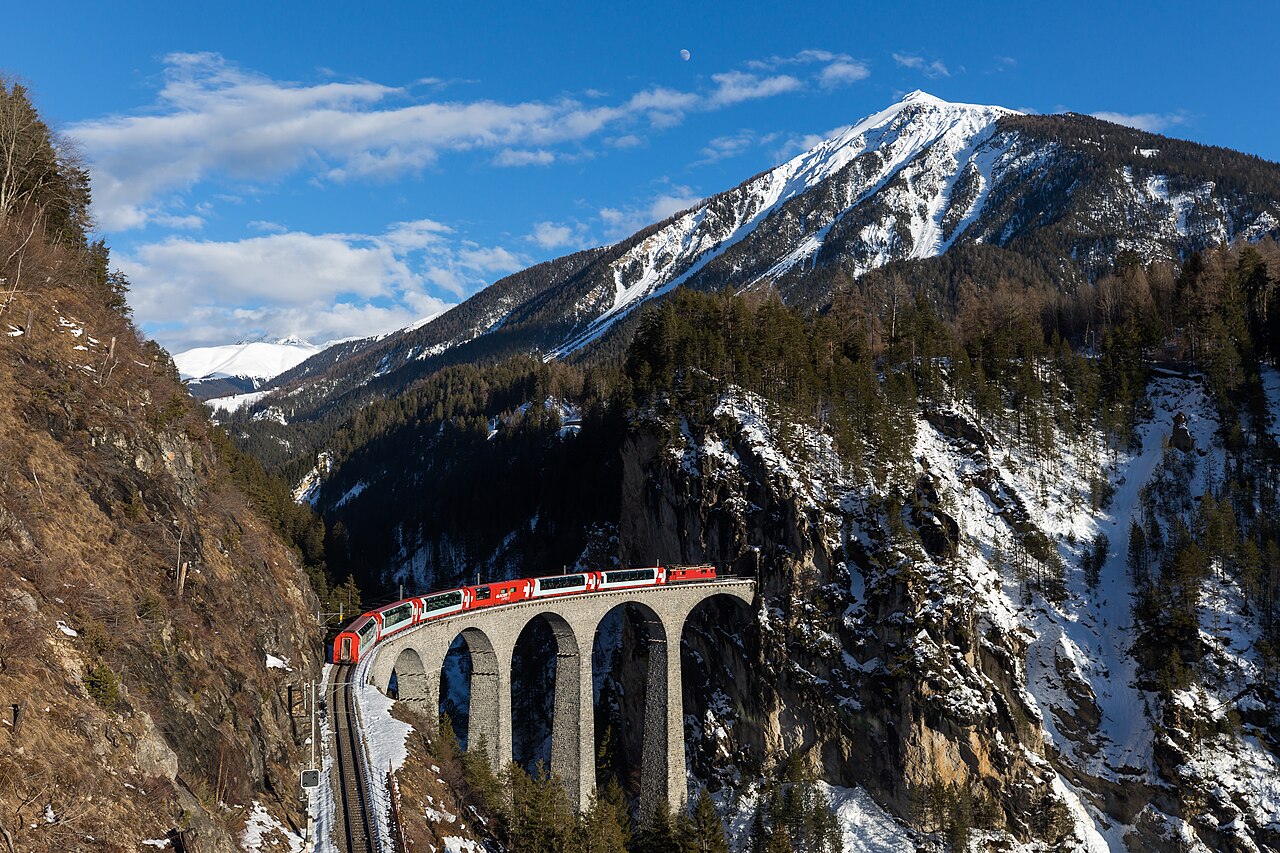
A rail holiday is built like a river trip: one watershed, traveled in order. Pick the spine first — a line famous because the land demanded it. The benchmarks are instructive: Switzerland's Glacier Express has run since 1930 between Zermatt and St Moritz (181 miles — 291 km, 291 bridges, 91 tunnels, over the 6,670-foot Oberalp Pass), and its companion Bernina line is a UNESCO World Heritage railway (the Rhaetian Railway's Albula/Bernina landscapes, inscribed 2008); Norway's Flåm line climbs 2,840 feet in 12.6 miles at a gradient of 1 in 18, among the steepest standard-gauge railways on earth; Scotland's West Highland line and Japan's local lines make the same point at other scales. The planning rule that makes these holidays feel golden rather than logistical: ride the scenery in daylight, in legs of three to five hours, alighting where the railway itself created the town (the junction villages, the spa stops, the viaduct viewpoints) rather than shuttling back to a hub each night.
The commercial layer needs equal care. Passes (Interrail in Europe since 1972, national passes like the Swiss Travel Pass, Japan's JR Pass — repriced sharply upward in October 2023, which changed its maths from default to calculation) pay when legs are long and plans fluid; they mislead when the trip is two fixed journeys, where advance singles win. Seat reservations are the trap inside the pass: many flagship trains (the Glacier Express among them) require a paid reservation on top of any pass, panorama cars sell out in season, and the famous trains often have an un-famous twin — the hourly regional train on the same track, same windows of scenery, no reservation scrum (the Bernina's regional services run the UNESCO line all day). Book the spine's reservations the day they open, plan one "slow day" on local trains only, and give the holiday a railfan's margin: connections of 30-plus minutes in mountain country, where a late train is a landscape, not a disaster.
Picture the place
A panorama car at 9 a.m., the viaduct curving away under the wheels, coffee arriving as the valley drops a thousand feet below the window — the landscape doing the entertaining at walking pace raised to art.
The easily missed detail
Direction and side are free upgrades nobody charges for: many great lines have a scenic side (the sea side southbound on coastal routes, the gorge side on the Bernina) and a light side (west-facing seats for afternoon sun on north–south runs). The second overlooked asset is the station town itself — the buffet, the railway museum, the hotel the company built — which the express culture teaches you to pass through; slow rail holidays are won in the stations you sleep in.
A practical rhythm
- Spine, then ribs — One famous line end-to-end in daylight legs; branch lines and buses as day ribs from sleeping towns
- Reservations on release day — Flagship panorama trains booked when sales open; regional twins as the flexible fallback
- One pass, checked twice — Price the pass against advance singles for your exact legs before buying either
What could complicate the plan
The spine line is the part of a rail holiday that cannot be improvised. Flagship panorama trains sell their compulsory reservations months ahead and sell out completely in season, so a missed connection costs a day rather than an hour, and mountain railways close for engineering and for winter, which can remove the middle of a route entirely. A pass does not cover those reservations, so the honest comparison is pass plus reservation fees against advance point-to-point fares for your exact legs — and a pass bought for flexibility loses most of it on precisely the trains you came for. The journey to the spine is the other weak point: an airline operating under the European regime owes no compensation when it announces a cancellation at least 2 weeks in advance, pays EUR 250 on flights of 1,500 kilometers or less when it does not, and must reimburse an abandoned trip within 7 days. The railway is usually the reliable half of a rail holiday; the flight that delivers you to it is not.
What to do next
Choose the spine line, list its sleeping towns in order, and price pass-versus-singles for those exact legs this week.
Sources
- UNESCO World Heritage List — Rhaetian Railway in the Albula/Bernina Landscapes (2008)
- Glacier Express / Rhaetian Railway — the Zermatt–St Moritz service (since 1930), its bridges, tunnels and reservation rules
- Interrail/Eurail — the European pass system (Interrail since 1972) and reservation requirements
- JR Group — the Japan Rail Pass and its October 2023 repricing
- Regulation (EC) No 261/2004, Articles 5, 7 and 8 — notice periods, the short-haul compensation band and the 7-day reimbursement rule (retrieved 2026)